


📌 NOTE FOR NEW READERS: This is an independent Substack covering 50501, No Kings, and the broader pro-democracy and civic-action ecosystem. Subscribe to never miss a post.

ICE runs on private airlines, tech companies, local police, contractors, and public cooperation, and each of those is a place where you can push back. In January 2026, Avelo Airlines dropped its ICE deportation flights and closed its Arizona base after months of protests. Below you’ll find 7 ways to push back. You don’t have to do all 7 but the more you can do, the better.
Fighting back is more than a big No Kings march
No Kings protests and other big gatherings help bring attention to what’s going on, but it’s not the only way, and not everyone can safely march. Many people have disabilities, swing/night shifts, caregiving duties, or immigration worries of their own, and that’s okay, there is a lot to do and many ways to fight back.
ICE rents planes, uses software, and leans on local police. ICE also counts on the belief that their system is too strong and complicated for us to challenge it.
1. Pressure the companies that fly for ICE
ICE doesn’t own planes, it pays private airlines to fly people to detention and deportation.
One of them, GlobalX, flew more than half of ICE’s deportation flights in 2024 and 2025. GlobalX also flies commercial clients like college sports teams, so it has customers and a reputation to protect.
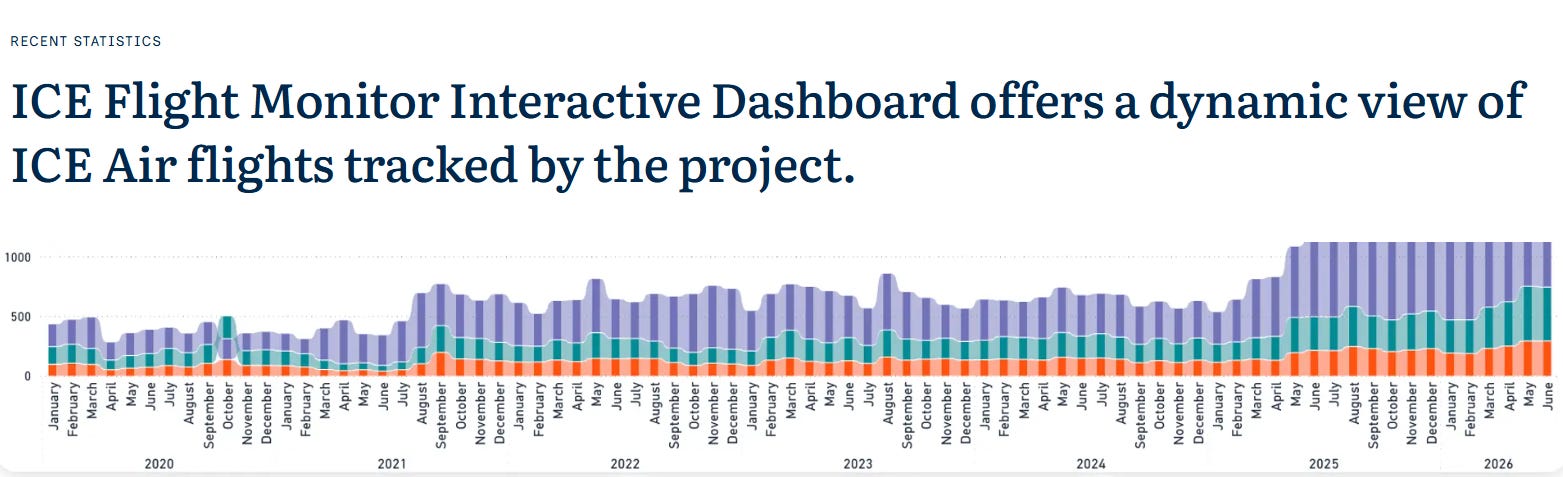
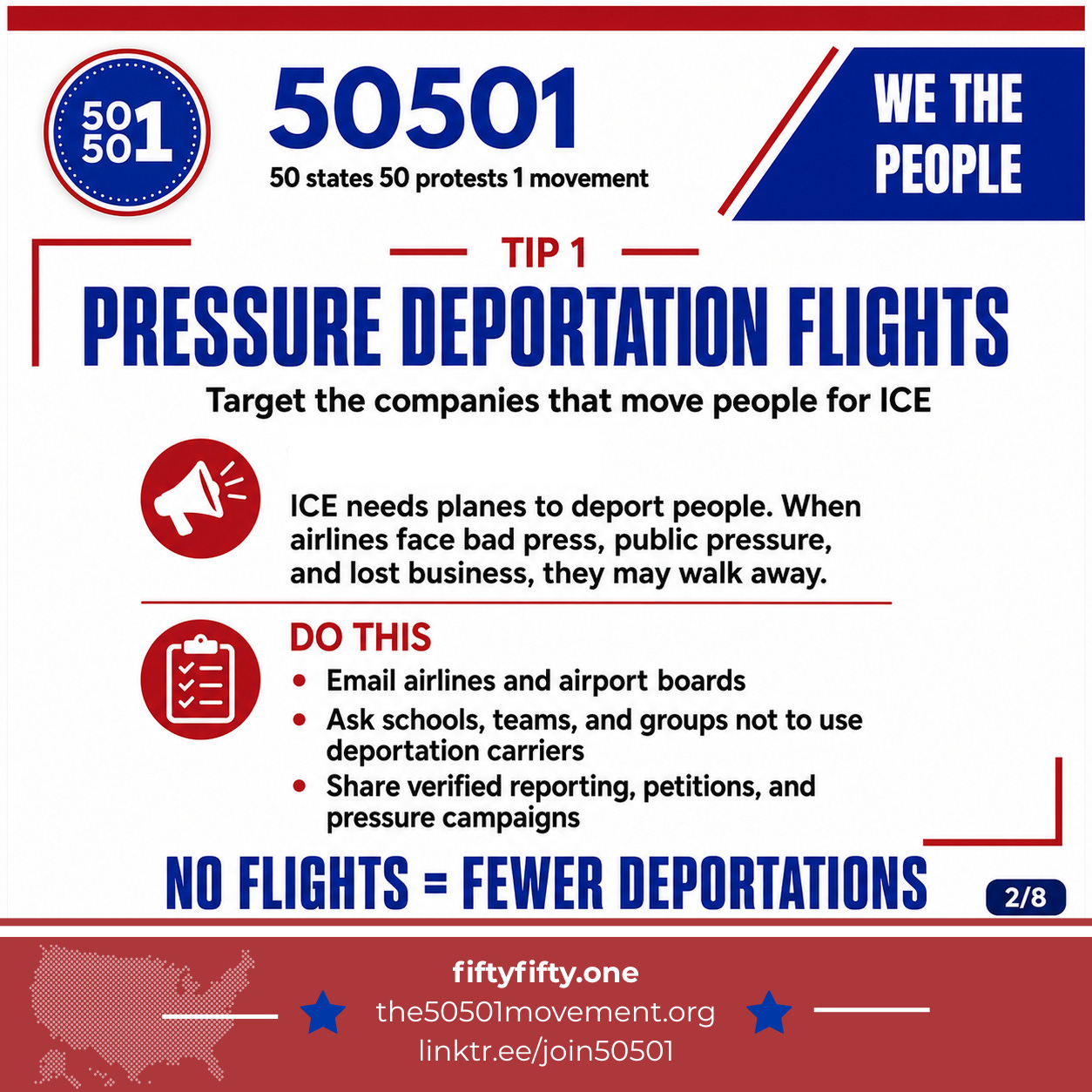
Do this: Pick a group that hires an ICE-linked airline by clicking here and try to reach out to them, ask: Will you stop booking airlines that operates ICE deportation flights? And also ask who chooses the airline and when the contract ends. Keep the pressure on those who sign the contracts. Look up which carriers fly for ICE at ICE Flight Monitor.
2. Do your Local Police work with ICE?
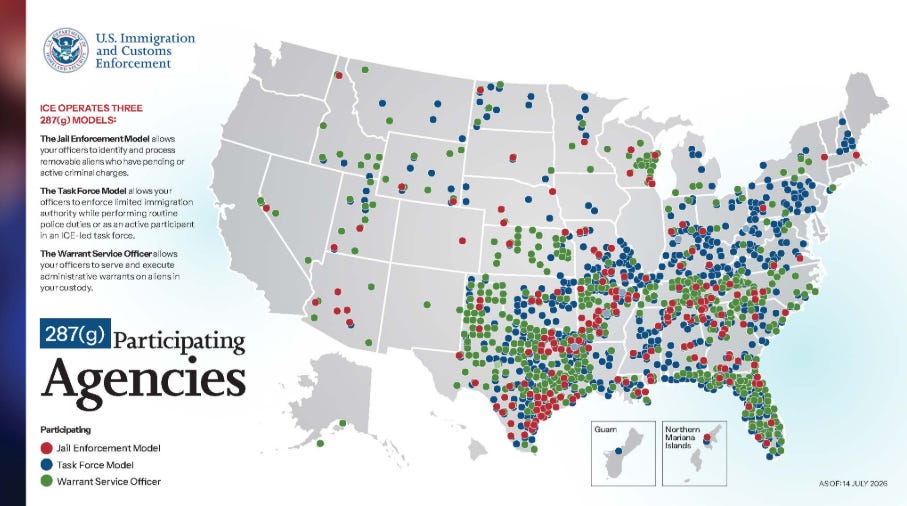
287-g (a program) lets ICE deputize your local police and sheriffs to act as immigration agents. This program has expanded with 135 program agreements at the start of 2025 to more than 2,100 by July 2026, (this month). These deals are signed by local officials and voted in your local public meetings.
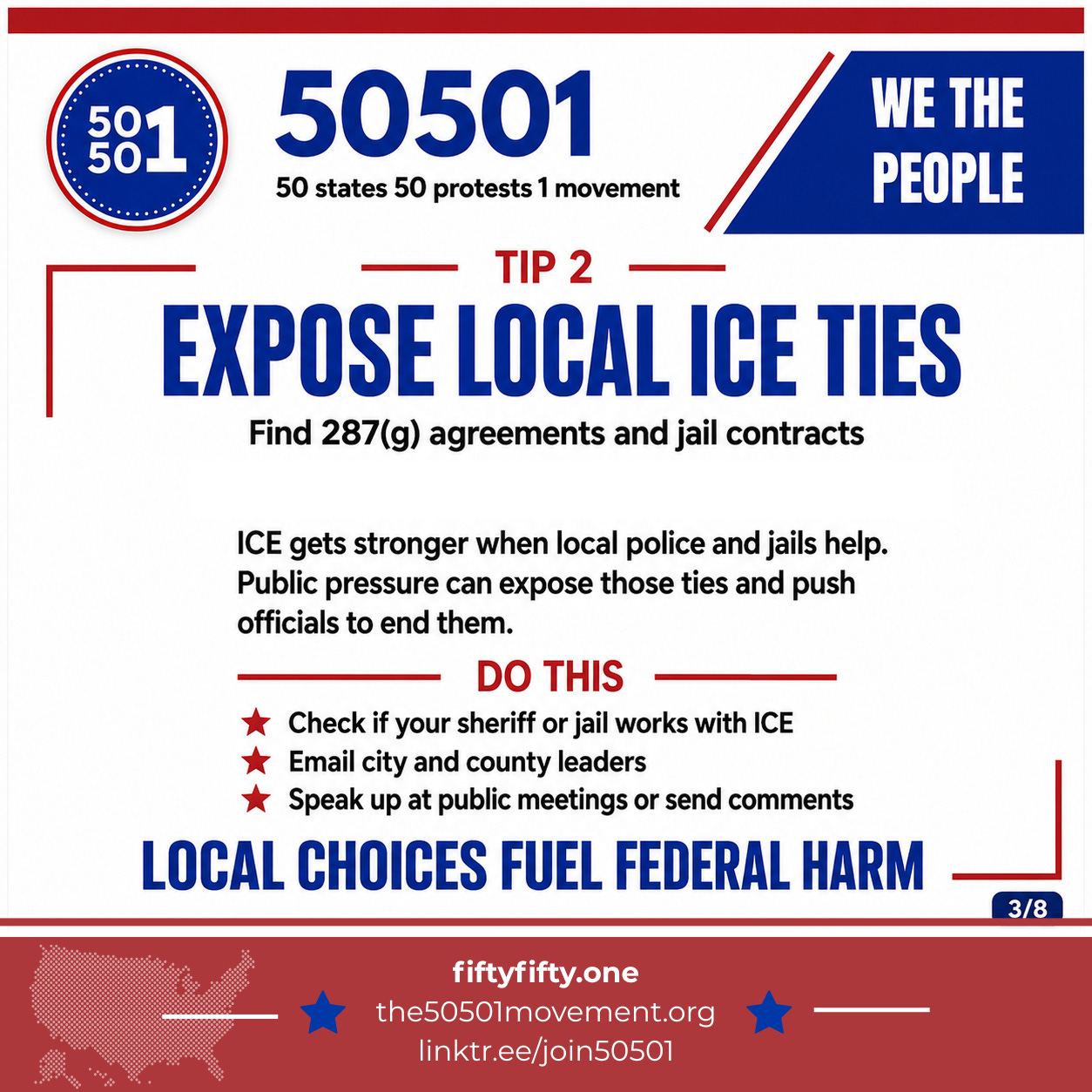
Do this to help fight back: You can search the ICE 287g list for law enforcement involved with the program. If your area is on it, email your sheriff, mayor, and council and say: Will you end this agreement? What’s the process to withdraw?! Then try to set a weekly reminder to scan the local meeting agendas for words like “ICE,” or “287g,” and be sure to speak up before the vote.
3. Look up the Public Records
Most people don’t realize they can do this. You can look up public records without being a journalist or reporter. You can view government invoices, agreements, and emails which are often public under records laws. Following the records can show you and your community how much local officials are working with ICE.
Do this: You can file a narrow records request with an agency: Copy and use this: Under the applicable public-records law, I request ALL contracts, agreements, and invoices between ‘insert agency here’ and ICE or DHS from January 1, 2025 to today. Please send them electronically, and give me an estimate if fees will top $25. There are free tools like MuckRock that walk you through this process. You can turn what you get back into a timeline/summary to share or that a local reporter can use.

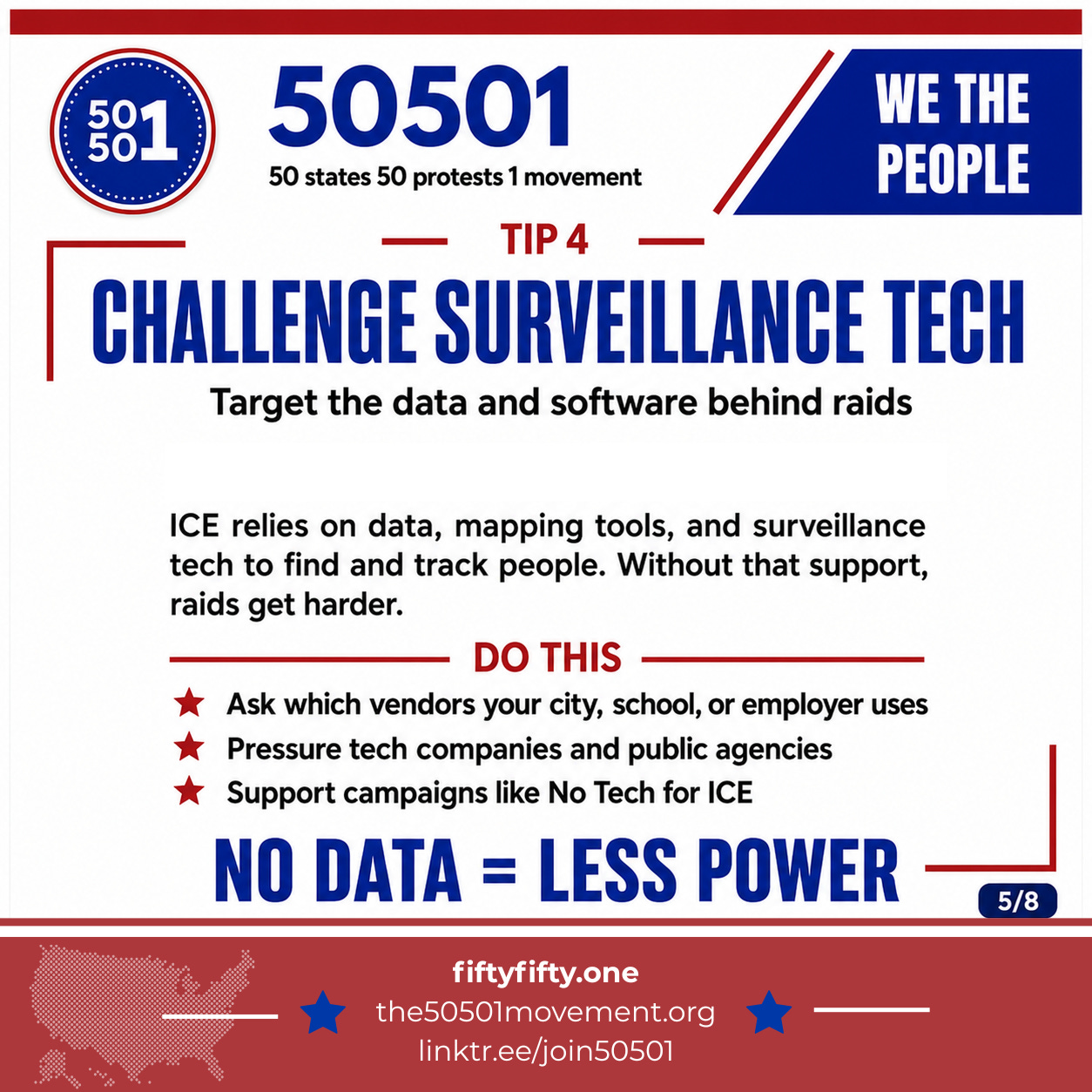
4. Tech Companies Powering ICE
In January of 2026, the EFF reported that ICE uses a Palantir tool that maps targets and scores/records their likely addresses, pulling from Medicaid and other records. Palantir disputes it. Either way, these companies have employees and shoppers who are being affected by this kind of surveillance.
Do this to help fight back: If you work in tech, own stock, attend a school, or belong to a union or professional group, ask: Does my employer, school, or city hold a contract with ICE or an ICE data vendor? Then push for something specific, like a worker letter, student resolution, or a promise not to renew the contract. Skip “boycott everything.” and aim at one contract. The EFF report is a good place to start. You can also learn more about FLOCK cameras by clicking here
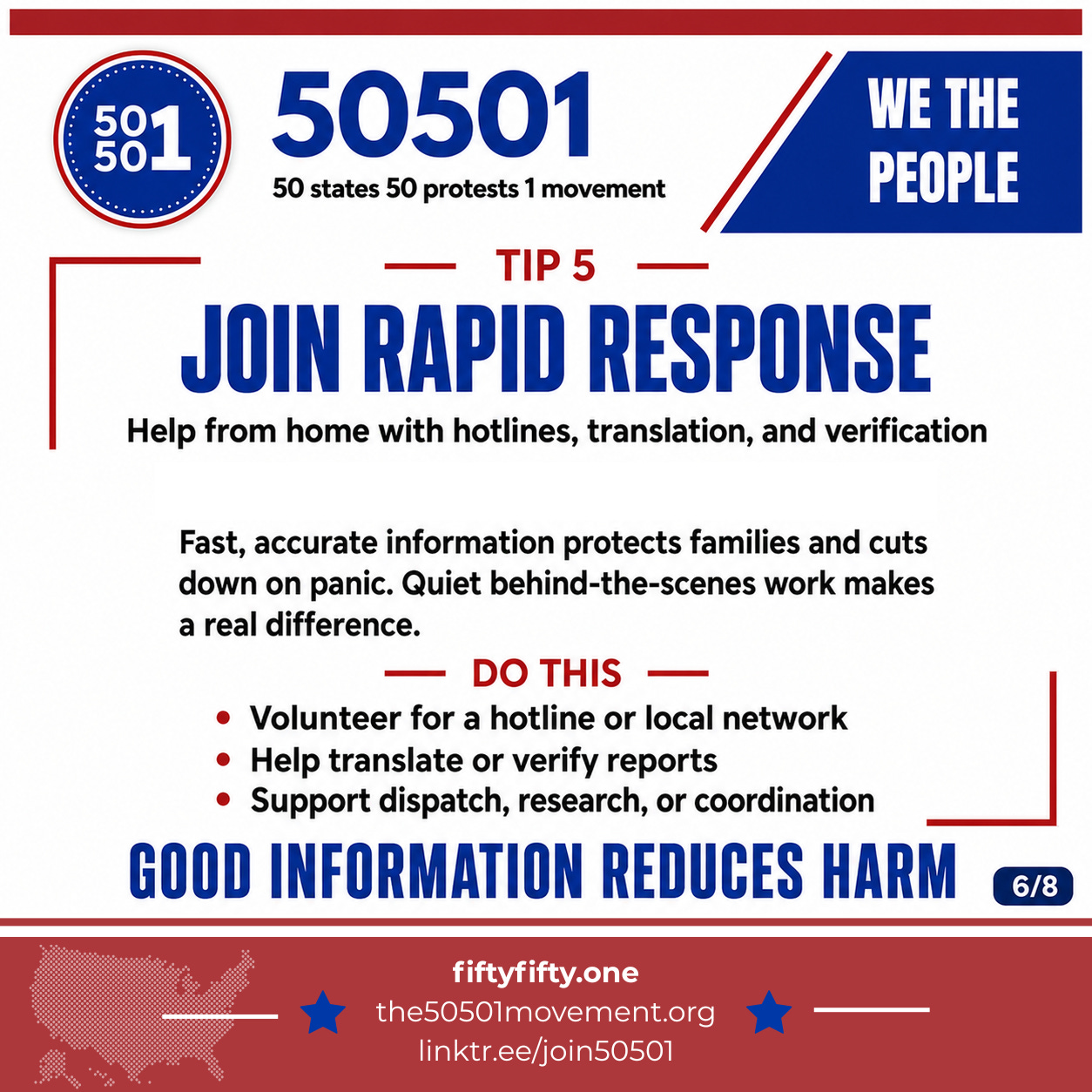
5. Help Rapid Response from Home
Trained volunteers respond in-person when ICE shows up, but Rapid Response groups need people behind the scenes too. They need help answering phones, checking and verifying reports, translating, and reaching out to lawyers.
Do this: Join a group that already exists instead of starting your own alert page. (But if your community doesn’t have one yet, definitely get one going!) Contact a local immigrant-rights or rapid-response network and ask what remote help they need, like hotline shifts, translation, or graphics/flyers. The United We Dream MigraWatch hotline can direct you to local groups. You can also learn how to report safely from our guide, ICE Vehicles Don’t Look Like ICE Vehicles Anymore.
6. Get “know your rights” cards out to people
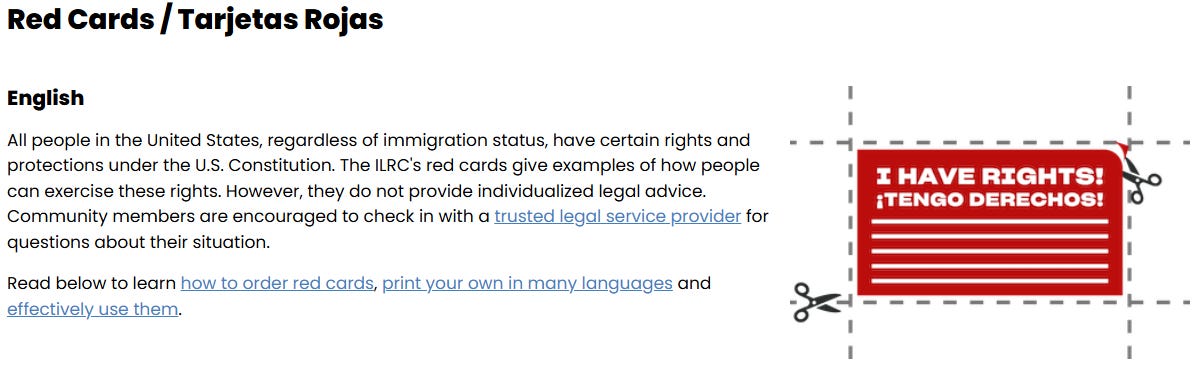
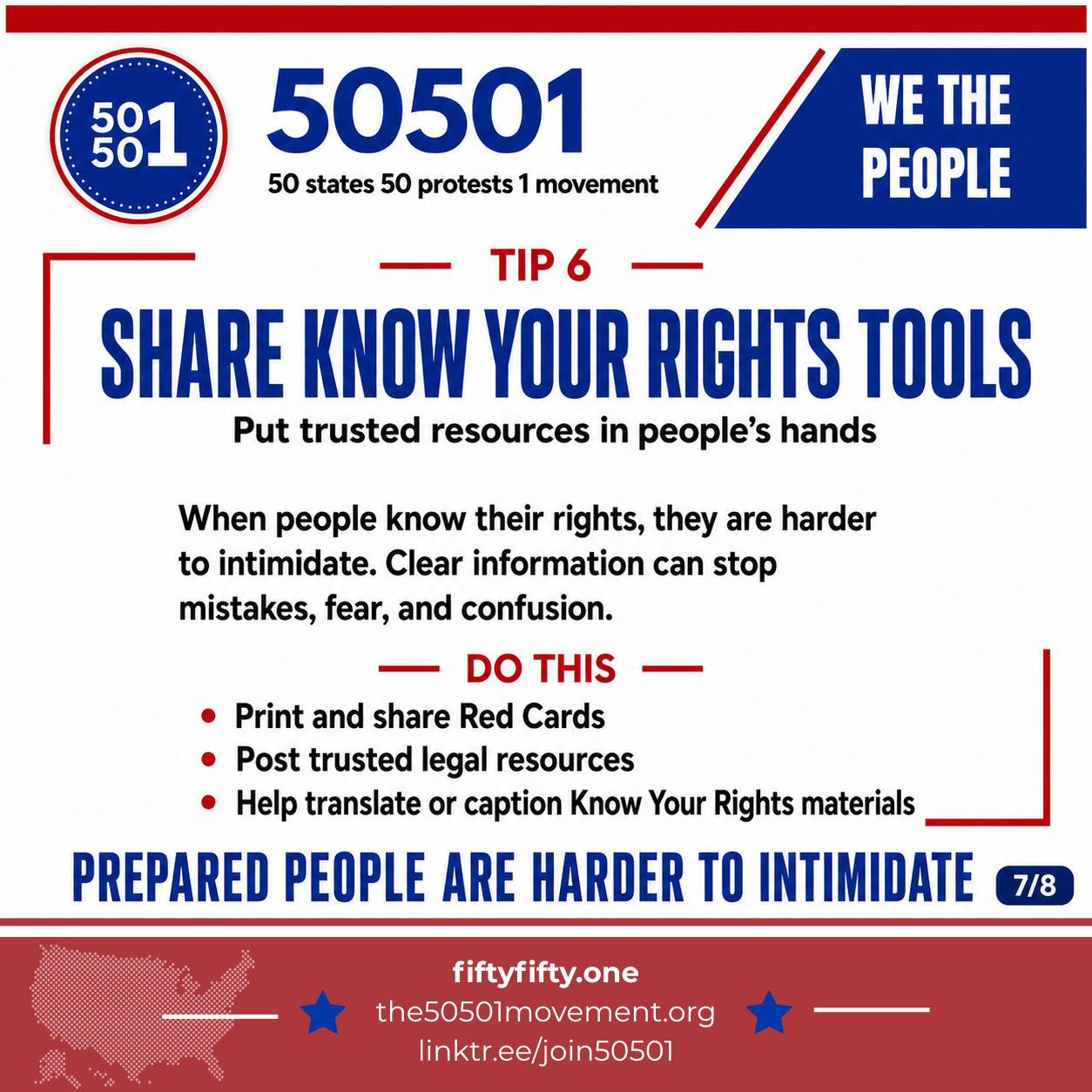
The Immigrant Legal Resource Center makes Free Red Cards, in more than fifty languages, these help explain rights in a simple and easy to understand way.
Do this: Download and print Red Cards, then hand them out, mail them to a trusted local group, or pay for a batch to be printed. The cards are always free, so ignore any account charging for them. While you are at it, share vetted legal help and remind people of three things: a notary is not a lawyer, a comment online is not legal advice, and no one should pay an unlicensed “consultant.”
7. Support Affected Families
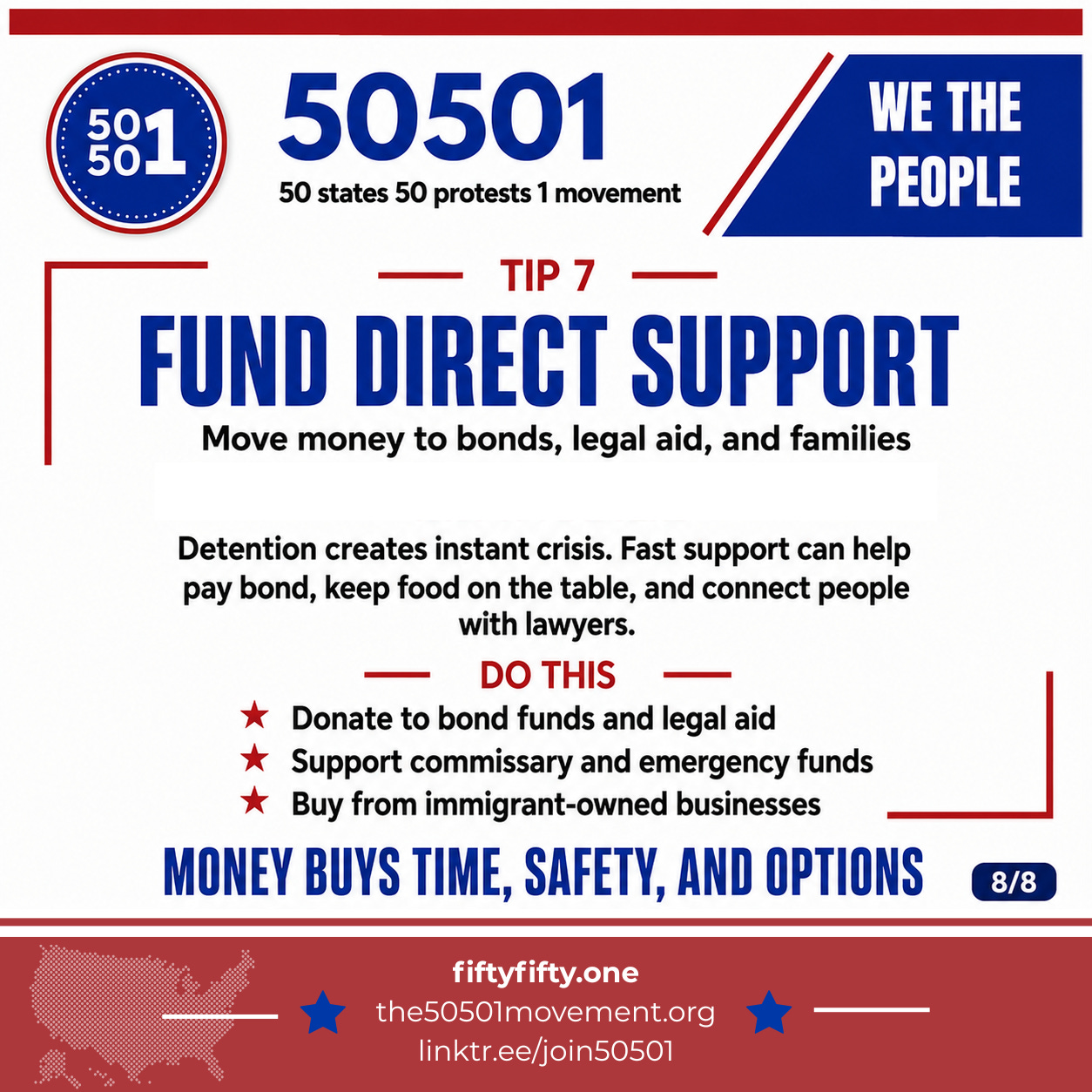
One detention can drain a family very fast with legal fees, bond, rent, missed paychecks, and long drives to a detention center.
Do this to help fight back: you can set up a small monthly donation to a local bail or bond fund and look for clear local leadership with a secure donation page. You can also help by spending money at immigrant owned businesses when fear of being kidnapped by ICE keeps their regular customers away.
The people ICE targets are the ones who pay the price if something goes wrong. When you’re not sure about something, ask an immigrant-led group what they need, and take the boring (but necessary!) job.

These are only 7 ways to fight back. Help our community by sharing more ideas in the comments:

Sources/Reading
Avelo Airlines ending ICE deportation flights and closing its Mesa base | CNBC
ICE Flight Monitor | Human Rights First
GlobalX ICE flight records, reporting by The Guardian; NCAA charter estimate, De-ICE These Flights campaign | Democracy Now
287(g) program, models, and participating agencies, ICE | ILRC national map
Palantir enforcement-targeting tool report | Electronic Frontier Foundation
MigraWatch hotline United We Dream
Free printable Red Cards Immigrant Legal Resource Center
How can we find out which sports teams contract with the airlines that fly deportations
Ask customer service people before hanging up if they are registered to vote provided they are eligible. And encourage if they are able to vote but not registered.