


📌 NOTE FOR NEW READERS:
The 50501 Movement organizes peaceful action across all 50 states to defend democracy. This publication is nearly 100k readers strong and growing. If this resonates with you, hit subscribe!
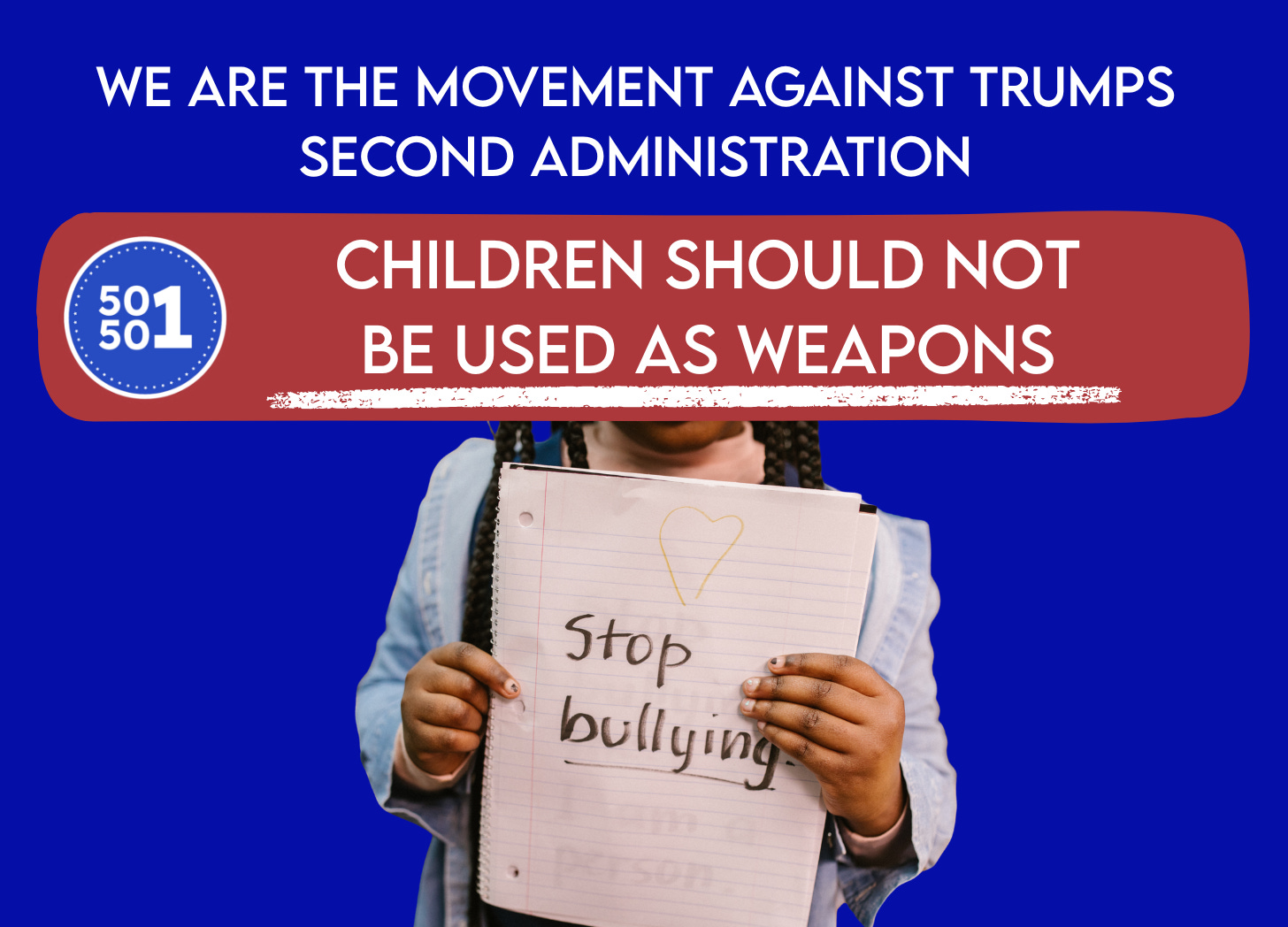
TL;DR: In late 2025, a UCLA-led national survey of 600+ public high school principals found that 35.6% of U.S. public high schools reported bullying aimed at students from immigrant families including taunts like “Can I see your papers?” and “Go back home.” (UCLA summary; report PDF).
In 2026, that finding lands in a sharply changed environment. Reporting now documents immigration enforcement activity occurring closer to school routines including detentions near dismissal time and reports of parents confronted near bus stops while districts weigh emergency measures like temporary remote learning because fear is driving absenteeism. (Chalkbeat, Feb. 3, 2026; Education Week, Jan. 27, 2026).
Children experience this as a hierarchy of safety and belonging and some learn to apply that hierarchy to their classmates.
A predictable spillover into schools
On January 21, 2025, U.S. Department of Homeland Security announced that it had rescinded prior guidance limiting certain immigration enforcement actions in or near “protected areas,” including schools. (DHS statement).
That announcement did not say “agents will enter schools.” But it did communicate that schools were no longer being treated as a uniquely buffered space in federal guidance. In practice, even the perception of proximity can be enough to change behavior, especially for families who have reason to believe they are vulnerable.
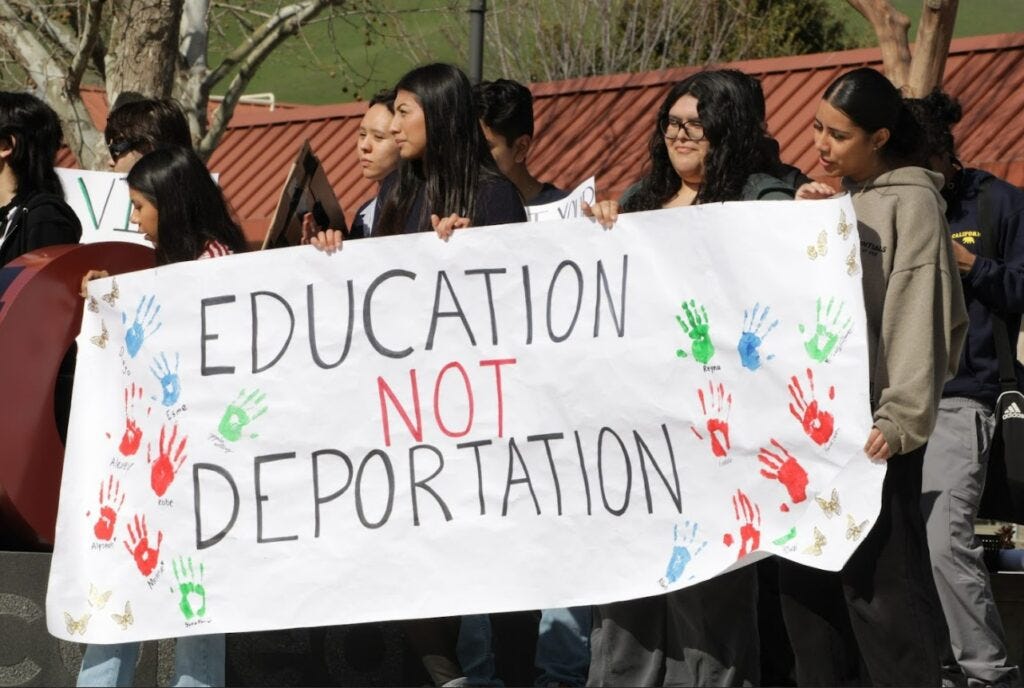
What principals reported before 2026 began
In December 2025, researchers at UCLA Institute for Democracy, Education, and Access released a nationally representative survey of 600+ public high school principals:
35.6% of principals reported bullying or harassment aimed at students from immigrant families, including “papers” and “go back home” taunts.
70.4% said students from immigrant families expressed concern about their well-being or their families’ safety.
57.8% reported immigrant parents/guardians leaving the community during the school year.
^ This is what school leaders say they are seeing on the ground. ^
What it’s looking like in 2026
On February 3, 2026, Chalkbeat reported that immigration enforcement activity has moved closer to schools “at the school yard gate,” in their framing, including an image captioned as a detention near a high school around dismissal time and reporting on detentions near bus stops. (Chalkbeat, Feb. 3, 2026).
On January 27, 2026, Education Week described districts weighing “Band-Aid” virtual learning temporary remote options because fear of enforcement is driving absenteeism and disrupting basic attendance. (Education Week, Jan. 27, 2026).
And on January 31, 2026, The New Yorker reported on an enforcement surge affecting the Columbia Heights school district near Minneapolis, describing students taken into federal custody and educators building protocols around parent detentions and student fear. (The New Yorker, Jan. 31, 2026).
Separately, local reporting out of Ypsilanti described parents detained near school bus stops during drop-off time; one official noted that details could be difficult to confirm even as multiple reports converged. (WILX, Jan. 29, 2026; Michigan Advance, Jan. 27, 2026).
How children bring this to peer-to-peer cruelty
When the broader culture speaks about deportation as normal and routine, children learn the vocabulary… and then use it the way children use any vocabulary associated with authority, as leverage against the vulnerable.
In late January 2026, local reporting in Iowa documented a viral video in which a boy describes xenophobic slurs from other children after a youth soccer tournament; the facility opened an investigation, according to the report. (CBS2 Iowa, Jan. 23, 2026).
We are not here to label kids as “good” or “bad”, this happens when we fail to protect children from the hardest parts of the adult world.
If we normalize the idea that families can be separated, some children will weaponize that idea. And the children who are targeted are left carrying an unbearable question no child should have to carry: Will my family still be here when I get home?
The measurable indicator: Attendance
There is quantitative evidence that heightened enforcement can immediately affect whether students show up.
A 2025 study examining unexpected immigration raids in California’s Central Valley found a 22% increase in daily student absences in affected districts. (Stanford SIEPR summary; PNAS article).
Warrants, access, and the difference between “public” and “private” space
Credibility requires precision about legal mechanics. In many encounters, the practical question is “Can they enter a nonpublic space without consent?”
Organizations that train schools and communities draw a basic distinction:
A judicial warrant is signed by a judge or magistrate and carries different legal authority than an agency document.
An administrative (immigration) warrant is issued by a federal agency and is not the same as a judge-signed warrant; it generally does not grant authority to enter nonpublic spaces without consent.
(NILC: Know Your Rights Warrants; NILC PDF on warrants/subpoenas).
This distinction is at the center of current reporting and litigation over enforcement practices, including scrutiny of administrative warrants and Fourth Amendment limits. (Reuters, Jan. 30, 2026; AP, Jan. 21, 2026).
When adults model confusion about rights and process without being educated, children will parrot back: “They can take you.” That message functions socially as a threat and will only hurt our children.
What schools can do that is both practical and defensible
Immigrant children can’t solve this by “being resilient enough.”
Schools and districts have tools that are both administratively straightforward and legally literate:
First: adopt a clear access protocol who speaks to agents, what documents are reviewed, how nonpublic areas are handled, and how staff are trained to document encounters. Guidance for education providers emphasizes a designated point person and careful review of documentation under Fourth Amendment principles. (NILC guidance for education providers).
Second: treat immigration-based harassment as identity-based intimidation, not banter. The UCLA survey shows “papers” language and related threats are already appearing in schools at scale; which means they should be tracked and addressed with the same seriousness as other protected-class harassment. (UCLA summary).
Third: communicate stability. When districts consider temporary virtual learning as a response to fear, it should be paired with transparent messaging about safety planning and attendance support so that “remote” doesn’t become a permanent marker of exclusion. (Education Week, Jan. 27, 2026).
Schools do more than teach general subjects like reading and math.
Schools teach the boundary between power and rights, between who belongs and who can be made to feel temporary.
Right now, many children are learning that boundary in the worst way: through fear, rumor, absenteeism, and peer cruelty that borrows the language of state force.
The environment can be changed. But it will not be changed by asking targeted children to carry that weight alone. It will be changed by educated and mature adults who insist on procedural clarity, consistent enforcement of anti-harassment rules, and a public culture that does not turn removal into a punchline.
Has your child (or a child in your community) heard immigration-based bullying at school recently such as “ICE jokes,” “papers” comments, deportation threats, or racial targeting?
If you’re comfortable, share what you’re seeing. If you’re not comfortable sharing details, you can simply say: “Yes, it’s happening here.”
We need to document the division because compliance and silence to this behavior is how it spreads.
What advice can you give to parents on how to mitigate this?
Or if you’re a teacher/admin/coach: what’s one policy or protocol that would immediately help reduce this harm in your school?
Share ideas or creative ways to help in the comments below:
Sources
UCLA (Dec. 2025) | Summary: bullying + fear impacts in U.S. high schools | Full report (PDF)
Chalkbeat (Feb. 3, 2026) | Reporting on immigration enforcement activity near schools
Education Week (Jan. 27, 2026) | How districts respond when ICE activity drives fear and absences
The New Yorker (Jan. 31, 2026) | Minnesota school district case reporting
U.S. DHS (Jan. 21, 2025) | Statement rescinding “protected areas” guidance
Stanford SIEPR + PNAS (2025) | Summary: raids linked with increased student absences | Study record
National Immigration Law Center (NILC) | Know Your Rights: warrants | Guidance for education providers
988 Suicide & Crisis Lifeline | 988lifeline.org
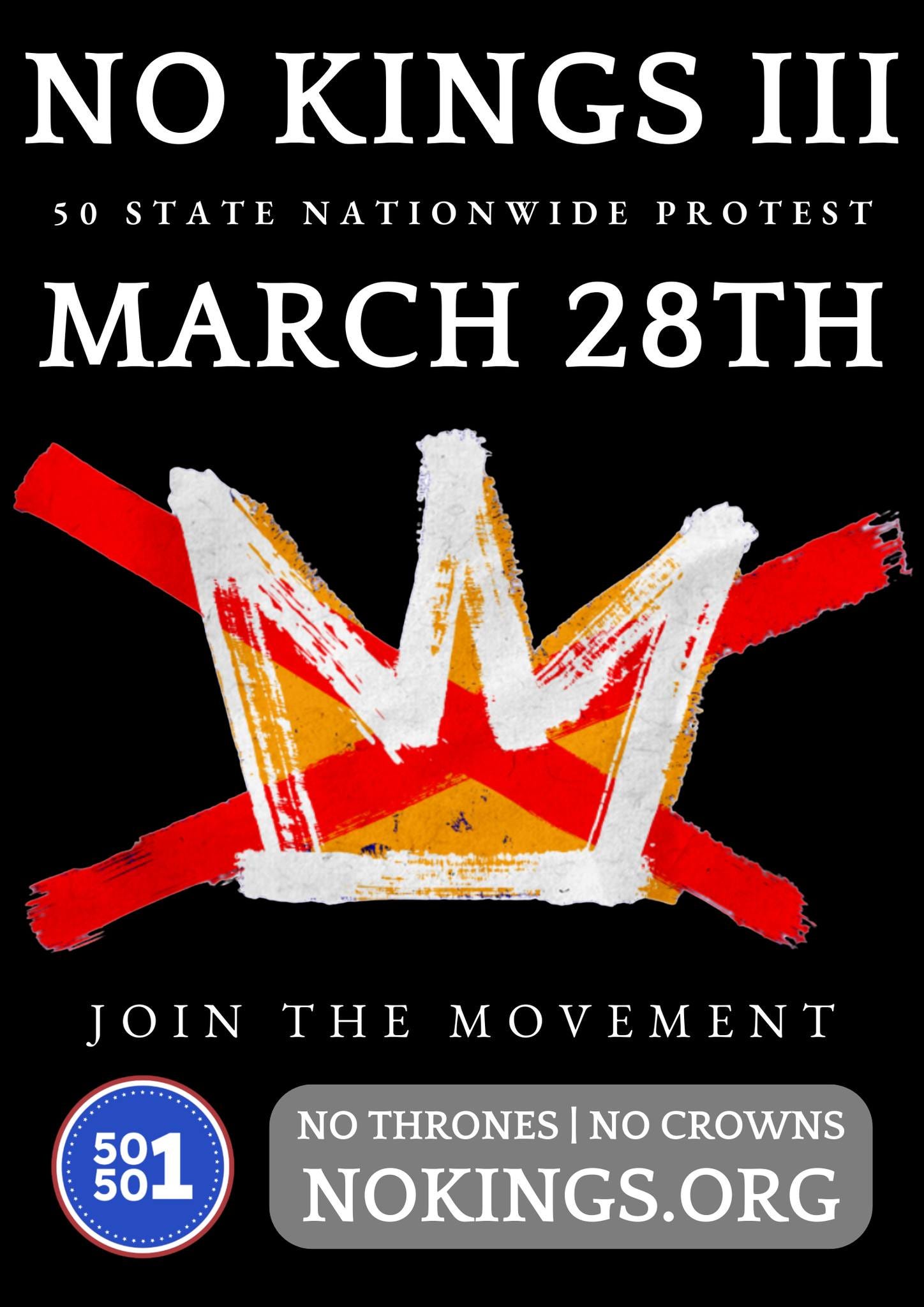
Get ready for the next mass mobilization set for Saturday, March 28th, with a flagship event planned for Minneapolis, Minnesota. Nokings.org
The Peaceful Solution-Part 2
Why a Spending Strike is the Best Option:
TINA: There Is No Alternative. There is no peaceful alternative.
Plan A
Plan A consists of phoning/writing your legislators, and street demonstrations, neither of which have worked nor give any sign of working. His Royal Heinous controls the majority party in the legislature and they are doing his bidding. As for street demonstrations:
From Professor Erica Chenoweth:
…”they often subject their participants to a higher risk of repression or communal violence from opponents. So movements that are capable of having the capacity to shift to methods of dispersion, like stay-at-homes or strikes or forms of economic noncooperation, tend to be much more effective because they have the capability of maneuver when the state begins to ramp up violence against them.”
Soft Secession
Federal funds make up 35% of California’s state budget, with $173 billion in federal grants awarded in Fiscal Year 2021 alone, making up a significant portion of state and local budgets for programs like health, education, and infrastructure.
Are they really going to anger HRH to the extent that he cuts off their federal funding?
Soft secession? Only to the point when HRH feels threatened.
He will move in with all his resources and stop it.
This soft secession idea is a political ploy by state officials to get their constituents to believe the officials are doing something to stop the takeover.
It’s also another distraction to the resistance in that it keeps us from organizing and uniting around what must be done and what will work. It’s another example of hoping for an easy fix, one that will not take any sacrifice.
In addition, soft secession is divisive, pitting blue states against red states, playing into the narrative of HRH, who wants to start a civil war. MAGA not only wants to “own the libs”, they’d like to kill as many as possible, to eliminate the opposition.
Targeted boycotts
Why targeted boycotts are ineffective:
Boycotts often fail because they require massive, sustained participation to create meaningful financial pressure, lack clear alternatives for consumers, generate insufficient negative media attention, and are easily weathered by companies waiting for the protest to fade. Additionally, the complex nature of modern capitalism and the proliferation of corporate conglomerates can make it difficult for boycotters to effectively target and impact a company's bottom line or reputation, especially when companies have multiple revenue streams, like real estate, that aren't affected by consumer boycotts.
In 2020, Goya Foods praised President Donald Trump on social media, which caused those in opposition to Trump to boycott their products. Trump loyalists simultaneously initated a counter-boycott, where consumers bought mass quantities of their products, in response. The boycott caused Goya profits to increase dramatically because Trump supporters started an opposing campaign.
The midterm election
Will it be free and fair? It won’t be. Will it occur at all? HRH has already said that if we’re at war there’ll be no election. Guess what? If it’s looking bad for him, we’ll be at war to stop the election. The election is important to him because having the majority in the legislature gives the fascist regime the look of legitimacy.
People are putting too much faith in what the midterms will do. They may have a beneficial psychologic effect but in reality the outcome will have little or no practical effect, unless the Dems can get 2/3 majority in the house and senate, which they won’t. They will not be able to undo anything HRH has done or pass new legislation because of his veto power.
The Courts
While some lower courts have ruled against HRH, slowing his takeover, the rulings have been fast tracked to the Supreme Court. It has almost universally ruled in HRH’s favor. SCOTUS members Roberts and Barrett may have an epiphany and save the country from civil war, but it’s doubtful. It’s going to be up to us to stop this.
Time is running out for a Peaceful Solution. Please Spread the Word!, far, wide, and quickly, before the fascists takedown our means of communication.

ICE does whatever they want. Whether allowed too or not. They seem to be in their on little world. If my kids were still school-age I would NOT send them to school. Why, because not everyone is brave enough to stand up to these bastards. I've been reading way too many that won't speak up out of fear.
I will put my body in harms way to protect children.
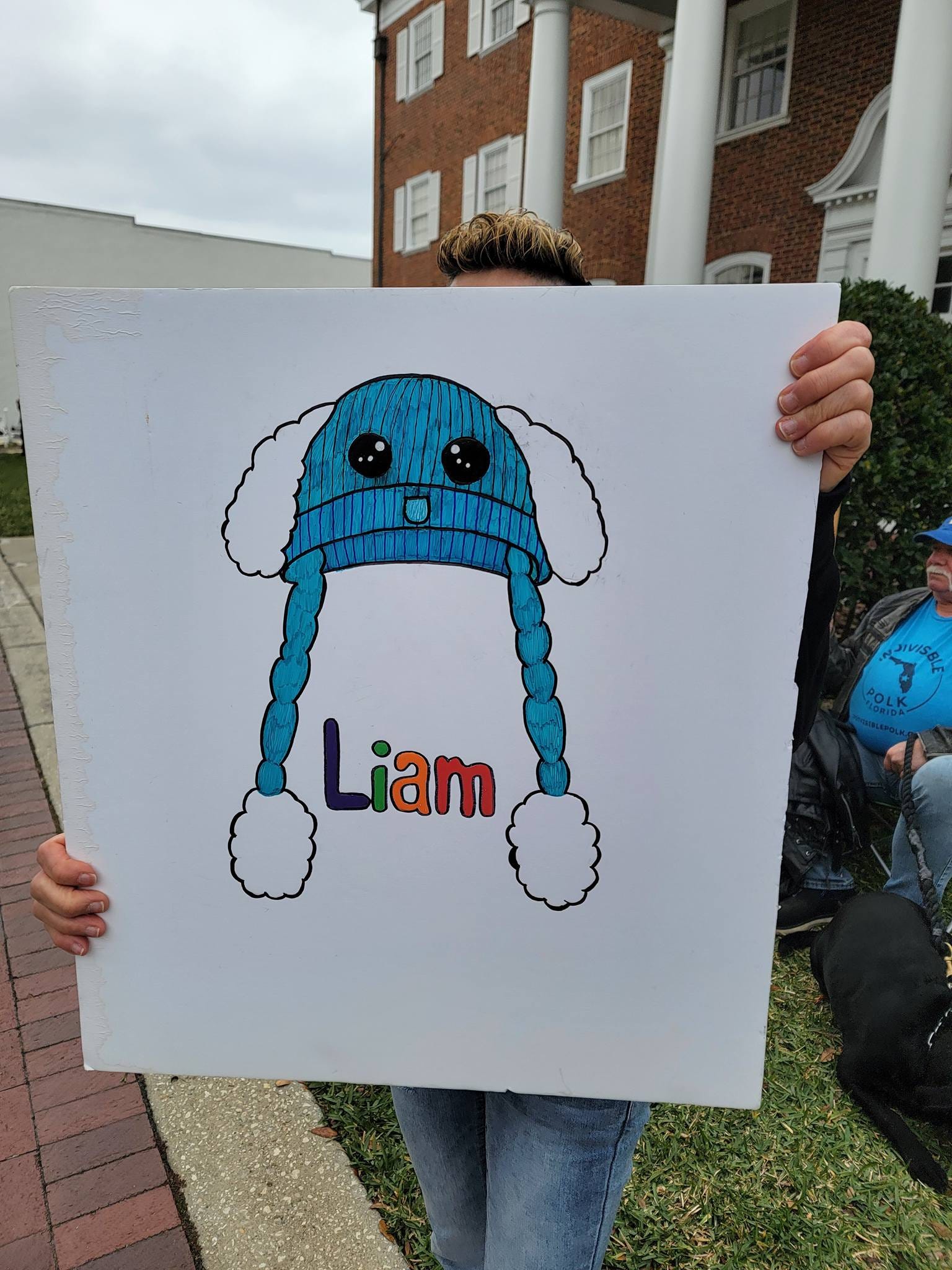
When I saw Liam Ramos fkn lifeless that CRUSHED me. We need to protect little ones. No matter what. They don't know what's going on just that they are now with strangers and Mommy and Daddy is gone.
FUCKING TRAFFIC.