


📌 NOTE FOR NEW READERS: The 50501 Movement organizes peaceful action across all 50 states to defend democracy. If this resonates, subscribe so you don’t miss the next mobilization update.
TL;DR
2025 squeezed us through a chain of policy choices and avoidable disruptions that raised uncertainty, kept costs stubbornly high, and pushed major life milestones further out of reach. This timeline shows us how we got here and what it suggests for 2026.
January 2025: Direction Is Set, Expectations Shift
The Trump administration opened the year by signaling a clear economic posture: deregulation in energy, faster permitting, and a business-first tone meant to boost domestic production. EO: “Unleashing American Energy” and GovInfo
Markets heard it immediately. Investors adjusted expectations. Energy companies recalibrated plans. Households? Not so much.
Energy policy works on long timelines. While it can influence costs eventually, it doesn’t lower rent, groceries, or insurance premiums in the short term. What January really did was set the tone: supply-side signaling and corporate confidence, not direct household relief.
For consumers already stretched, nothing felt easier yet but the framework was locked in.
February–March 2025: Tariffs Stop Being Hypothetical
New tariffs were announced and implemented rapidly, broadly, and under emergency authority, shifting trade policy from “negotiating tool” into a day-to-day cost driver “Presidential 2025 Tariff Actions: Timeline and Status”
Tariffs are paid by U.S. importers, not foreign governments. Companies then respond:
prices inch up
hiring slows
investments pause
supply chains are reshuffled at higher cost
Even before every detail was final, businesses didn’t wait for clarity. They priced uncertainty into everyday goods.
By March, volatility had become an economic input.
April–May 2025: Tariff Whiplash
2025 brought tariff whiplash.
On May 12, 2025, the administration issued an executive order modifying reciprocal tariff rates in the context of U.S.–China discussions EO: “Modifying Reciprocal Tariff Rates
That may have eased pressure temporarily but it didn’t restore predictability. The damage to planning was already done: contracts shortened, pricing got defensive, and “wait-and-see” became permanent.
A “truce” still leaves households paying the price of uncertainty.
Spring 2025: Uncertainty = Now Normal
Importers and manufacturers stopped assuming stability and started assuming change. Contracts shortened. Inventory strategies shifted. Risk buffers grew.
This is where many households began noticing something subtle and persistent… prices weren’t skyrocketing but they weren’t coming down either.
Even when the inflation rate falls, prices don’t reset, they just rise more slowly.
When uncertainty lasts long enough, it hardens into cost.
July 2025: Tax Relief Arrives But Meets a Wall of Costs
On July 4, a major tax and fiscal package became law: H.R.1 (Public Law 119–21) Congress.gov H.R.1 landing page and bill text showing Public Law No. 119-21 (07/04/2025)
Some households saw improved cash flow. Some businesses gained new incentives to invest. On paper, this looked like relief.
In practice, it collided with reality. Tax changes help at the margin but they don’t reset housing prices, insurance premiums, food costs, or interest rates. For many families, the extra room was quickly swallowed by expenses that had already risen.
If you’re wondering why people felt “no relief,” this is why.
Late Summer–Fall 2025: Housing Becomes the Clearest Casualty
By late summer, housing told the clearest story of all.
First-time homebuyers fell to a historically low share of purchases (21%), and the median age of first-time homebuyers reached 40 NAR: newsroom release and Fast Facts infographic
That single number carried enormous weight.
It means longer years of renting, delayed stability, postponed plans and it explains why “doing everything right” still isn’t enough for Americans.
For many Americans, 2025 was the year homeownership stopped feeling delayed and started feeling distant.
Fall 2025: The Shutdown
Another major “you might have forgotten this” moment, the federal shutdown disrupted economic measurement.
BLS reports it could not collect key October 2025 reference-period survey data for CPI and had to carry forward data in accordance with standard procedures (BLS CPI shutdown impact), and BLS notes October 2025 CPS (household survey) data were not collected and would not be collected retroactively (BLS CPS shutdown impact and BLS revised release dates).
The Richmond Fed called the missing October unemployment and CPI continuity historically unprecedented in modern series terms (Richmond Fed: “Phantom Figures”).
This is political dysfunction and households paid in uncertainty.
Fall–Winter 2025: Cracks Showing
As the year progressed, stress signals began appearing where analysts tend to look last.
Corporate bankruptcies rose with Reuters reporting filings on pace for the highest level in years using S&P Global Market Intelligence data (Reuters: corporate bankruptcies set to hit 15-year high).
Household stress showed up in credit. The New York Fed reported elevated delinquency levels in 2025 and detailed increases in certain categories (NY Fed Q3 2025 update and the Household Debt & Credit hub).
At the same time, the U.S. dollar weakened across 2025, Reuters reported the dollar index down sharply for the year (Reuters: Dec 30, 2025 dollar performance).
An economy can keep moving forward while becoming more brittle underneath especially when leadership keeps injecting uncertainty into the system.
The Cost Category
If you don’t name it, others will.
Treasury’s Federal Insurance Office warned early in 2025 that homeowners insurance was becoming more costly and harder to procure for millions of Americans (Treasury FIO press release: “Homeowners Insurance Costs Rising, Availability Declining”)
This is important because it wasn’t just “inflation.” It was life overhead: the costs you can’t opt out of.
December 2025: A Mixed Ending
The data told a complicated story.
The Fed began cutting rates in 2025 (FOMC statement Sept 17, 2025 and FOMC statement Dec 10, 2025).
Mortgage rates eased somewhat late in 2025 (Freddie Mac’s weekly survey: PMMS).
But households weren’t reset, they recalibrated.
Spending habits changed. Risk tolerance dropped. Long-term plans were delayed or rewritten.
2025 didn’t break the economy but it did reshaped behavior.
And behavior is often the most honest economic signal of all for what’s to come.
Sources
NAR (2025): First-time buyer share 21%; median age 40
White House: EO “Unleashing American Energy”
Congress.gov: H.R.1
CRS: Presidential 2025 Tariff Actions (R48549 PDF) Congress.gov
White House: EO May 12, 2025 modifying reciprocal tariff rates The White House
BLS: CPI shutdown impact
Richmond Fed: “Phantom Figures” Federal Reserve Bank of Richmond
NY Fed: Q3 2025 household debt/delinquency update Federal Reserve Bank of New York
Reuters: 2025 dollar index decline Reuters
Reuters: corporate bankruptcies trend Reuters
Treasury FIO: homeowners insurance costs/availability warning U.S. Department of the Treasury
Freddie Mac: PMMS mortgage rate tracking Freddie Mac
Show up for the Free America Walk Out
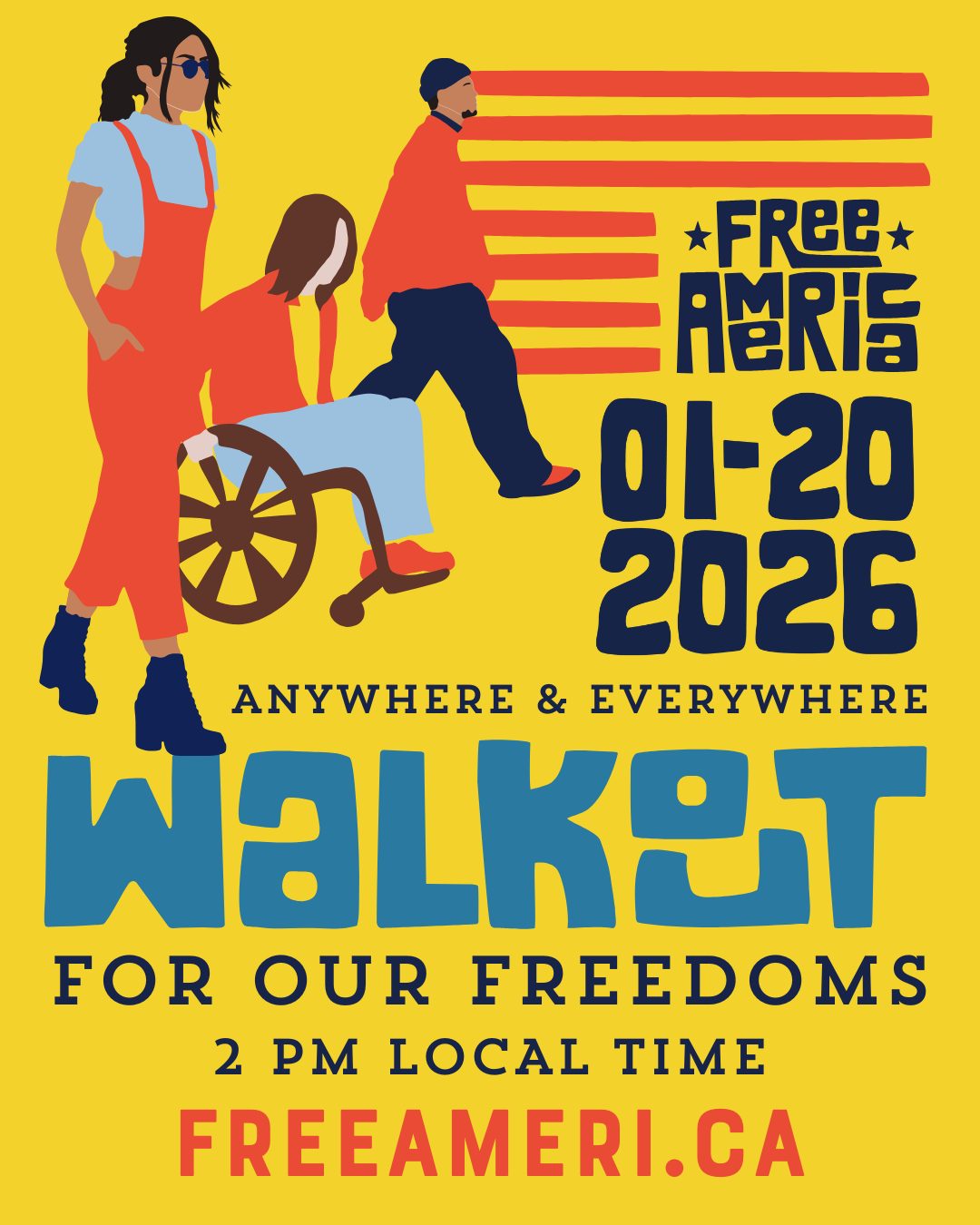
On January 20, 2026 at 2 PM local time, we walk out of work, school, and commerce. Not as performance. As public noncooperation. As proof of numbers. As a visible refusal to normalize the construction of a coercive state.
Do this today (2 minutes):
Commit here: https://www.freeameri.ca/
Put it on your calendar: Jan 20, 2026 2 PM local time
Text two people (two direct asks). Copy/paste this to them:
“Jan 20, 2 PM local. Free America Walk Out. I’m going. Will you?”Help us get the word out by sharing:
I support the 50501 movement and have participated in marches here in Austin each time. I am afraid that the January 30th Walk Out will be a failure and will not make a big impact statement. The individuals affected most by Trump policies can't "walk out". Teachers, day care workers, hospital employees, store employees, etc. Many of these potential participants can't afford to leave their job. As we have seen in past peaceful protests, the marches have grown larger each time. I fear that the walk out will be scantly represented, and appear as a failure to Trump and his henchmen.
Thanks for the recap of the actual economic impact on regular folks.