


📌 NOTE FOR NEW READERS: The 50501 Movement organizes peaceful action across all 50 states to defend democracy. This publication is nearly 100k readers strong and growing. If this resonates with you, hit subscribe.
SUMMARY
On President’s Day, Broadway dancers performed a choreographed memorial for Renée Nicole Good and Alex Pretti at the Lincoln Memorial then were stopped shortly after at the Kennedy Center by 23 law enforcement officers. People across the country, people who had never been politically active are showing up to city council meetings, standing at intersections with signs, and applying creative strategy to grassroots organizing. Resistance is evolving from marches to methods and the response from those in power tells you, it’s working.
There is a moment in movements when protest stops being as reactive and starts becoming something that touches us emotionally. Something that doesn’t just express anger but communicates it with a precision that forces people to pay attention. We are in that moment.
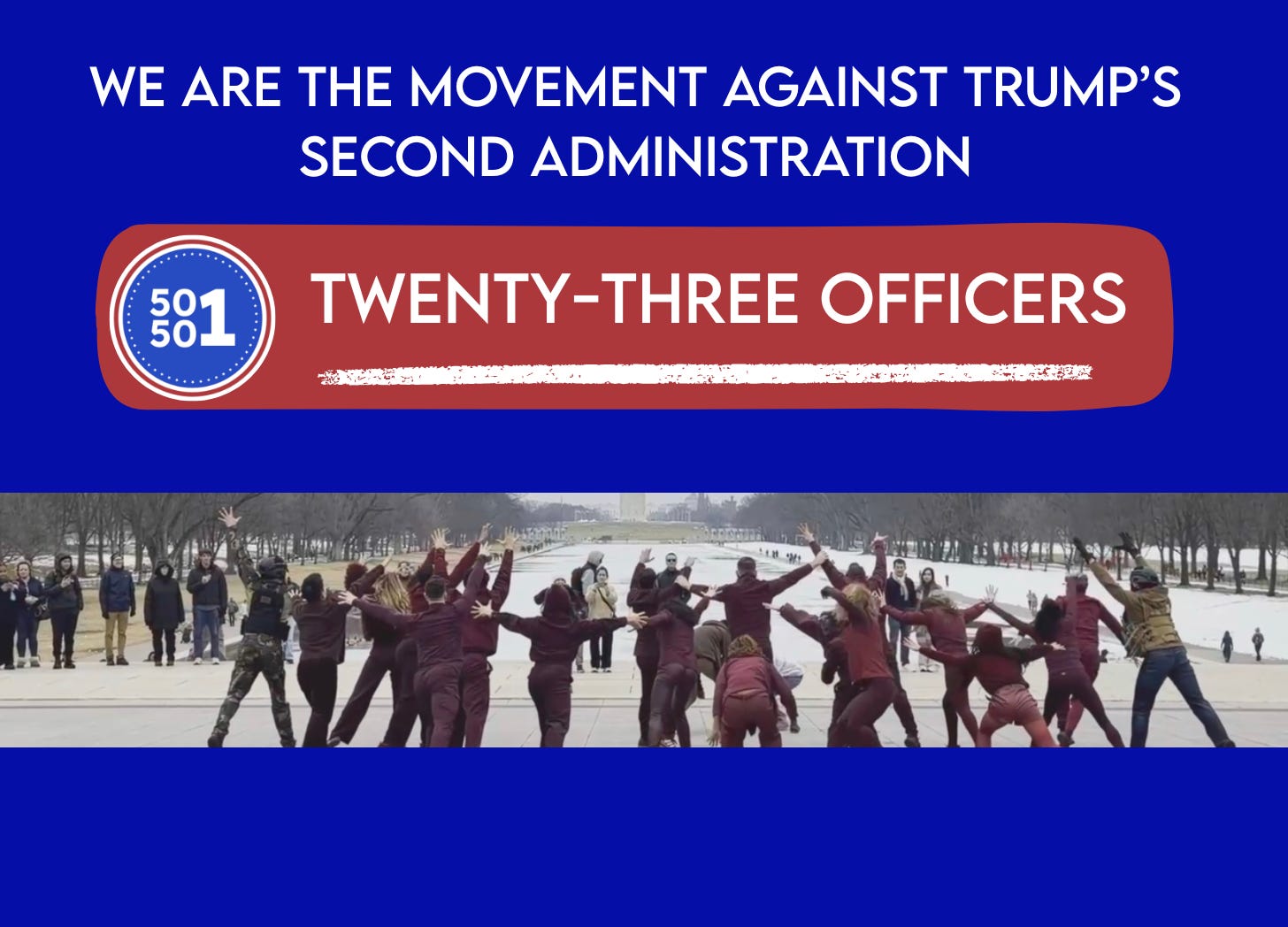
On President’s Day, a group called First Amendment Troop staged a choreographed performance on the steps of the Lincoln Memorial. The dancers, twenty-two of them, drawn from the casts of Hamilton, MJ: The Musical, Wicked, and former Kennedy Center performers, moved through a piece that dramatized the final moments of Renée Nicole Good and Alex Pretti, two people killed by ICE agents in Minneapolis. The piece was directed by Bryan Buckley, a two-time Academy Award-nominated filmmaker, and choreographed by Matthew Steffens, whose credits include multiple Tony Award-nominated productions. (Playbill) The performance was set to music that included songs by Rhiannon Giddens, one of many artists who have cancelled their engagements at the Kennedy Center after significant leadership changes reshaped its board and programming direction.
The Lincoln Memorial performance was peaceful, and it played in full….
Then the dancers moved to the Kennedy Center. They made it partway into the routine before twenty-three officers stopped them, one more officer than dancer, saying they were not allowed on federal property.
The White House Communications Director, Steven Cheung, responded on social media by calling the memorial for two killed Americans “weak, corny, and lame” and describing it as “total loser and simp behavior.”
The Kennedy Center, which President Trump announced in February 2026 will close for approximately two years beginning July 4, 2026, for major renovations (PBS/AP) after a wave of artist cancellations and declining ticket sales, became the backdrop to an image the administration did not want: federal officers outnumbering dancers at a memorial for people killed by federal agents.
That’s what effective creative resistance does. It created an image that could not be unseen and a contrast that could not be explained away. Creative resistance works.
Performance at the Lincoln Memorial and Kennedy Center
Creative Resistance is Everywhere
But the ResistDance isn’t the only version of creative resistance happening right now. It may be the most theatrical, but it isn’t the most common.
The most common version is happening in city council chambers, at intersections, and in social media groups where people are teaching each other how to get creative.
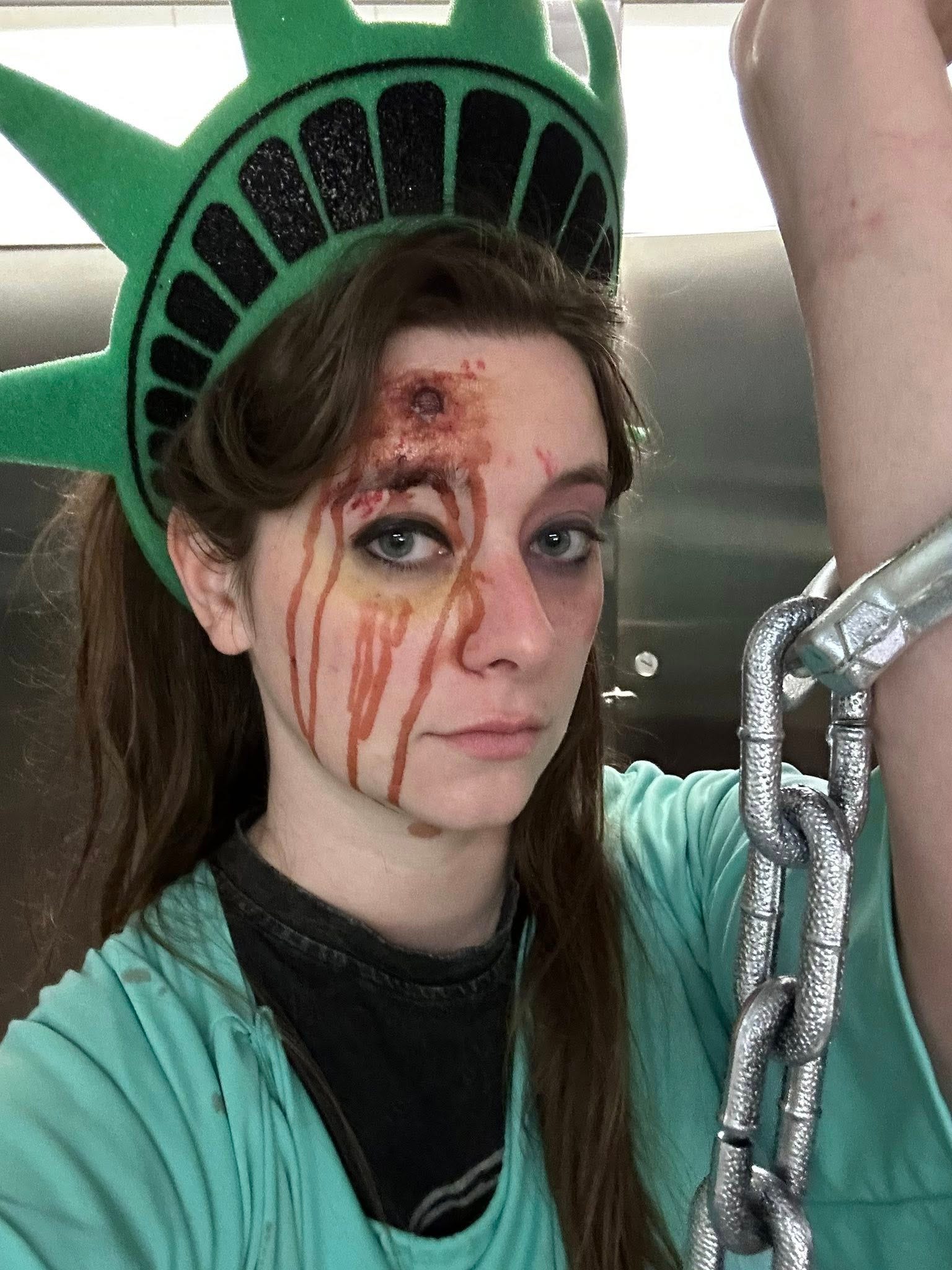
Brittany posted in The 50501 group and described herself as someone who had never been involved in politics before and now she’s showing up to local city council meetings with a growing group of community members. And she’s making a statement with her wardrobe while at it! Dressed as the Statue of Liberty in distress… bruised, bloodied, but still standing. Brittany turned her presence into something no one in that room could look away from. “We keep showing up,” she wrote, “and the crowd gets bigger and bigger. We realize we are not alone.”
She added: “I can’t speak but I can still show up and make a point.”
That sentence is powerful because it captures something that loud voices in movements can easily miss: presence itself is a form of pressure. Showing up to a city council meeting and sitting in the room, visible and unmissable, sends a message that no email or phone call can replicate. The people making decisions know you’re watching. And they know you’ll be back.
The Creative-Psychology of Showing Up
In another corner of the movement, a creative activist, Yvonne, offered organizing advice. The strategy is deceptively simple, stand at an intersection a week before your event with signs that read “MEET US HERE NEXT WEEKEND.” This comment was in response to our No Kings flyer for March 28th.
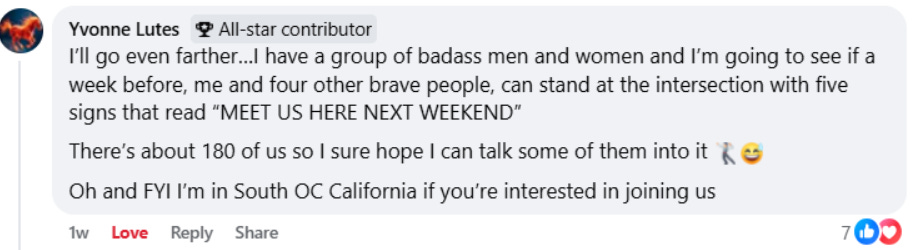
Yvonne has a group of about 180 people in South OC, planning to put five of them at an intersection the week before No Kings 3 (March 28th!) This is creative, strategic, and a visible, repeated, community-level message that something is happening here and it involves your community.
When Creative Symbols Do the Talking
And then there are the images that circulate without attribution, without organizers, without a plan, just someone, somewhere, making a choice about what a public space should say.
This week, a photo circulated of someone adding the word “ICE” beneath a stop sign to our 50501 FB group, transforming a traffic sign into a political statement. No explanation needed. The message is immediate, visual, and clear.
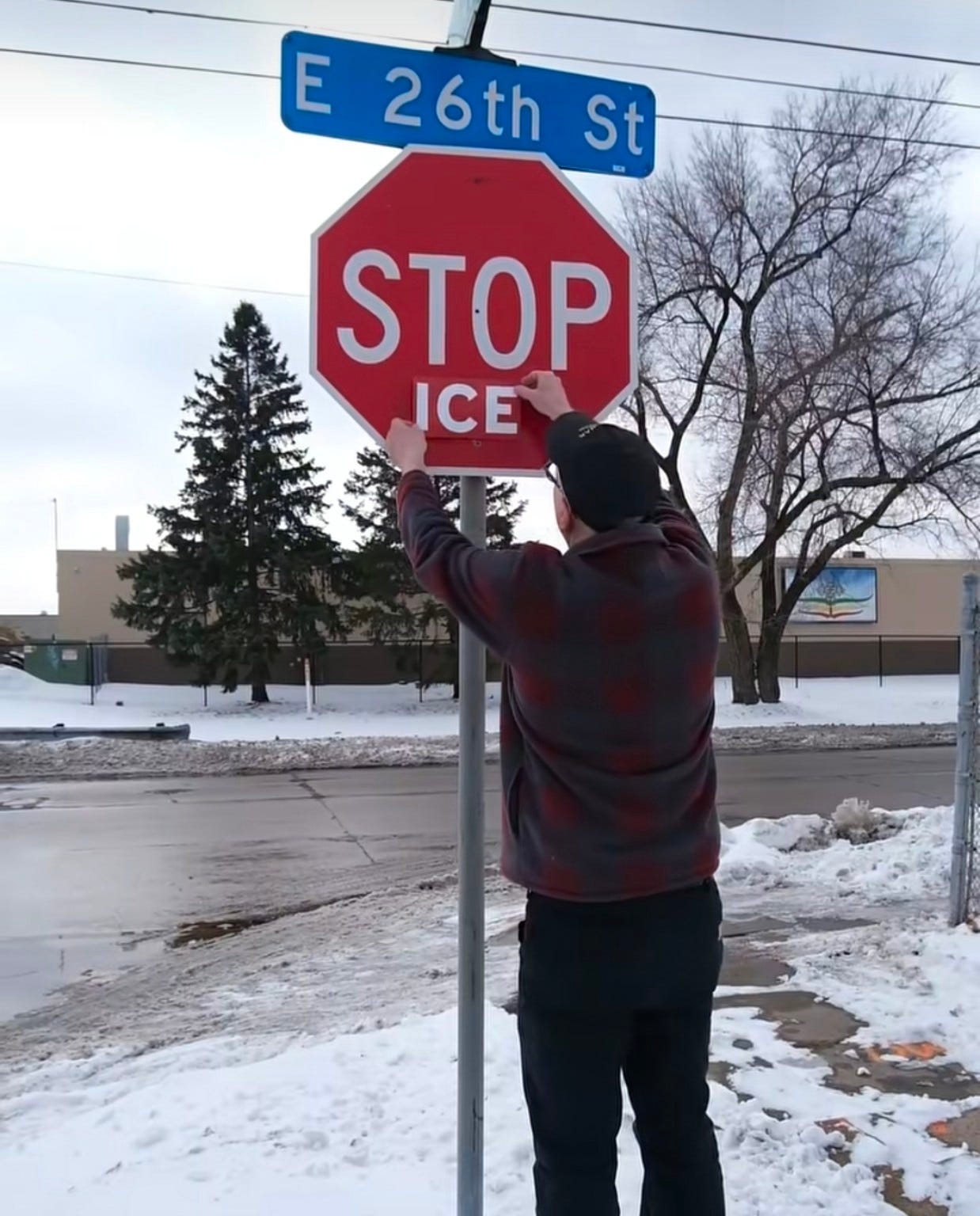
Whether one agrees with the tactic or not, it reflects something real about where civic expression is heading.
Protest language is increasingly borrowing from the built environment and using symbols, infrastructure, and everyday objects as canvas.
Acts like this sit at the intersection of expression and property law, and they tend to spark exactly the kind of debate about boundaries that a healthy democracy needs to be having, and the debate is part of the process.
None of these creative actions emerged from a single organization, central plan, or a shared strategy guide. They emerged independently, in different cities, from different people, for different reasons.
Each action is repeatable and creative, designed to create a pattern that builds over time and inspires others.
Brittany’s city council attendance grows each week. Yvonne’s methodology is designed to generate momentum days before No Kings. The ResistDance was choreographed to be captured on phones and amplified through sharing. Even the stop sign carries a message that will be read by every car that passes it while it’s up.
This is movement maturation.
When protest becomes creative, and repeatable, what will power do?
The Kennedy Center gave us one answer on Monday. Twenty-three officers for twenty-two dancers. A memorial for two killed Americans called “weak” and “corny” by the White House.
The response tells us that creative dissent is being treated as consequential.
Every person reading this has a skill that could serve this movement in different ways. What’s yours? Are you a graphic designer, a teacher, a writer, a musician, a photographer, a retired professional with decades of institutional knowledge?
What would it look like to apply that skill to build something that inspires and motives others? What form of creative resistance feels most sustainable to you? Artistic performance, local government attendance, strategic visibility campaigns, or something else entirely? Maybe you already have, or currently are, share it with us in the comments:
*Thank you for being here. Thank you to the readers who share these posts, who send ideas and inspiration from their local groups, who show up to city council meetings. This publication exists because of you.
Sources & Resources
On the ResistDance performance:
Playbill: Dancers From Hamilton, MJ, Wicked Stage Protest Performance Outside of the Kennedy Center
BroadwayWorld: Video | ResistDance Honors Renée Good & Alex Pretti in DC
On the White House response:
On the Kennedy Center:
CNN: Trump Says Kennedy Center Will Close in July for Two-Year Renovation
PBS/AP: Kennedy Center to Close for 2 Years for Renovations in July, Trump Says
CBS News: Kennedy Center to Close for Construction for 2 Years, Trump Says
Playbill: Kennedy Center to Close for 2 Years Following Artistic Cancellations
Getting involved in creative resistance:
Find your state’s 50501 group (*Due to the grassroots nature of 50501, this list is not comprehensive.)
Attend your next local city council or school board meeting
Use 5 Calls if you want to apply phone pressure with a script
Use Resistbot to turn text messages into letters to your representatives
If you have a professional skill | design, writing, video, marketing, event planning | offer it to your local organizers
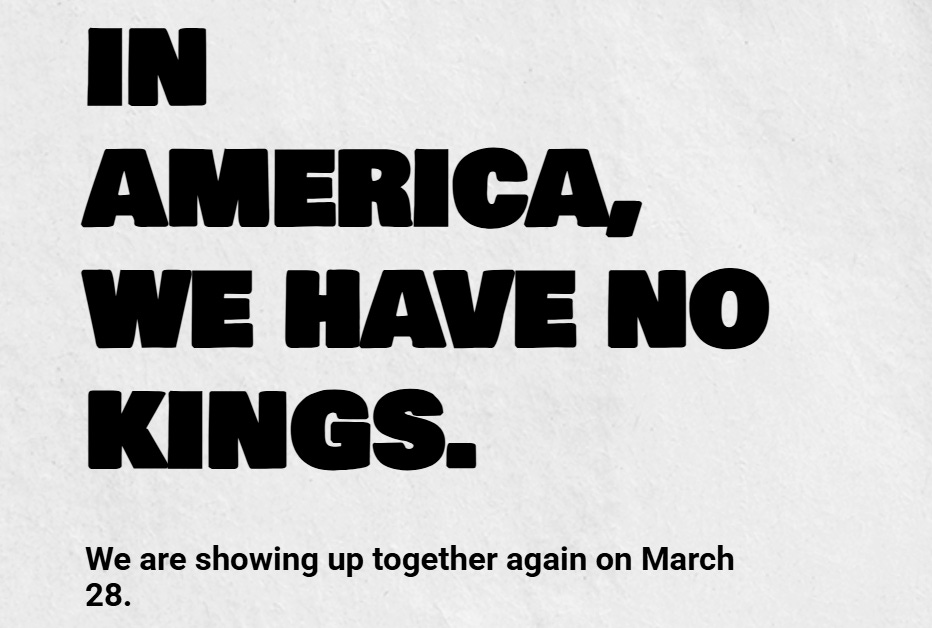
NO KINGS MASS MOBILIZATION
MARCH 28, 2026
If you missed the announcement, read it here: ANNOUNCEMENT: The Next NO KINGS Mobilization. And if you’re a beginner organizing locally, use this starting-guide: How to Organize a Protest.
Last fall while visiting Ireland, the number 22 kept recurring on our trip, a room number, a table number, a food receipt, a sober anniversary, 2yrs, 2 months,2 days. After that a grocery trip, 22 items, totaling $220.00. We knew it had meaning, and here we are, Renee, and Alex, 22 days apart, and 22 dancers. My heart is hurting and the sheer hate and terror which is being inflicted on our country at the hands of ICE, still feels like a movie. However it’s not, I love this piece, and I am grateful that these brave and incredible artists, could exercise their rights to show respect to these 2 beautiful people, who were robbed of their right to live. Renee, and Alex, Thankyou for your bravery and sacrifice.
ResistDance is so powerful! We need all the arts - dance, singing, resistance street art, incredibly creative signs, performance of all kinds. At our Free America Walkout, we got a brass band to lead a second line through the center of town. Big, bold and lots of fun!