


📌 NOTE FOR NEW READERS:
The 50501 Movement organizes peaceful action across all 50 states to defend democracy. If this resonates with you, hit subscribe to stay connected.
TL;DR
This year’s Black Friday headlines shouted “record sales!”
But beneath the media headlines:
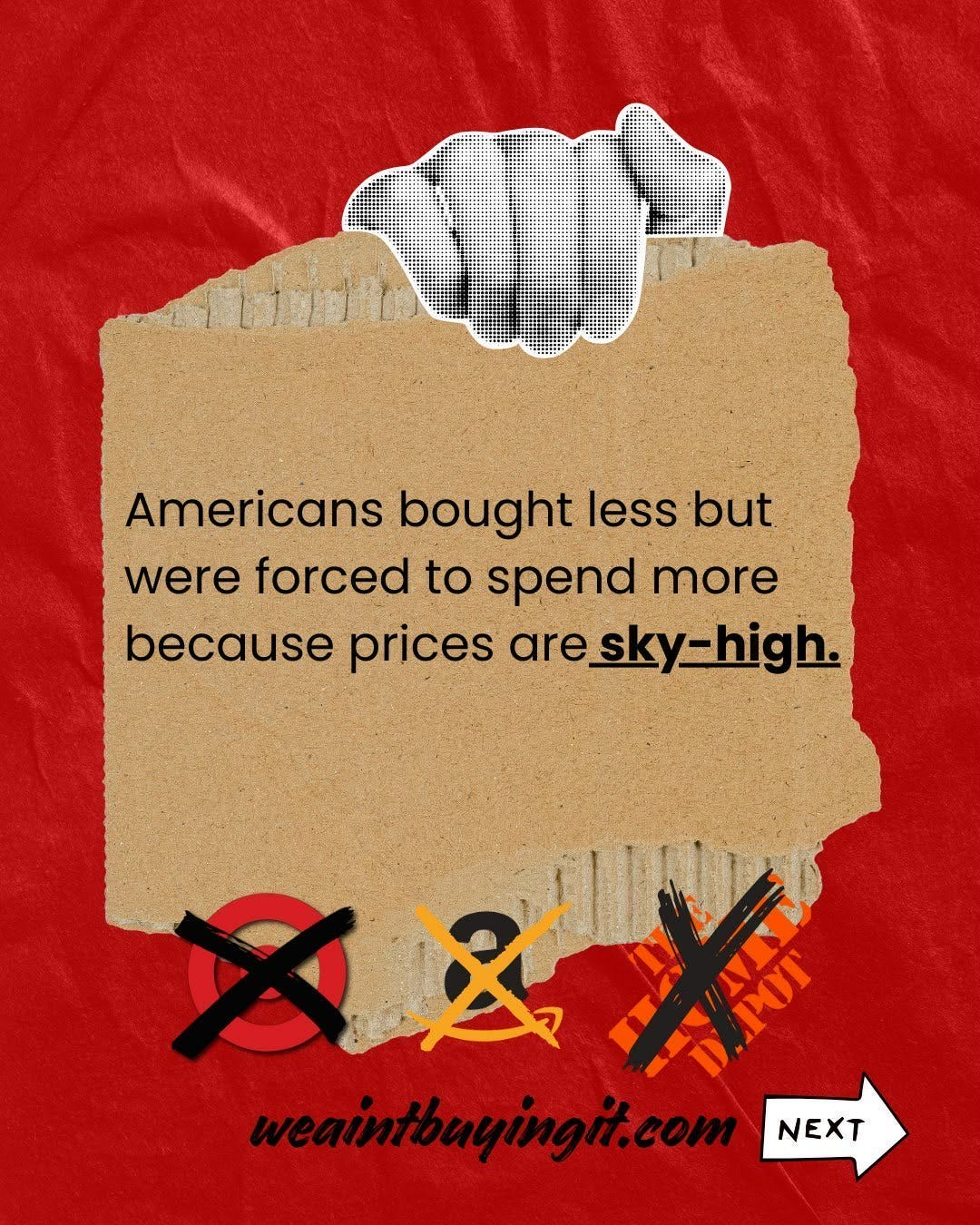
Americans bought fewer items than last year.
Total dollars went up mainly because prices went up.
Shoppers redirected an estimated $109 billion toward small businesses.
Boycott pressure on Target and Home Depot is starting to show up in their numbers.
This is shows us economic strain and a growing movement of conscious consumers.
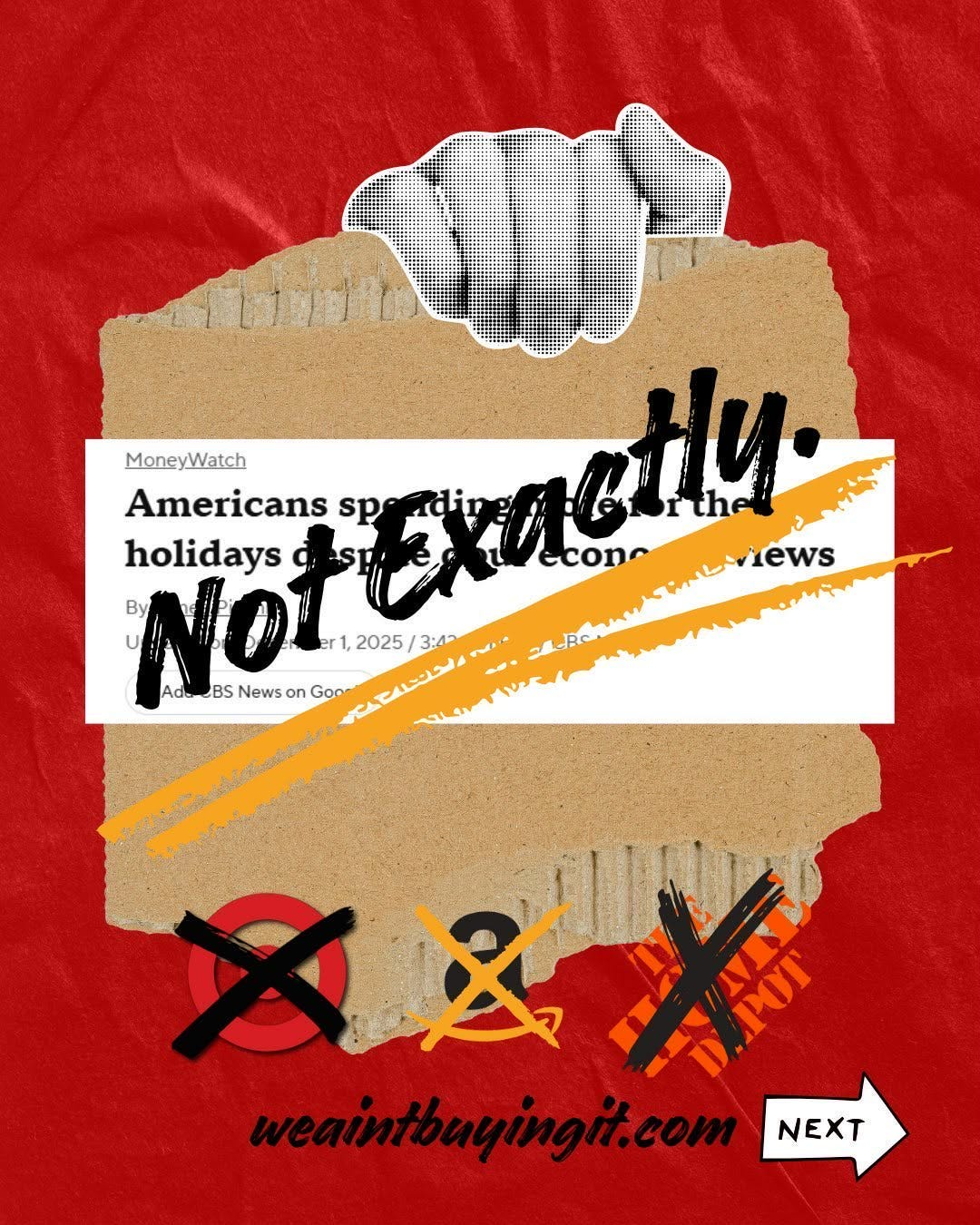
The “Record Sales” Storyline
If you only saw the headlines, you heard a very loud message:
“Black Friday breaks records. Americans spend more than ever.”
On cable news and in financial outlets, the narrative was everywhere:
Sales are up.
Shoppers are back.
The economy is fine.
That’s the surface story.
The more important question is: how did those “record” numbers happen?
Underneath the Record Hype
When we take a step back and carefully look at the data, a different picture emerges.
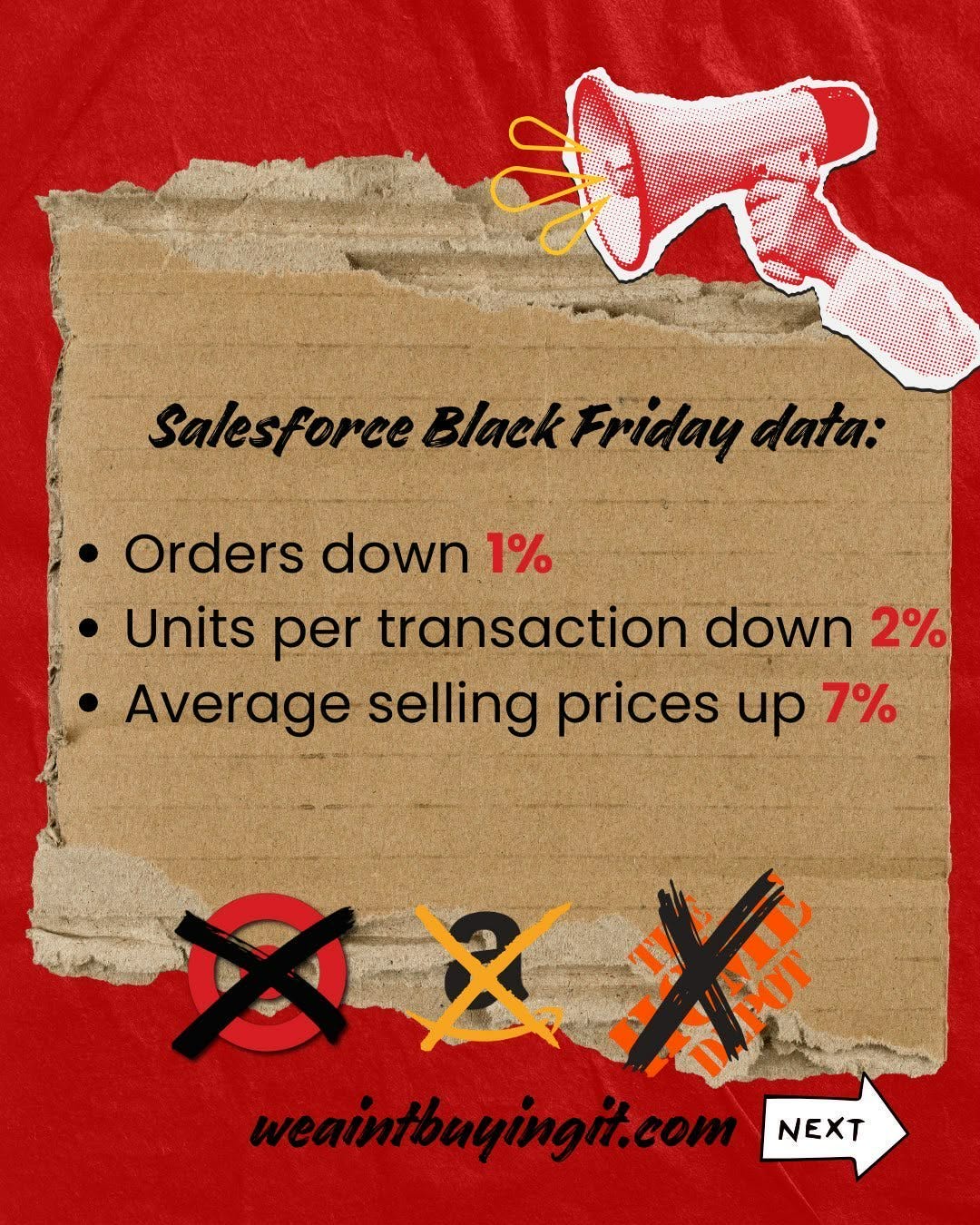
According to Salesforce:
Americans bought about 1% fewer items than last year.
The number of units in each order fell by about 2%.
Yet total spending went up about 7%.
The reason: average prices jumped around 7%, helped along by inflation and tariffs.
On the surface, sales look strong.
But once you factor in higher prices, shoppers are feeling “the bite of inflation.”
Put more plainly:
People are not going on a buying spree.
They’re paying more for less.
That doesn’t feel like economic strength.
It feels like people being squeezed and told to call it prosperity.
The Trick Hidden in the Word “Record”
This gap between “record sales” and “buying less” is important here.
When media coverage focuses only on the top-line dollar amount, it sends a different message:
If sales are high, then worries about the cost of living must be exaggerated.
If consumers are “spending freely,” then everything must be fine.
But the underlying numbers show us something else:
People are not suddenly flush with cash.
They’re stretching to afford basics.
And many are deciding to use what they do have differently.
Black Friday’s Real Winners: The Little Guys
Alongside those headline numbers, another trend is emerging.
An Intuit QuickBooks survey of 6,000 consumers found that this holiday season, Americans plan to spend 44% more at small businesses than last year.
That’s an estimated $109 billion moving away from big corporate chains and toward:
Local shops
Independent businesses
Community-based and values-driven stores
During the We Ain’t Buying It period, Little Blue Cart, a directory connecting shoppers with progressive small businesses, reported record traffic.
So people were not just staying home.
They were actively looking for alternatives to Amazon, Target, and Home Depot.
In a system that often tells us our only option is to accept whatever the biggest corporations offer, that’s significant.
It means people are beginning to treat their spending as a choice, not just a habit.
Target, Home Depot, and the Cost of Ignoring Us
You can also see this shift in the companies that have become symbols of something larger.
Target
Once branded as a more progressive big-box store.
Rolled back parts of its DEI commitments earlier this year under pressure from the right.
Has since faced boycotts from the other direction.
Now:
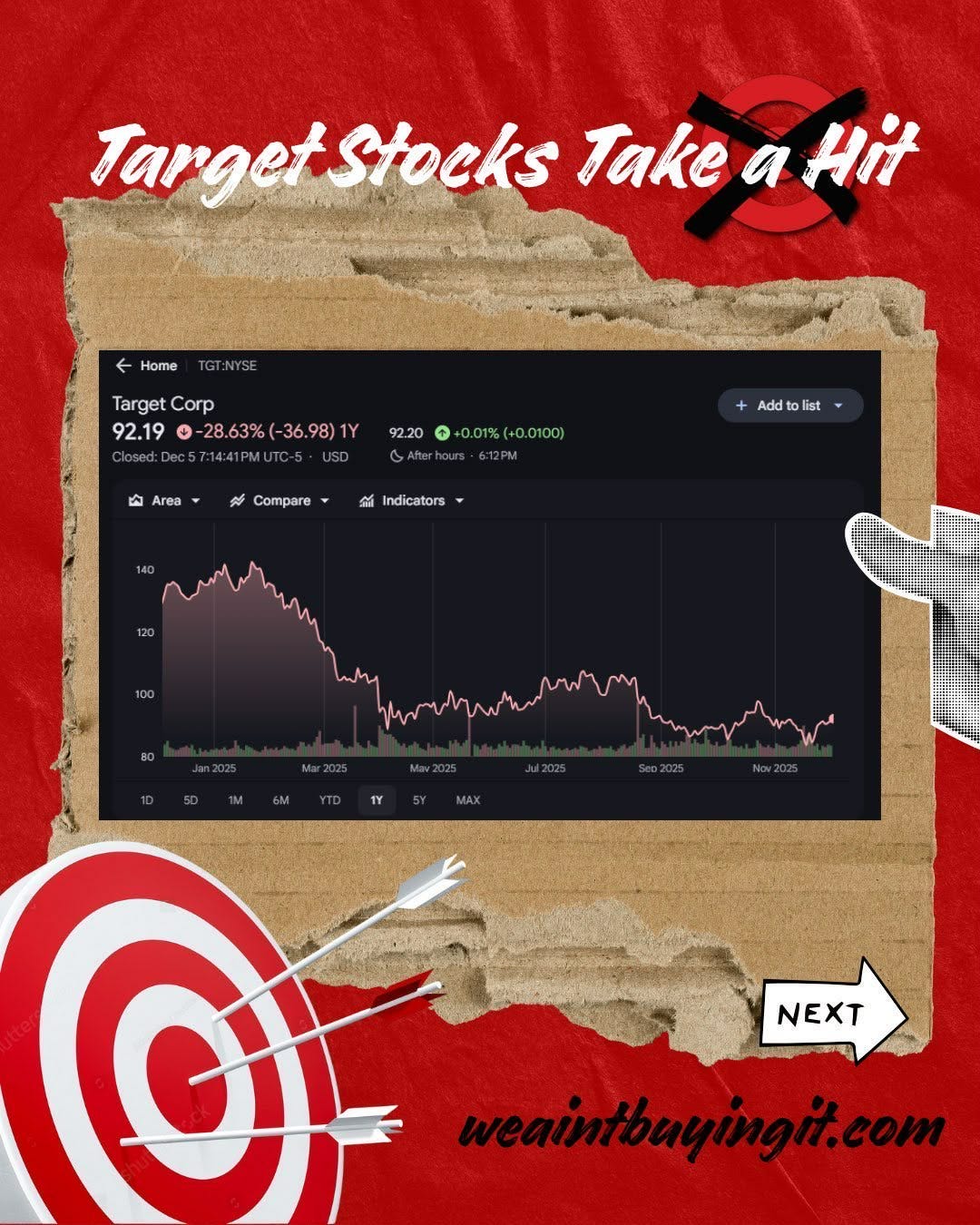
Target’s stock is down about 61% from its 2021 peak.
The company announced 1,800 corporate layoffs, its first major cut of that size in about a decade.
Comparable sales and store traffic have declined in recent quarters, even with heavy Black Friday promotions.
No single boycott explains all of that.
But it’s harder and harder for executives to pretend these choices don’t have consequences.
Home Depot
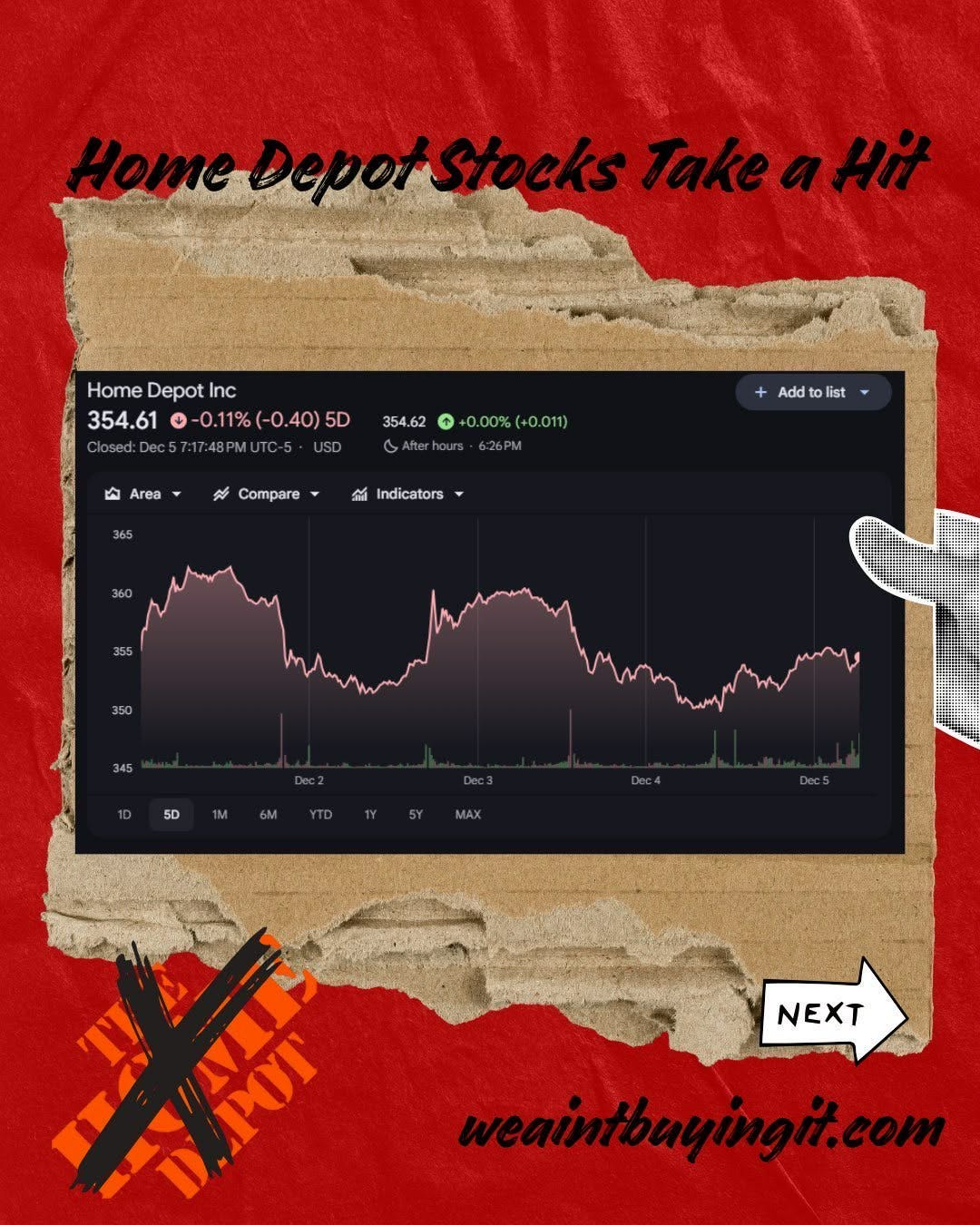
Home Depot has faced sustained criticism for allowing ICE arrests of day laborers in its parking lots.
Immigrant-rights groups and worker organizations have protested.
Calls to boycott Home Depot have spread through many of the same networks encouraging people to shop small and worker-friendly instead.
Again, this isn’t a where one weekend of protest brings down a giant.
But the direction of travel shows us that more people want their money aligned with their values.
The We Ain’t Buying It Campaign
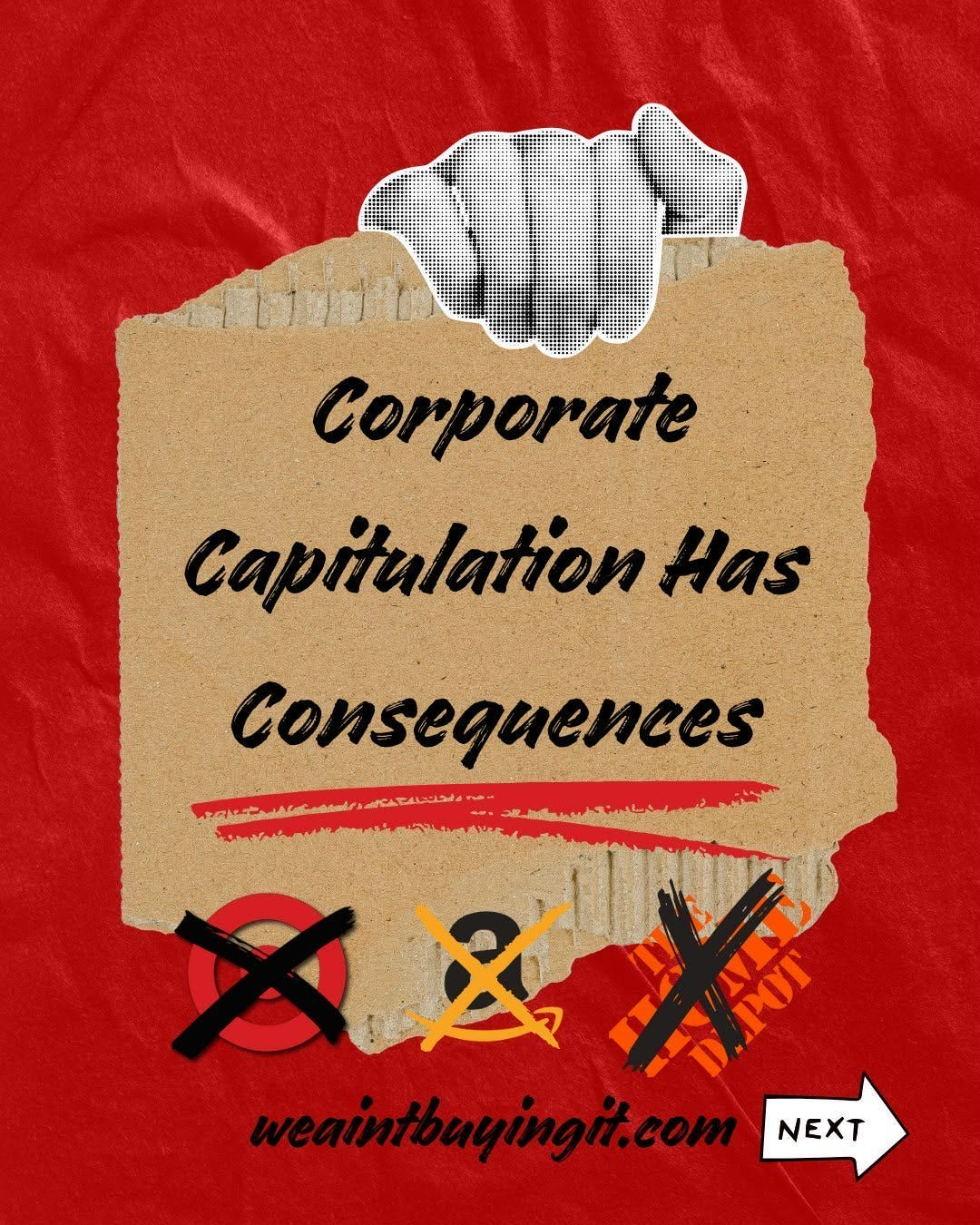
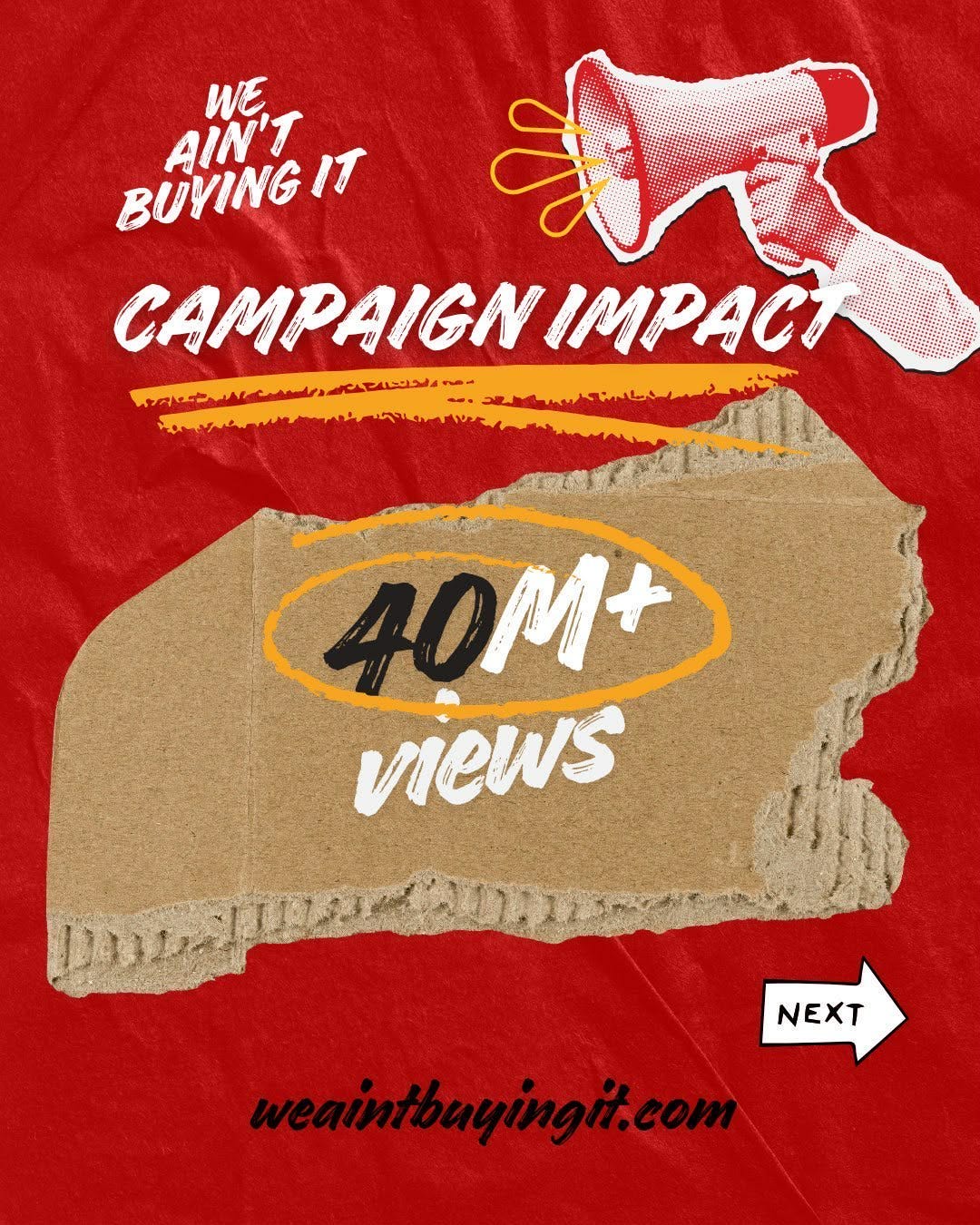
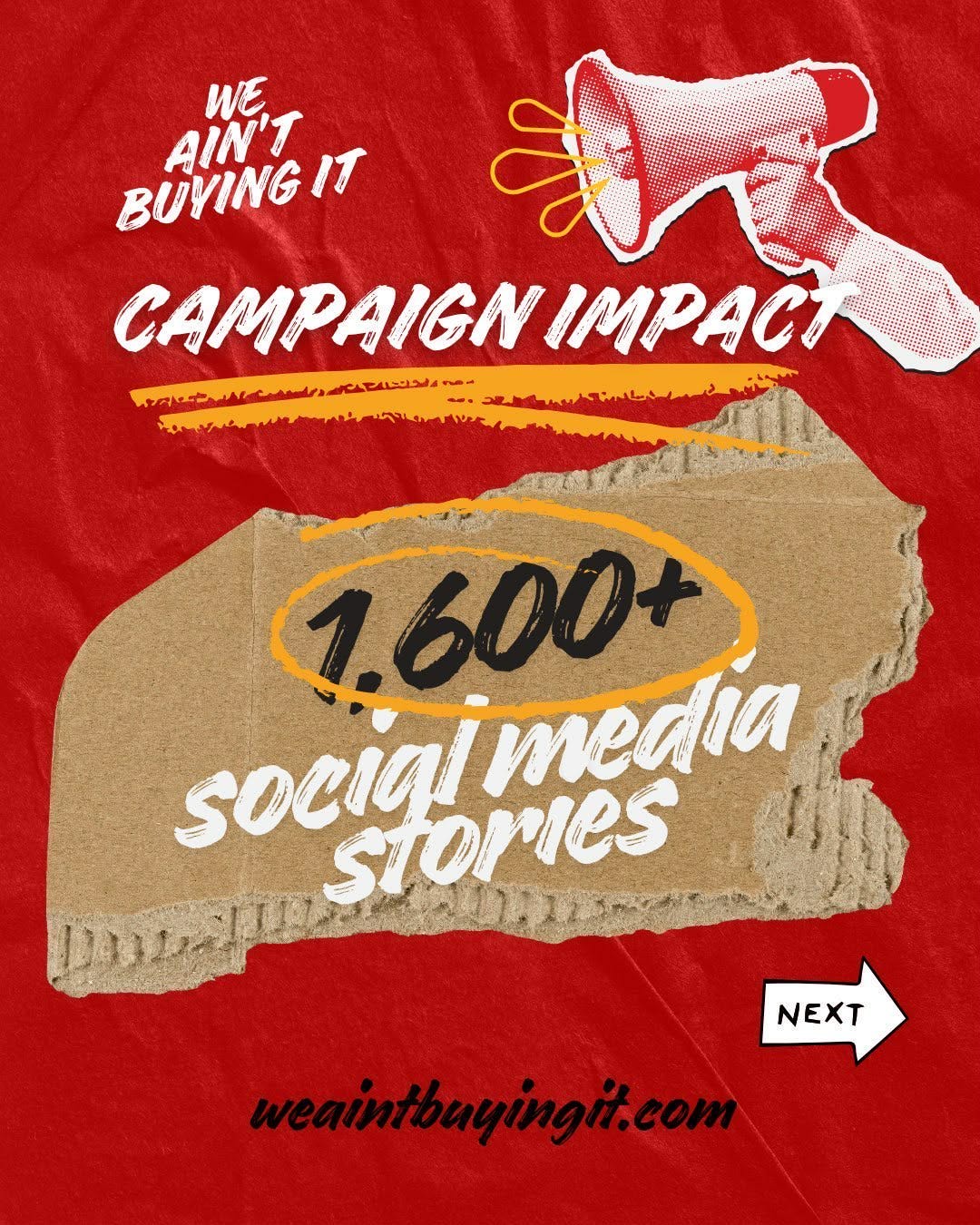
This year, that energy was organized into The We Ain’t Buying It campaign that brought together hundreds to thousands of organizers and groups, they asked people to do three things from Thanksgiving through Cyber Monday:
Boycott blackout:
Don’t spend at Amazon, Target, or Home Depot.Shop small:
Support small and local businesses instead.Pledge:
Think of yourself as a conscious consumer, not a “holiday shopper.”
Many people said yes.
So What Did Black Friday Do?
So what did this Black Friday weekend reveal?
“Record” dollar sales built on inflation, not a surge in buying.
A meaningful shift of money toward small and local businesses.
Early signs that sustained boycott pressure can show up in stock prices, layoffs, and strategy changes.
If we only accept the official story, “everything is booming, nothing to see here”, we miss all of that.
But if we look underneath, we see something else starting to form:
An experiment in economic citizenship.
Building the Economy We Want
We are still living in a moment where:
Corporations pour money into politics.
Some back candidates and policies that weaken democratic institutions.
Communities are left to absorb the cost.
In that context, everyday choices begin to add up:
Where you buy your groceries.
Which store you pick for holiday gifts.
Whether you choose a big chain by default or pause to look for a local option.
Those decisions will not fix everything on their own.
But they are part of deciding what kind of economy we are willing to sustain.
This Black Friday suggests more people are starting to think that way.
An Invitation
The 50501 Movement organizes peaceful action across all 50 states to defend democracy.
If you’re ready to keep using your economic power in ways that reflect your values, you can join our newsletter here:
Join the Conversation
Where did you redirect your dollars this Black Friday weekend and why?
Your answers help map the new economy people are quietly building.
Sources & Further Reading
Americans spending more for the holidays despite dour economic views CBS News MoneyWatch
https://www.cbsnews.com/news/black-friday-cyber-monday-2025-spending-deals-inflation/You’re paying more for less this shopping season. Now there’s proof. CNN (syndicated via WRAL)
https://www.wral.com/story/you-re-paying-more-for-less-this-shopping-season-now-there-s-proof/22269794/Holiday Shopping Survey 2025: $263B Total Spend, $109B to Small Businesses Intuit QuickBooks
https://quickbooks.intuit.com/r/small-business-data/holiday-shopping-survey/Winners and losers of Black Friday 2025 Retail Dive (Salesforce data: order volume down 1%, prices up 7%)
https://www.retaildive.com/news/winners-losers-black-friday-2025/806610/Black Friday 2025: Who Won Traffic, and Why? RetailWire
https://retailwire.com/discussion/black-friday-2025-winners/AMZN, WMT, TGT: Retail Stocks Diverge despite Record $44.2B Holiday Online Sales TipRanks
https://www.tipranks.com/news/amzn-wmt-tgt-retail-stocks-diverge-despite-record-44-2b-holiday-online-sales
We Ain’t Buying It & Boycott Campaign
Black Voters Matter, Indivisible and Until Freedom launch campaign to put economic pressure on corporations to defend democracy and freedom Black Voters Matter
https://blackvotersmatterfund.org/black-voters-matter-indivisible-and-until-freedom-launch-campaign-to-put-economic-pressure-on-corporations-to-defend-democracy-and-freedom/What is the latest Black Friday boycott – and will it work? The Guardian
https://www.theguardian.com/us-news/2025/nov/24/what-is-the-latest-black-friday-boycott-and-will-it-workCoalition of over 220 organizations demand corporate accountability from Home Depot, Target and Amazon Black Voters Matter
https://blackvotersmatterfund.org/coalition-of-over-220-organizations-demand-corporate-accountability-from-home-depot-target-and-amazon/We Ain’t Buying It | Coalition Campaign Site https://weaintbuyingit.com/
I didn’t shop at all, anywhere, from the Tuesday before Turkey Day until the Tuesday after.
I’m redirecting all my Home Depot purchases to a local hardware chain.
Spent less money this year but the money I did spend I spent on small businesses. I’m seeing so many small business close in my area. I hope we can save the rest from going out of business. Let’s keep up the good fight!