


📌 NOTE FOR NEW READERS: This is an independent Substack covering 50501, No Kings, and the broader pro-democracy and civic-action ecosystem. Subscribe to never miss a post.
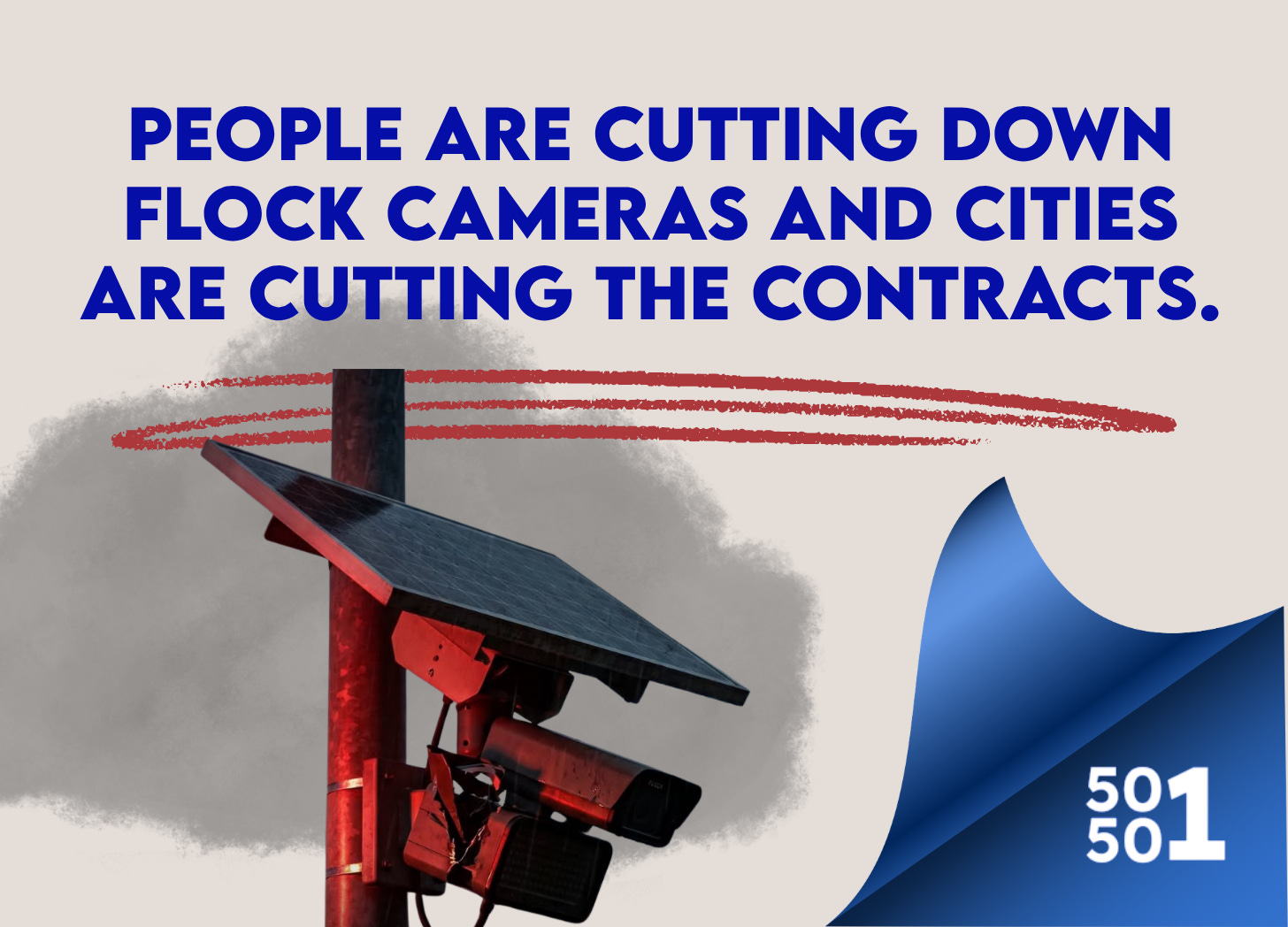
You’ve already driven past one
You can it’s a Flock camera from the black pole, small rectangular box and a solar panel bolted at the top, they usually sit at intersections.
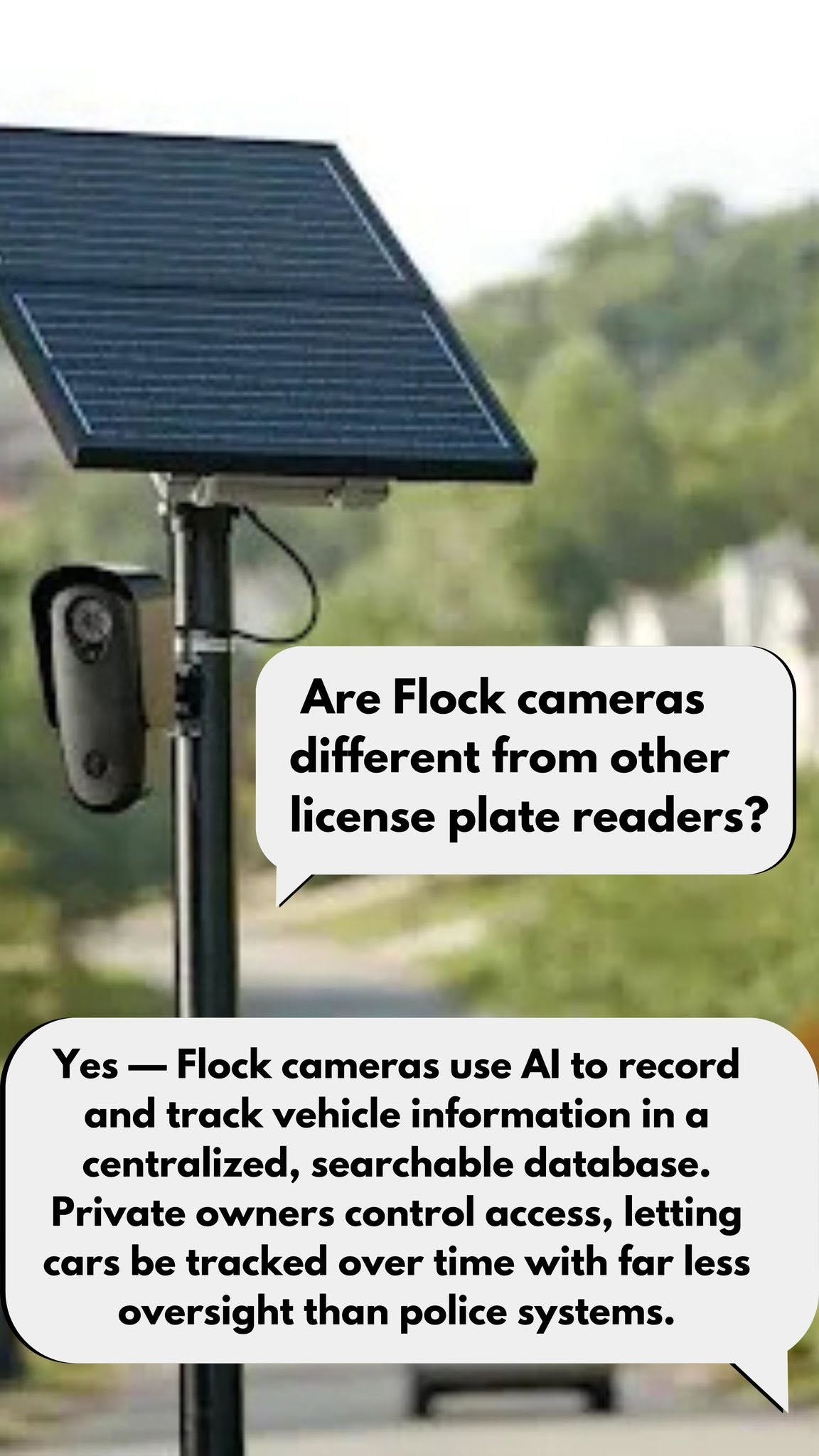
It takes pictures of your car and logs the plate, along with the make, model and color. It uses AI and other smart features to remember the dent in your bumper or the sticker in your back window… it then filed that into a interconnected nationwide network that thousands of agencies can search.
The Institute for Justice has now documented at least 28 cases nationwide of officers allegedly abusing license plate reader data to track romantic interests such as current partners, exes, and in one Florida case a stranger a deputy met on a TV set and later pulled over.
A Milwaukee officer looked up the location of the woman he was dating 124 times, and her ex another 55 times, according to the criminal complaint. A Richmond County, Georgia deputy allegedly searched one woman’s plate 1,639 times.
On top of that, most of these cases were not caught by internal audits, For example, the Milwaukee case surfaced because the victim looked up their own plate on a public site built from Flock’s own audit data and found odd activity.
Between August 2021 and May 2026, communities in 28 states terminated at least 82 reported Flock contracts.
39 of those happened in 5 months:
Redmond, Washington, voted 7–0 on July 21, 2026, to terminate its Flock Safety contract and end the city’s automated license plate reader program.
Monroe County, Indiana, voted 2–0 to end its Flock contract about a year early and agreed to pay approximately $3,000 to remove six cameras. Commissioner Jody Madeira called it “$3,000 well spent.”
Bandera, Texas, population roughly 900, saw its first installed Flock camera sawed down two days later. A second camera was installed on a sturdier city-owned pole, but after months of public opposition, the council voted 3–2 in May to terminate the grant-funded program.
Meanwhile, hundreds of new contracts were signed this year.
About the cameras… on the ground
Across the country, Flock cameras are being cut, painted, and toppled.
People accused of destroying or damaging Flock cameras are facing serious felony charges and thousands of dollars worth in damage claims.
One man in Suffolk-Virginia, faces 25 charges for allegedly damaging 13 Flock cameras which is 13 destruction-of-property counts, 6 petit-larceny counts and 6 counts of possessing burglary items.
There’s also a strategic reason to keep the focus on the contracts rather than the poles: A damaged camera can be replaced but a canceled contract can’t.
What you can do to DeFlock your community
Look up your town on DeFlock’s crowdsourced camera map and check ALPR.watch, which tracks which local government meetings have ALPR on the agenda. Then send this to someone who drives more than you do.
You can Email your city manager and police office to ask: “does our department use ALPRs, and which outside agencies can search our data”?
Find your contract’s Flock expiration date and add the date to your calendar so you can attend a local meeting before the date with search logs. This organizing has helped produce at least 82 reported contract terminations.
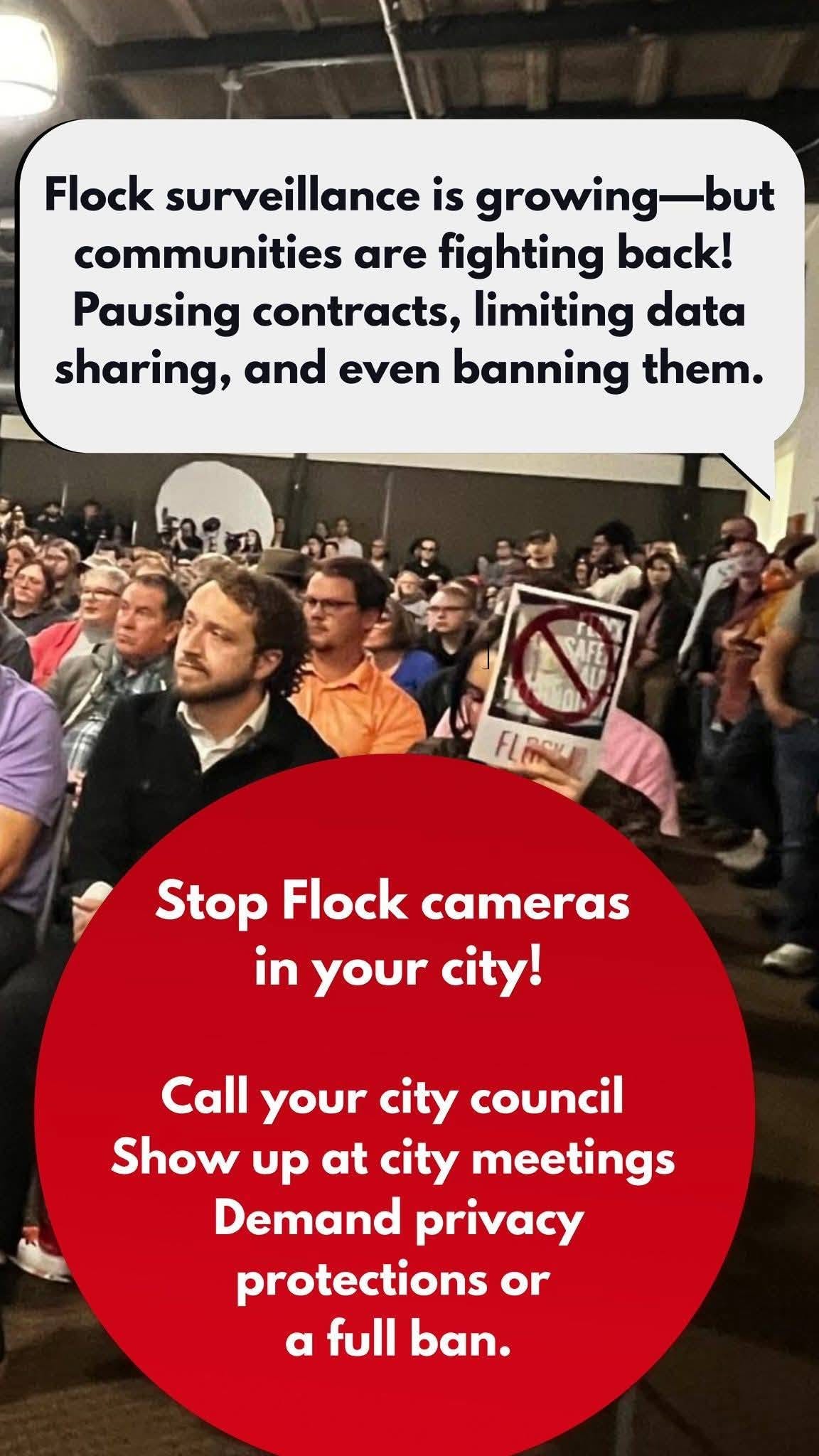
Are these cameras legal?
Yes, for now. A federal judge upheld Norfolk, Virginia’s 176-camera network in January. The residents who sued, backed by the Institute for Justice, are appealing, and IJ has a separate class action going in San Jose. Kentucky capped retention at 90 days effective July 15, Washington’s governor signed its Driver Privacy Act, Maine has restricted ALPRs for years, and Colorado’s warrant bill died on the Senate floor in April after law enforcement pushback.
Is cutting a Flock Camera down illegal?
Yes. Prosecutors are charging destruction to Flock Cameras as felony criminal mischief or destruction of property, damage claims run into the thousands per camera.
How do I find out if my town has them?
DeFlock maps them nationwide.
Ban Flock Cameras tracks state-by-state status, and Who Approved This tracks contracts, dollar amounts, and renewal dates.
Can I find out if an officer searched my plate?
You can, sometimes. The website: HaveIBeenFlocked collects audit data from the governments that publish it. That is exactly how the Milwaukee case broke open.
Does canceling actually remove the cameras?
No, not automatically. It can take weeks… Eugene OR, found a camera had switched back on without authorization.
My police chief says our data is protected. Is it?
Ask for the complete search and audit logs, outside-agency access records, hotlist records, and current sharing settings, not just the summary.
They told us it solves crimes. What do I say back?
Say that’s not the concern. Monroe County’s commissioner said the technology had a role, then voted to end it anyway. A tool can help an investigation and still collect too much information, give too many people access or create risks that outweigh its benefits.
Our council will not budge
Framingham took many months, Pittsboro started in February and won in May, Bloomington needed a council resolution and a full report to get them to budge. Every one of these communities started with residents who were told no.
Such an important and timely post! For anyone interested, we built a website for our ALPR campaign http://www.flockoff.io
And lawn signs:
Also dropping my post this week on the topic
https://rgilmartin.substack.com/p/our-streets