


📌 NOTE FOR NEW READERS: The 50501 Movement organizes peaceful action across all 50 states to defend democracy. This publication is nearly 100k activist-reader strong and growing. If this resonates with you and to help support this newsletter, hit subscribe.
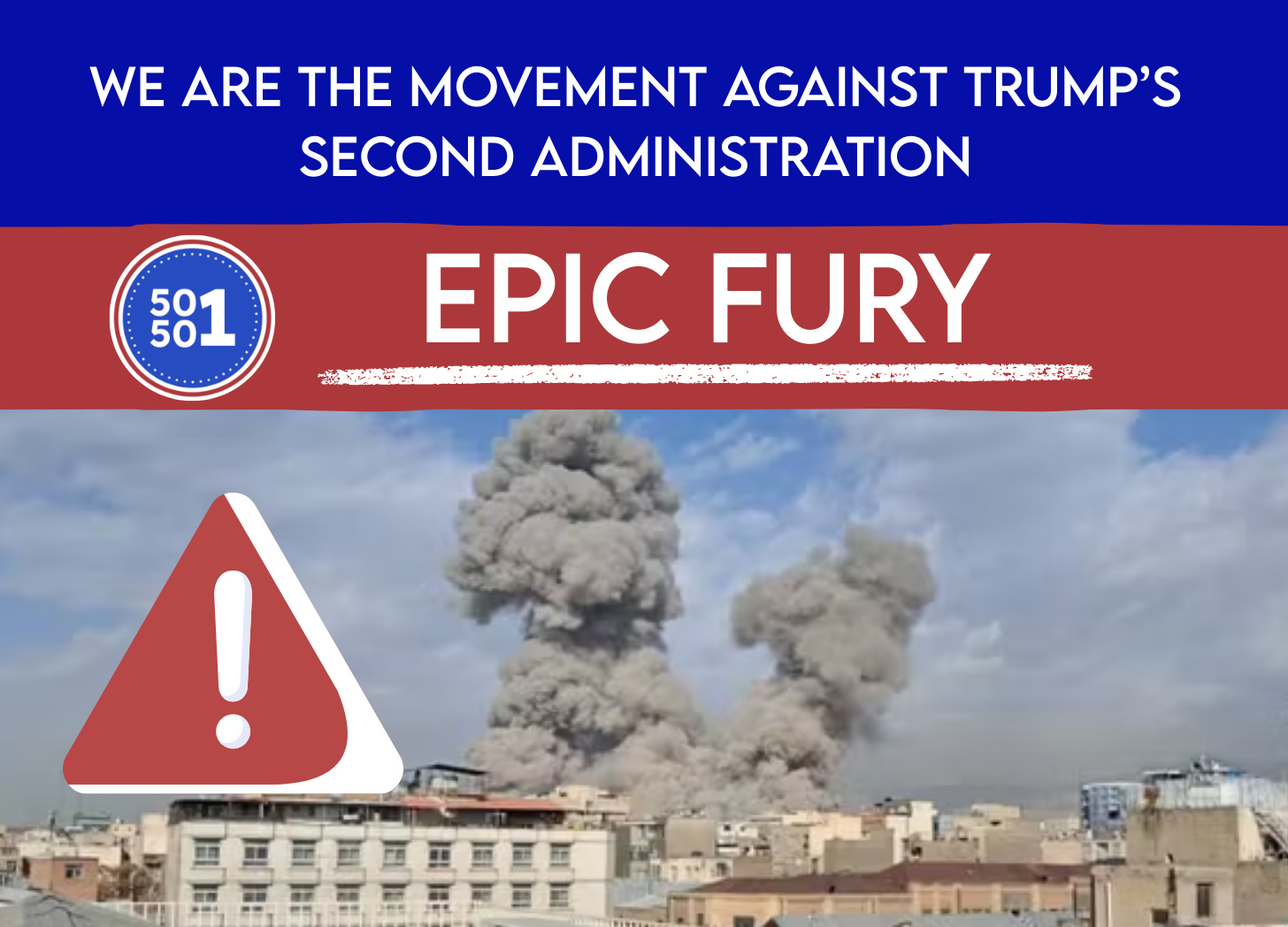
On Friday less than 24 hours before the first bombs hit Tehran, Oman’s Foreign Minister Badr Albusaidi went public with an unusually specific description of the framework, he said the parties had reached in recent talks.
Albusaidi said Iran had agreed to never stockpile enriched uranium or nuclear material and to accept full IAEA verification calling it a breakthrough “never achieved” before.
Additional talks were scheduled in Vienna for the following week.
His message, repeated on air and in writing: a peace deal was “within our reach.”
By Saturday morning, American and Israeli warplanes were flattening targets across Iran.
A girls’ elementary school in a southern coastal city was in rubble. And Iran’s internet had plunged to about 4% of normal and kept dropping.
What we know vs. what we don’t
Confirmed: The strikes occurred and are ongoing. Khamenei’s death was confirmed by Iranian state media. Congressional leaders were briefed shortly before (not asked for authorization) NetBlocks reported a near-total internet blackout at ~4% connectivity. Iran retaliated across the region.
Reported but not independently verified: Precise death toll at the Minab school (figures vary widely by source). Full target list, exact civilian casualty totals nationwide. Under blackout conditions, independent verification is extremely limited, treat all specific numbers as fluid.
What Happened
Saturday, February 28
U.S. and Israeli forces launched coordinated strikes across Iran with explosions reported in Tehran, Isfahan, Qom, Karaj, Kermanshah, Tabriz, Bushehr, and other cities, according to multiple outlets and Iranian state media. CENTCOM said targets included IRGC command-and-control facilities, air defense capabilities, missile and drone launch sites, and military airfields, using air-, land-, and sea-based capabilities. Reuters reported Tomahawk cruise missiles were used, and CENTCOM confirmed first combat use of low-cost one-way attack drones.
Israel’s military said approximately 200 fighter jets hit roughly 500 targets across western and central Iran describing it as the Israeli Air Force’s largest-ever strike sortie.
Khamenei’s death: There was initial confusion, but Iranian state media ultimately confirmed that Supreme Leader Ali Khamenei, age 86, was killed. NPR reports the Iranian government announced 40 days of mourning. CBS News, citing an intelligence source and a military source, reported that as many as 40 Iranian officials were killed in the strikes, though it was unclear whether they were in one location or multiple.
Iran’s retaliation: Iran launched missiles and drones at Israel and across the Gulf with Kuwait, Qatar, the UAE, and Bahrain reporting strikes or interceptions, Saudi Arabia saying it was targeted in Riyadh and the Eastern Province, Jordan intercepting Iranian missiles over its territory, and Syria reporting civilian fatalities from an Iranian missile strike. One woman was killed in a strike on Tel Aviv, according to Israel’s Magen David Adom emergency service, with additional injuries reported across Israel.
🚨Civilian harm: A girls’ elementary school in Minab, a city in Iran’s southern Hormozgan province, was struck. Death toll figures have shifted throughout the day as rescue work continues under a communications blackout. Early Iranian reporting via Al Jazeera cited Iran’s judiciary news agency Mizan at 108 killed, ABC News reported Iranian leaders and state TV said 115 were dead as of Saturday evening ET. Tasnim and Fars, Iranian state-aligned news agencies, reported the victims were elementary-aged Middle East Eye cited them as between 7 and 12. Numbers are inconsistent and not independently verified under blackout conditions, treat all specific totals as provisional. A CENTCOM spokesperson told ABC News the U.S. was “looking into” reports of the school strike and emphasized that the U.S. does not target civilians.
Casualty figures from Iranian authorities are claims that have not been independently verified, in part because of the communications blackout. But the strike on the school itself has been widely reported by AP, NPR, Al Jazeera, ABC News, Middle East Eye, and the Washington Post.
Why It Happened What They’re Saying vs. Evidence
The stated reason: “imminent threats,” nukes, and missiles
Trump framed the campaign as necessary to eliminate “imminent threats” from Iran, destroy its missile capability, and prevent nuclear weapons. He said Iran had been developing missiles that could “soon reach the American homeland.”
The concerning intelligence gap
Trump’s claim that Iran could “soon” have a missile capable of hitting the U.S. homeland is not backed by U.S. intelligence.
Three sources familiar with intelligence reports told Reuters the claim is exaggerated. CNN reported separately that there is no intelligence to suggest Iran is pursuing an ICBM program to hit the U.S. at this time.
An unclassified 2025 Defense Intelligence Agency assessment which multiple sources confirmed has not been updated and said Iran could potentially develop a “militarily viable” ICBM by 2035, using existing space-launch vehicles, if it decided to pursue one.
Even with assistance from China or North Korea, one source told Reuters, Iran would likely need at least eight years to produce something operationally viable at ICBM level.
Asked about this, Secretary of State Marco Rubio declined to address the DIA assessment directly. He didn’t give a timeline and he argued Iran is increasing its missile range and is headed toward that capability someday which is not necessarily “soon.”
Special Envoy Steve Witkoff, one of the lead U.S. negotiators, claimed in an interview just days before the strikes that Iran was “probably a week away from having industrial-grade bombmaking material.” This came despite the Trump administration’s own repeated claims, made last year, that U.S. and Israeli strikes in June 2025 had “obliterated” Iran’s nuclear program.
The diplomatic timeline
Negotiations were active. Three rounds of U.S.-Iran talks had been held, the most recent in Geneva on Thursday, February 26, two days before the strikes. Oman’s foreign minister, who mediated the talks, flew to Washington on Friday to brief U.S. officials. He appeared on CBS and said Iran had committed in the talks to never stockpile enriched uranium, with full IAEA verification, a framework he said went “beyond what Obama achieved.” He said all remaining issues could be resolved within months and that a deal was “within reach.”
Trita Parsi of the Quincy Institute noted publicly that Albusaidi going on U.S. television was unusually direct, his view was that it was meant to make clear to the American public that diplomacy was still producing results when the administration chose war instead.
Additional talks were scheduled for the following Monday in Vienna.
The regime-change aim
Trump explicitly urged Iranians to “take over” their government, saying in his video announcement: “When we are finished, take over your government. It will be yours to take. This will be probably your only chance for generations.”
Netanyahu described the stated objectives, overthrow of the Iranian regime, elimination of the nuclear program, and elimination of the missile threat.
The Atlantic Council, not a left-wing outlet, published expert analysis noting this was not a preventive strike against an imminent threat. It was, in their words, an exploitation of perceived regime weakness to generate political change inside Iran. They described it as an “enormous gamble with questionable legal justification.”
How It Happened And What’s Being Overlooked
The kinetic campaign
This was a broad, ongoing campaign… air, sea, and land… with Trump saying bombing would continue “throughout the week or, as long as necessary.”
The blackout
NetBlocks, a respected internet monitoring organization, reported Iran’s connectivity plunged to about 4% of normal as the strikes began with NetBlocks’ CEO later describing it as “flatlining” even lower. The Washington Post described it as a “near-total internet blackout.” NetBlocks’ CEO called it “straight out of Iran’s wartime playbook” consistent with shutdowns during the June 2025 war and the January 2026 protest crackdowns.
Foreign Policy described Iran’s shift toward a “two-tiered” or “class-based” internet where regime insiders retain broader access through tools like “white SIM” privileges and network-level whitelisting, while the general public is throttled or cut off entirely. They warned it’s an authoritarian system other governments are watching closely. That system was sealed tight as the bombs fell.
The information war you’re not being told about
WIRED reported that a widely used Iranian prayer-timing app appeared to have been hacked, sending push notifications to users urging security forces to surrender and defect, timed to coincide with the strikes. No party has claimed responsibility, and analysts could not identify the source.
What It Means For Iran, The Region, and American Democracy
Khamenei’s death doesn’t automatically mean freedom
The Atlantic Council noted the central unresolved question… can external military pressure realistically rely on an Iranian public that lacks cohesive opposition leadership, facing a regime that has operated for 47 years under disciplined IRGC control? Foreign Policy raised similar concerns about post-strike governance, noting the IRGC’s deep economic and military entrenchment.
The region is on fire
Iran struck across the Gulf and beyond pulling in countries that did not choose this war. Saudi Arabia said it had been targeted in Riyadh and its Eastern Province and claimed to have intercepted the attacks. Residential areas in Dubai were hit. Jordan intercepted Iranian missiles over its territory.
At least four civilians were killed in Syria by an Iranian missile strike.
Iran threatened to shut the Strait of Hormuz and warned vessels, a corridor through which roughly one-fifth of global oil consumption passes, immediately spiking global disruption fears.
The sanctions
Even before this bombing campaign, U.S. policy was already waging a slow-motion war on ordinary Iranians. Human Rights Watch has documented how broad U.S. sanctions have constrained Iran’s ability to finance humanitarian imports, including medicines. UN human rights experts have warned that sanctions and “overcompliance” by banks threaten humanitarian access.
People can’t exercise self-determination under rubble. They also can’t build liberation under collective punishment.
This is about War Powers
This military operation was launched without Congressional authorization.
Top congressional leaders from both parties were notified shortly before the attack but notification is not authorization.
The War Powers Resolution requires the president to report to Congress within 48 hours when U.S. forces are introduced into hostilities. It creates a structure widely discussed but never cleanly tested under which Congress can constrain unauthorized military action.
Both chambers were already moving toward votes before the bombs fell. The bipartisan Khanna-Massie War Powers Resolution in the House, co-sponsored by progressive Rep. Ro Khanna (D-CA) and libertarian Rep. Thomas Massie (R-KY) was teed up for a vote this coming week. In the Senate, Sen. Tim Kaine (D-VA) and Sen. Rand Paul (R-KY) are pushing a parallel resolution. These are procedurally privileged resolutions, meaning they can force floor action.
House Democratic leadership called the strikes unconstitutional without congressional authorization and said the administration has not articulated a plan. Jeffries told NPR’s All Things Considered that regime change has never been successful, pointing to Iraq, Libya, and Afghanistan and said Democrats will force a vote on the Khanna-Massie War Powers resolution.
Only 21% of Americans support the U.S. initiating an attack on Iran under the current circumstances, according to polling released earlier this month.
What to do and how to help:
The House and Senate are expected to vote on War Powers Resolutions as soon as this week.
Step 1: Find your representatives
House: house.gov/representatives/find-your-representative
Senate: senate.gov/senators/senators-contact.htm
Step 2: Call. It takes 30 seconds.
“Hi, my name is ______ and I’m a constituent in _______. I’m calling to urge ‘Representative/Senator’ to vote YES on the Iran War Powers Resolution and oppose any unauthorized expansion of military action against Iran. Congress must authorize war. Please put ‘him/her/them’ on record: YES on War Powers. Thank you.”
Step 3: Email.
Subject: Vote YES on the Iran War Powers Resolution
I am a constituent in ZIP ______. I urge you to vote YES on the Iran War Powers Resolution and oppose any unauthorized use of U.S. armed forces in hostilities against Iran without specific Congressional authorization. I urge you to demand clear objectives, a diplomatic off-ramp, verified civilian protection, and full transparency with the American public.
Step 4: Share + mobilize
Share that you called. Tag your friends. Push your local communities to do the same. Offices count contacts every call and every email gets logged.
Congressional votes: Watch for the Senate procedural vote and the House floor vote on the Khanna-Massie resolution.
Evidence standards: Does the administration provide verifiable proof of “imminent threats” or just adjectives? When Rubio says “we can see that it’s possible” instead of citing intelligence, that is a tell.
Civilian harm reporting: If the internet blackout persists, independent verification gets harder. Watch for NGO and journalist access or the lack of it.
Escalation indicators: Strait of Hormuz shipping disruptions, expanded target sets, wider proxy involvement, oil price shocks.
Succession dynamics: Who fills the vacuum? IRGC consolidation vs. anything resembling transitional governance.
“Don’t Get Played” And How to Read War Coverage
When a war starts, propaganda from every direction spikes. How to avoid misinformation:
Separate claims from confirmations. Iranian government casualty figures are claims until independently verified. U.S. “imminent threat” rhetoric is also a claim until intelligence is shown. Hold everyone to the same standard.
Treat casualty numbers as fluid under blackout conditions. They will change. That doesn’t mean they’re fake, it means verification takes time when connectivity is at 4%.
Look for evidence, not adjectives. “Imminent” and “soon” are not evidence. A DIA assessment that says 2035 is evidence.
Track the process. Did Congress authorize this? Was the public case documented?
Watch the incentives. The Atlantic Council reported that officials briefed Trump on this as “high-risk, high-reward.”
The Omani foreign minister said peace was “within reach” on Friday afternoon. By Saturday morning, bombs were falling. If you could ask one question of the administration one question they’d have to answer under oath what would it be?
Sources
Strikes, operations, and Khamenei confirmation
Intelligence disputes on missile/ICBM claims
Reuters via U.S. News: Trump Iranian Missile Claim Unsupported by U.S. Intelligence
CNN: Trump Has Claimed Iran Is Building Missiles That Could Soon Hit the U.S.
NBC News: Trump Said Iran Will ‘Soon’ Have Missiles | A 2025 Intel Report Said 10 Years
Times of Israel: Trump’s Claim Said Unsupported by U.S. Intelligence
Civilian casualties and Minab school strike
Washington Post: Reported Airstrike Hits Iranian Girls’ School
Middle East Eye: At Least 115 Girls Killed in Strike on School
Oman diplomacy and negotiations
Al Jazeera: Peace ‘Within Reach’ as Iran Agrees to No Nuclear Stockpile
Common Dreams: Oman’s FM Said Deal Was ‘Within Our Reach’ | Then Trump Started Bombing
Expert and strategic analysis
Internet blackout and information warfare
Congressional War Powers response
Axios: Democrats Demand War Powers Vote After U.S. Strikes Iran
CNBC: Democrats Plan to Force Iran War Powers Vote Next Week
World reaction
In America, we have No Kings.
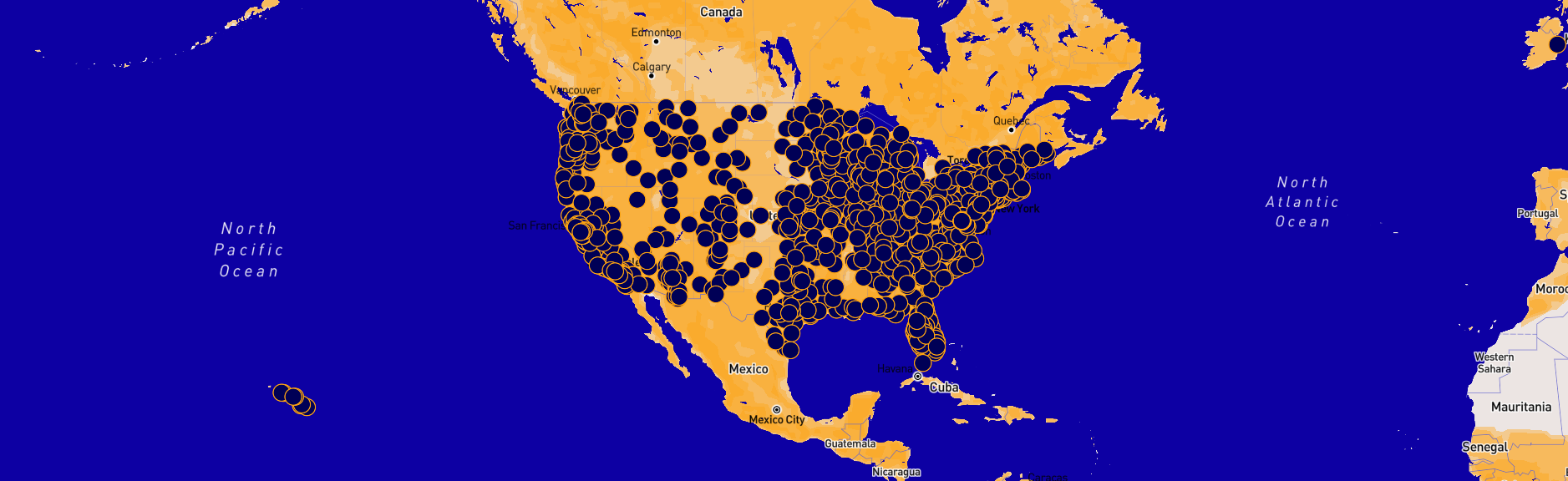
We are showing up together again on March 28.
When our families are under attack and costs are pushing people to the brink, silence is not an option. We will defend ourselves and our communities against this administration’s unjust and cruel acts of violence. America does not belong to strongmen, greedy billionaires, or those who rule through fear. It belongs to us, the people.
Other than authoritarian, strong-men, fascist, dictator regimes, who will believe us now?
Thank you for your comprehensive Substack. All great information and direction. However, there is something starting that scares me and I've written it in a Substack (https://betsyrobinson.substack.com/p/kristi-noem-outed-for-bogus-story) and will truncate it here: At yesterday's anti-war demonstration at Times Square, a woman took the microphone and led the crowd in increasingly antisemitic chants condemning both the USA and Israel as terrorists and occupiers. I left the demonstration. I am fully capable of acknowledging heinous American history and working to repair it and remaining a patriot. Jews are fully able (and do, although it is not covered in the news--go figure) of having a country and condemning their leader. This war serves two despots who must be condemned (as Bernie Sanders does--see end of my Substack post) and to reduce it to antisemitic chants accomplishes exactly what they want--division, allowing them more power. Please read my post and perhaps find another way to direct the justified ire at this illegal war.