


📌 NOTE FOR NEW READERS:
If you’re new here: 50501 coordinates peaceful action nationwide: 50 states, 1 movement. No kings, no exceptions. Join thousands of readers who subscribe to our publication and for resources and updates on our next mobilization.
TL;DR
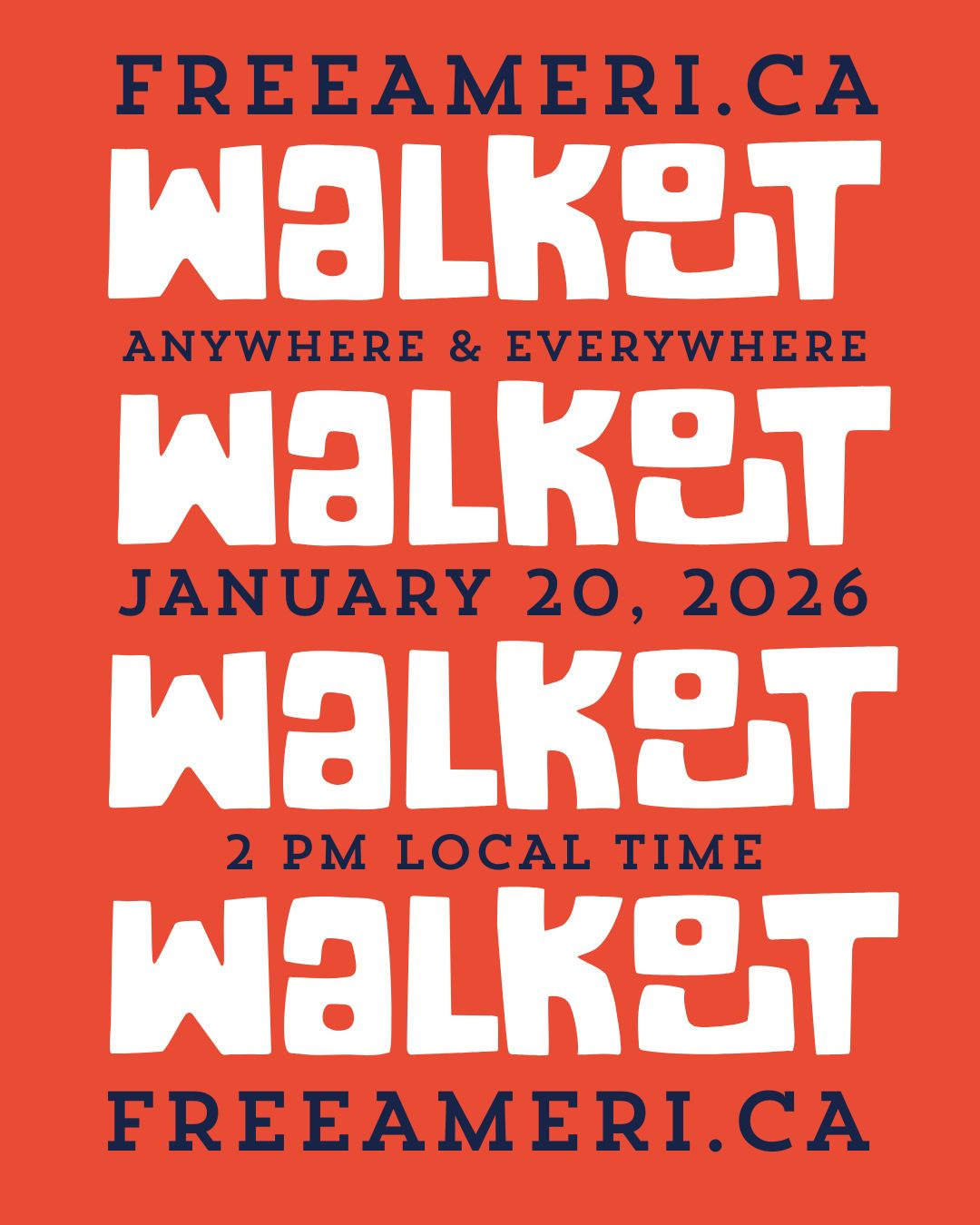
January 20th 2026, 2 PM local time.
Step away from work, school, or commerce.
If you can’t, participate another way.
Pledge + Walkout details below
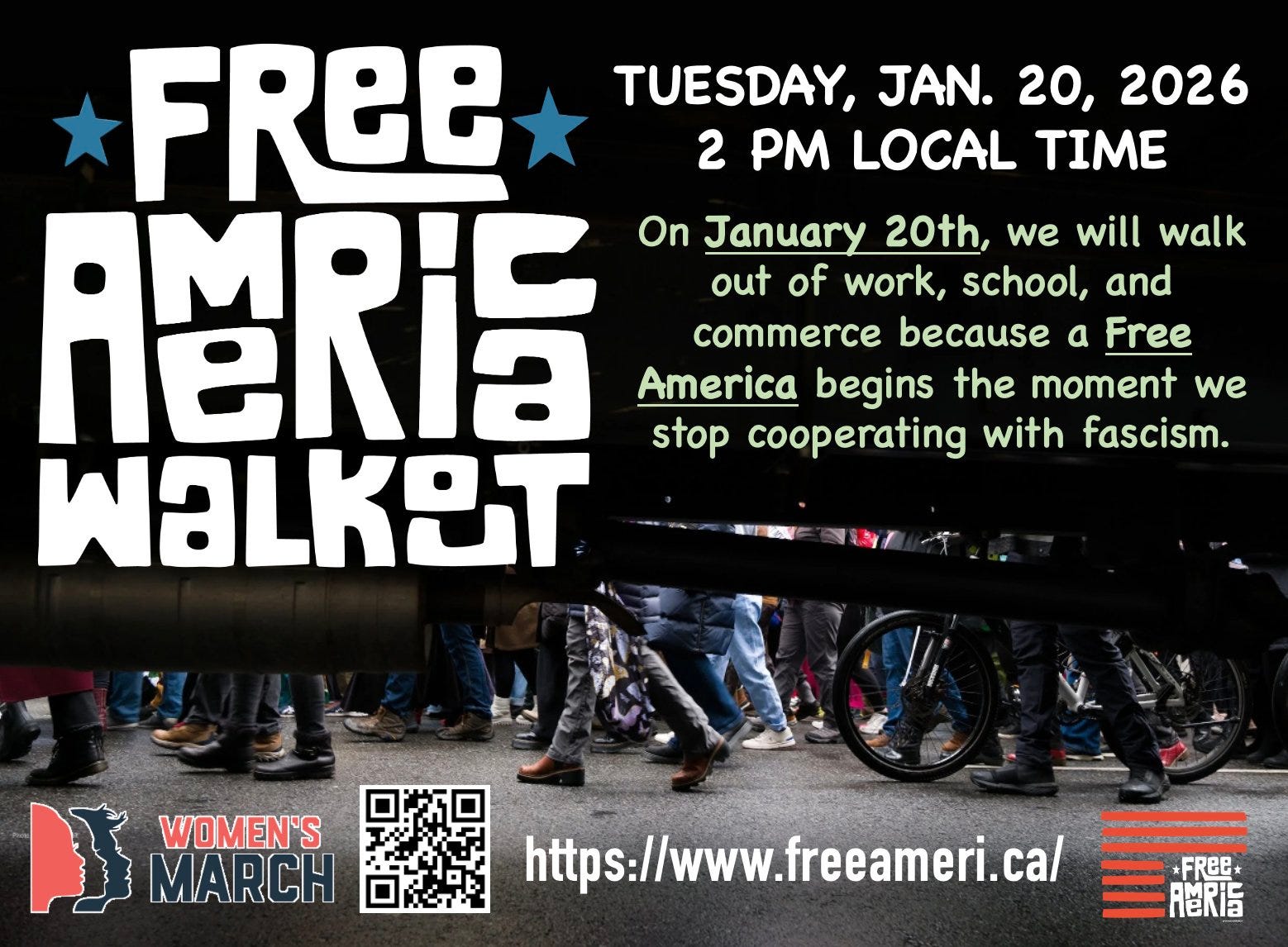
On Tuesday, January 20, 2026, at 2 PM local time, the Free America Walkout is a coordinated, nationwide act of nonviolent noncooperation.
It’s a simple idea: step away from work, school, and/or commerce at the same time, in whatever way is realistic and safe, so refusal becomes visible together.
This is a synchronized signal: we don’t consent to normalized authoritarianism and we can prove it without violence.
Official hub for the Walkout: https://www.freeameri.ca
What the January 20th walkout is saying
The pledge language: “walk out on fascism” and help “block the routines of power,” with “courage and care.”
A walkout is a form of nonviolent noncooperation. That sounds academic, but the idea is that modern power depends on people showing up, complying, producing, and buying as if everything is fine. Noncooperation is what it looks like when people stop doing that together, on purpose, without violence.
Political scientists and historians have studied this for decades. Strikes, boycotts, and mass refusals fall under noncooperation because they apply pressure without weapons, and because they work on systems rather than individuals.
Basically, a walkout is what it looks like when a lot of people say, not today.
Why walkouts matter and what they do that rallies don’t
A rally shows how many people care.
A walkout shows how much daily life depends on cooperation.
Walkouts change the environment in three concrete ways:
First, they make dependence visible.
Schools run because students show up. Businesses run because workers show up. Markets run because people buy things. When those routines pause at the same time, even briefly, institutions have to acknowledge what they usually take for granted.
Second, they change social permission.
Before a walkout, refusal can feel lonely or risky. After a walkout, that refusal has witnesses. That changes what people think is safe to say, safe to try, and worth organizing.
Third, they build capacity.
Even when a walkout doesn’t “win” immediately, it leaves behind contact lists, local organizers, shared experience, and the habit of acting together. That’s how movements stop burning out after one moment. This can be an incredible community building action and a big step for the movement, in the right direction.
Research on civil resistance consistently finds that nonviolent movements with broad participation tend to be more effective than violent ones because they pull in more people and are harder to isolate.
A short history of walkouts and what they accomplished overall
Walkouts are a high-leverage form of collective resistance, which is why they recur across different eras and political systems. Their effectiveness does not come from symbolism or spectacle; it comes from making institutional dependence measurable on labor, attendance, compliance, and consumption and from disrupting the routines that convert that dependence into day-to-day governing capacity.
East Los Angeles walkouts (1968)
In March 1968, Mexican American students walked out of multiple East L.A. high schools to protest overcrowding, underfunding, discriminatory discipline, and the lack of Mexican American teachers and administrators.
What they accomplished overall:
These walkouts forced unequal public education into the national civil rights conversation. They helped energize the broader Chicano Movement, produced new leaders, and established student walkouts as a legitimate response when institutions refuse to listen. Education inequality stopped being treated as a local inconvenience and started being treated as a political choice.
The 1970 student strike (Kent State era)
After the Kent State shootings, protests and walkouts spread to nearly a thousand campuses, with hundreds of schools shutting down or suspending classes.
What they accomplished overall:
The strike did not end the Vietnam War overnight, but it widened participation dramatically and raised the political cost of escalation. It forced the question of legitimacy into public view: when the state kills students at home, the idea that the war is distant or abstract collapses.
Iceland’s Women’s Day Off (1975)
In 1975, women across Iceland stopped paid work and unpaid domestic labor in what became known as Women’s Day Off. Participation is often cited at around 90 percent.
What they accomplished overall:
The country slowed. Schools closed. Offices stalled. Childcare became a crisis. Within a year, Iceland passed a gender equality law, and within five years elected the world’s first democratically chosen female president.
More than any single policy, the strike reset what Iceland treated as “normal.” Unpaid labor became visible, and equality became unavoidable.
Poland’s Solidarity strikes (1980s)
What began as labor strikes grew into a mass civil resistance movement. Solidarity eventually forced negotiations that legalized independent unions and helped open the door to competitive elections.
What they accomplished overall:
The strikes built bargaining power against an authoritarian state, produced institutional reforms, and created an alternative center of legitimacy. They also helped destabilize communist control across Eastern Europe.
Global climate strikes (2019)
Millions of students and workers walked out worldwide, making climate change a mass-participation demand rather than a niche issue.
What they accomplished overall:
They shifted public agenda-setting. Governments, employers, and media could no longer treat climate as a side topic. Youth-led walkouts became widely legible as civic participation, not truancy.
What walkouts accomplish overall
Across countries and decades, the outcomes tend to bring us:
Visibility: exposing hidden dependence on labor, care work, and compliance
Legitimacy pressure: forcing institutions to justify why people should cooperate
Policy change: sometimes fast, often delayed, but real
Movement growth: new organizers, stronger networks, practiced coordination
Cultural shifts: redrawing the line between “normal” and “unacceptable”
That’s the value of a walkout. It’s often a step towards a brighter future.
A legal check
Workers:
U.S. labor law protects many forms of concerted activity, including strikes, but protections have limits and employers sometimes retaliate anyway. If you are at-will, living paycheck to paycheck, or in a hostile workplace, choose a lower-risk option.
Students:
Public school students have First Amendment protections, but schools also have rules. Students should talk with trusted adults and plan in ways that reduce risk, especially for vulnerable classmates.
No one should have to sacrifice their safety to prove commitment.
If you can’t, you still can
If you can walk out safely at 2 PM local time, do it.
If you can’t, these actions will still help:
Step away during an official break
Join a local action before or after work
Skip spending or commerce that day if you can
Help someone else attend safely (rides, water, signs, childcare swaps)
Share official information so others can coordinate
What You Can Do Right Now
Put January 20, 2 PM local time on your calendar.
Choose how you’re going to participate.
Use official hubs to find or host actions: https://www.freeameri.ca
Drop your state and your plan. If you can’t walk out, let us know why. Job risk, childcare, health? If you can’t attend, are you helping to get the word out?
To everyone organizing, showing up, and taking real risks for the public good, thank you for your dedication and work. You being in this movement is what true patriotism looks like, love of country expressed as care for our neighbors, respect for the rule of law, and the refusal to let democracy erode. Your consistency, courage, and your commitment to peaceful civic action means so much right now. Thank you.
Nebraska, I can't walk out of a job, I am retired. But I will not purchase anything and I'm thinking about making a sign about the Walkout, I can print the Walkout poster and put it on poster board and walk through stores, I'll bring friends.
As a retiree, boycotting spending and joining local event are my only choices. Going with as many friends as possible.