


📌 NOTE FOR NEW READERS: This is an independent publication covering 50501, No Kings, and the broader pro-democracy and civic-action ecosystem. Subscribe to join our community and to keep us posting.
Congressman Cleo Fields represents Louisiana’s 6th Congressional District. He is Black.
His district is majority-Black. And now, for the second time in his career, a majority-Black district tied to Fields’s congressional service has been invalidated by the Supreme Court.
The first time was 1995. The Court said the district was drawn based on race. The district was later redrawn, and Fields was forced out of Congress.
Thirty years later, after a new round of litigation, Louisiana created a second majority-Black district again. Black residents make up roughly one-third of Louisiana’s population and now had a majority in two of its six congressional districts. This was representation looking like the people being represented.
Fields ran and he won.
He was sworn into Congress in January 2025.
Fifteen months later, the Court invalidated the district going forward.
A Black man from Louisiana runs for Congress in a district where Black voters can elect a candidate of their choice. He wins and serves.. and then the highest court in the country says that district shouldn’t even exist. TWICE. In one career, thirty years apart. This is a civil-rights emergency.
Here is the simplest way to understand what happened: Your community has enough people to elect someone to the city council who knows your neighborhood, shares your concerns, and fights for your schools, roads, and hospitals. Then someone redraws the district lines so your community gets split across three different council districts. In each one, you’re outnumbered. You can still vote but you can never elect anyone who represents you. You’re not banned from the ballot box but your power is divided up until it disappears or just doesn’t mean anything anymore.
Now imagine your community sues and wins and the court says the lines were unfair, and the map gets redrawn so your neighborhood is whole again. You elect your representative and the system works how it should. Then the Supreme Court steps in and says the new map relied too much on the makeup of your community. The map gets thrown out and the legal ground your community used to challenge the unfair lines in the first place is made much harder to use going forward.
That’s exactly what happened yesterday to Black voters in Louisiana, and setting “the standard” to Black and Latino communities across the country.
Yesterday the Supreme Court ruled 6-3 in Louisiana v. Callais that this district is an unconstitutional racial gerrymander. The majority, written by Justice Samuel Alito and joined by every conservative justice on the bench, said the Voting Rights Act didn’t require Louisiana to create the district, so the state had no compelling reason to consider race when drawing it.
Justice Elena Kagan, writing for the three-justice dissent, called the ruling the “latest chapter in the majority’s now-completed demolition of the Voting Rights Act.” She said Section 2 of the Act has been rendered “all but a dead letter.”
She said states can now “systematically dilute minority citizens’ voting power” without legal consequence.
This is the dissenting opinion of a sitting Supreme Court justice.
And we need to understand exactly what it means historically and racially. The tools designed to protect Black political power have now been stripped away. The Court has framed the dismantling as constitutional principle while the consequences have fallen on the same communities.
What Section 2 Was Built to Do
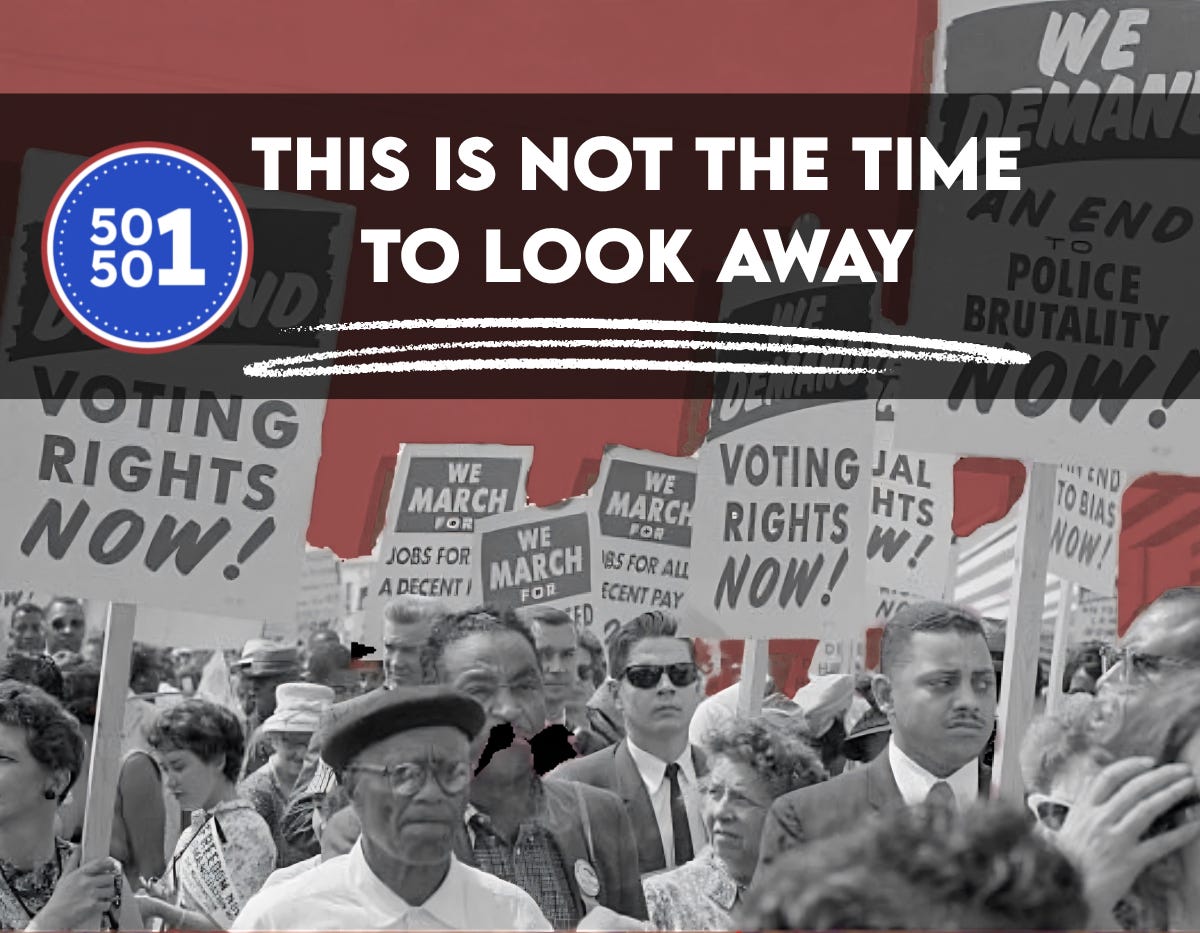
The Voting Rights Act of 1965 came out of Selma. It came out of the Edmund Pettus Bridge. It came out of a century of poll taxes, literacy tests, grandfather clauses, economic retaliation, and organized violence designed to keep Black Americans from voting and from political power.
It was racial exclusion, enforced by law and by terror, sustained across generations, and aimed at one group of Americans.
The Voting Rights Act was put in place and it worked.
Black voter registration surged, Black elected officials increased dramatically across the South.
Communities that had been locked out of government for generations finally had representation.
The law didn’t create equality overnight. However, it created legal architecture that made progress possible. But exclusion adapted.
Once it became illegal to keep people from the ballot box directly, their strategy shifted. Communities could still vote, but their power could be diluted through maps.
A large Black community could be split across multiple districts so it could never form a majority.
That practice is called cracking.
A community could also be packed into a single district when it had enough population to influence two or more. Either way, people could still cast a ballot while losing the ability to elect anyone who would represent their interests.
Which is WHY Congress amended Section 2 of the Voting Rights Act in 1982.
The original version required proof of discriminatory intent. Congress recognized that modern discrimination shows up through district lines, at-large election systems, polling place changes, and rules that sound neutral while producing unequal results. The 1982 amendment told courts to examine the results, not just the stated motive.
For more than forty years, Section 2 has been the primary legal tool for communities of color to challenge maps and voting systems that weaken their political voice.
Yesterday the Supreme Court changed that standard. The Court made Section 2 much more difficult to use, raising the burden on voters challenging discriminatory maps, and gave states far more room to defend harmful maps as partisan rather than racial.
What the Court Just Did
The majority’s opinion says Section 2 now “imposes liability only when the evidence supports a strong inference that the State intentionally drew its districts to afford minority voters less opportunity because of their race.”
After forty years of a results-based test, the ruling moves Section 2 much closer to the intent-based standard Congress rejected in 1982, according to Kagan’s dissent and voting-rights advocates.
The majority says its interpretation “does not demand a finding of intentional discrimination,” while simultaneously requiring circumstances giving rise to a “strong inference” of intentional discrimination.
The practical effect, as Kagan and civil rights groups warn, is that voters challenging a discriminatory map must now come much closer to proving racial motive, even when the real-world impact on communities of color is visible and measurable.
Kagan’s dissent explains why that shift is devastating: A state can announce that it drew maps for partisan advantage, not racial reasons, and plaintiffs may have no effective claim under Section 2, even if the practical result is that Black voters lose the ability to elect representatives of their choice. In states where race and party are closely linked, partisan justification can become the escape hatch.
In the South, where residential segregation still shapes political geography and where racially polarized voting is well documented, the communities most affected by redistricting manipulation are overwhelmingly Black and Latino.
A legal standard that lets states claim partisan motive while producing racial harm risks becoming a standard that permits racial harm.
Will Black voters end up with less political power when the maps are redrawn…?
Justice Clarence Thomas went further in concurrence, writing that Section 2 “does not regulate districting at all.” If adopted, that view would eliminate Section 2 challenges to redistricting maps entirely.
That is a sitting justice arguing that the central protection against racial vote dilution should not apply to the maps that determine political representation.
Why Civil-Rights Groups Are Calling This a Racial Justice Crisis
A policy can be racially discriminatory in its effect. A map can weaken Black political power without anyone speaking a slur in committee. A legal standard can make racial discrimination harder to prove while the discrimination continues. A court can leave rights on paper while stripping communities of the tools needed to enforce them.
And that is what Section 2 was built to recognize.
Congress amended it in 1982 precisely because proving intent was too hard, and because discrimination hides behind systems that appear neutral.
The people who have spent their careers fighting for voting rights are not taking this lightly, rightfully so.
This is a Civil-Rights Crisis.
Janai Nelson, President of the Legal Defense Fund, said the ruling is “devastating for Black Louisiana voters and for fair representation for all voters of color.” She called it the “height of hypocrisy” and said the Court “has rendered key voting protections that have served this country for more than 60 years null and void.”
NAACP President Derrick Johnson said the Court “betrayed Black voters” and that the ruling “threatens to erode the hard-won victories we’ve fought, bled, and died for.”
The ACLU of Louisiana called it “a devastating blow to Black and brown Louisiana voters, who have fought for decades to see their voices fairly represented.”
The Native American Rights Fund said the decision “cruelly undercuts the Voting Rights Act, the foundational tool for Native voters and other voters of color to protect themselves from racial discrimination.”
Cleo Fields himself said the ruling “dismantled decades of settled law that Congress established to ensure that no community’s votes could be silenced.”
The chair of the Congressional Black Caucus, Rep. Yvette Clarke, called the Supreme Court “rogue” and said the decision “effectively signed the death certificate of the Voting Rights Act, undoing decades of Black progress.” The caucus called for a vote on the John Lewis Voting Rights Act.
These are the organizations that have litigated voting rights cases for decades, in some cases since the 1940s. When they say a ruling is devastating, they are comparing it to the entire history of this fight.
Executive Director of Voices of Florida talks about the impact of the Supreme Court decision from yesterday:
This Is NOT Just Going to Happen in Louisiana
Just three years ago, in Allen v. Milligan, the Court sided with Black voters in Alabama and required the state to create a second majority-Black congressional district.
That ruling prompted Louisiana to do the same.
Alabama now has two Black U.S. House members serving together for the first time in its history.
Now the legal foundation of that outcome has been pulled away.
The possible consequences are already being mapped. And they fall on the same communities the Voting Rights Act was meant to protect.
AP reports that nearly 70 of 435 congressional districts have been shaped by Section 2 protections, according to election-law expert Nicholas Stephanopoulos. Pre-ruling analyses from Fair Fight Action and Black Voters Matter warned that a decision gutting Section 2 could eventually help Republican-led states flip as many as 19 majority-minority congressional seats. Analysts have warned that up to a quarter or more of the Congressional Black Caucus and roughly a tenth of the Congressional Hispanic Caucus could be affected by map changes that would previously have triggered Section 2 scrutiny.
These represent communities where Black and Latino voters organized, litigated, and fought for representation over decades. School board seats. City councils. State legislatures. Congressional districts. Each one of those gains was built through the legal framework that this ruling just weakened.
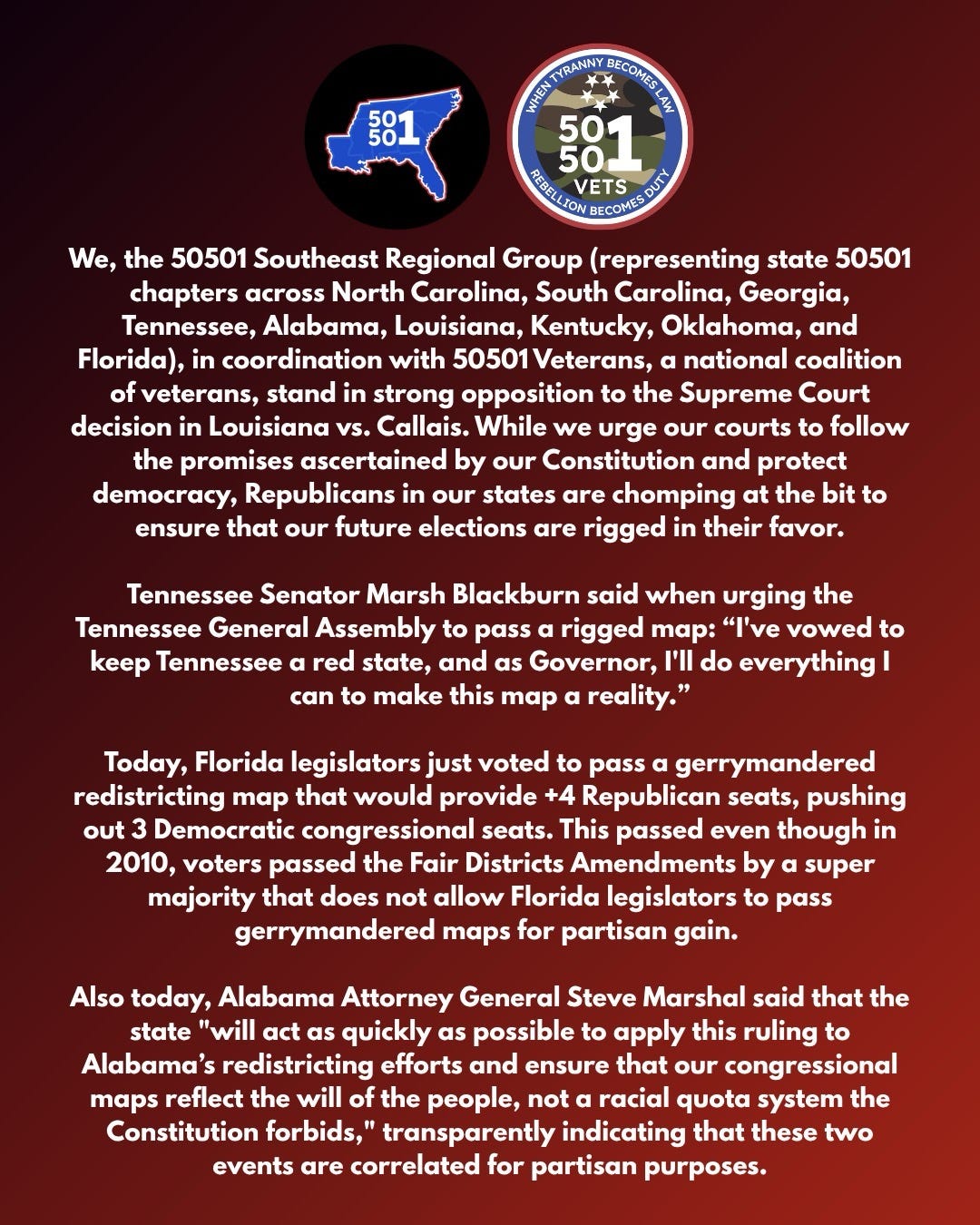
Florida’s legislature has now passed a new congressional map that could give Republicans up to four additional seats. The Senate voted 21-17 on the same day as the ruling, sending the map to Gov. Ron DeSantis, who proposed it and is expected to sign it. Litigation is expected.
Mississippi’s governor has called a special legislative session for May 20 to redraw state Supreme Court election maps in light of the ruling.
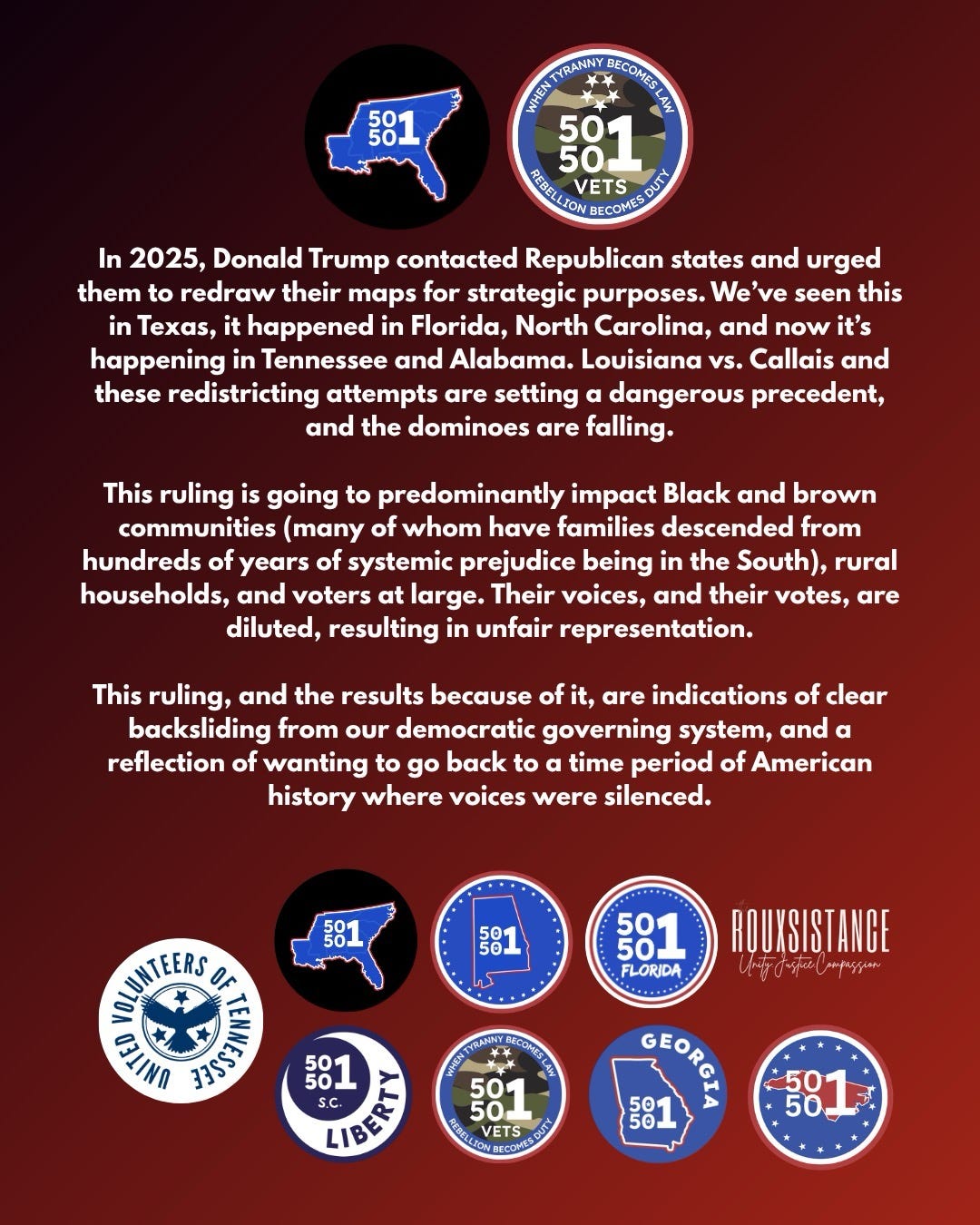
Texas had already pushed through a mid-decade congressional map after pressure from Trump and his allies, and the Supreme Court cleared that map for use in 2026. With Section 2 narrowed, remaining legal challenges face steeper odds.
And then there is Tennessee.
Within hours of the ruling, Senator Marsha Blackburn, who is running for governor, called on Tennessee lawmakers to reconvene and redraw the state’s congressional map. Marsha Blackburn is pushing for a 9-0 Republican map that would eliminate Tennessee’s only remaining Democratic district, TN-9, a Memphis-based district historically preserved as Black-majority under the Voting Rights Act. “I urge our state legislature to reconvene to redistrict another Republican seat in Memphis,” she wrote. “I’ve vowed to keep Tennessee a red state.”
She is openly calling for the elimination of a historically Black-majority district and framing it as partisan strategy. Tennessee already cracked Nashville’s minority voters across three districts in 2022, flipping a Democratic seat. Memphis is the last one left.
Rep. Steve Cohen, who represents TN-9 and is the only Democrat in Tennessee’s congressional delegation, announced a press conference the same day to address the ruling’s potential impact on Tennessee and Blackburn’s call for a special session. That is how quickly this moved from Supreme Court opinion to political strategy.
This is exactly what Kagan’s dissent warned would happen. A state announces a partisan goal. A Black community loses its representation. And under the new legal standard, the partisan framing may be enough to shield the map from a successful Section 2 challenge, even though the community being targeted is overwhelmingly Black.
In the hours after the ruling, Florida passed a new map. Tennessee Republicans began openly discussing a 9-0 map, and a U.S. senator running for governor posted her plans on social media with a map showing every district in red.
These are the dominoes falling.
All of those districts now exist on weaker legal ground.
This is the third major blow to the Voting Rights Act in thirteen years. And every one of them has landed on the same communities.
In 2013, the Court gutted preclearance in Shelby County v. Holder. Preclearance had required jurisdictions with histories of racial discrimination to get federal approval before changing voting rules. After Shelby, states no longer needed permission.
Texas announced a strict voter ID law the same day.
Restrictive voting measures followed across the South, disproportionately affecting Black and Latino voters.
In 2019, the Court ruled in Rucho v. Common Cause that partisan gerrymandering can’t be challenged in federal court.
Maps drawn purely for partisan advantage were declared a political question the courts would not touch. In states where race and party are closely intertwined, that ruling gave lawmakers cover to weaken minority representation.
And now, in Callais, the Court has narrowed Section 2 so that vote-dilution claims face a much higher bar.
These three rulings mean that preclearance is gone, partisan gerrymandering is allowed, and the main remaining tool to challenge racial vote dilution has been hollowed out.
The Voting Rights Act was the most consequential civil rights law of the twentieth century. It was built to address racial exclusion. Every tool it created was designed to counteract a specific form of racial harm. And this Court has now dismantled those tools one by one, each time with language that avoids saying the word race while producing outcomes that fall hardest on Black and Latino communities.
As Kagan wrote in dissent, the Voting Rights Act “must be brought low to make the world safe for partisan gerrymanders.”
From 50501 Veterans (Follow & Subscribe to them if you haven’t!)
What You Can Do Right Now
This ruling was issued yesterday. The response needs to be sustained, specific, and directed.
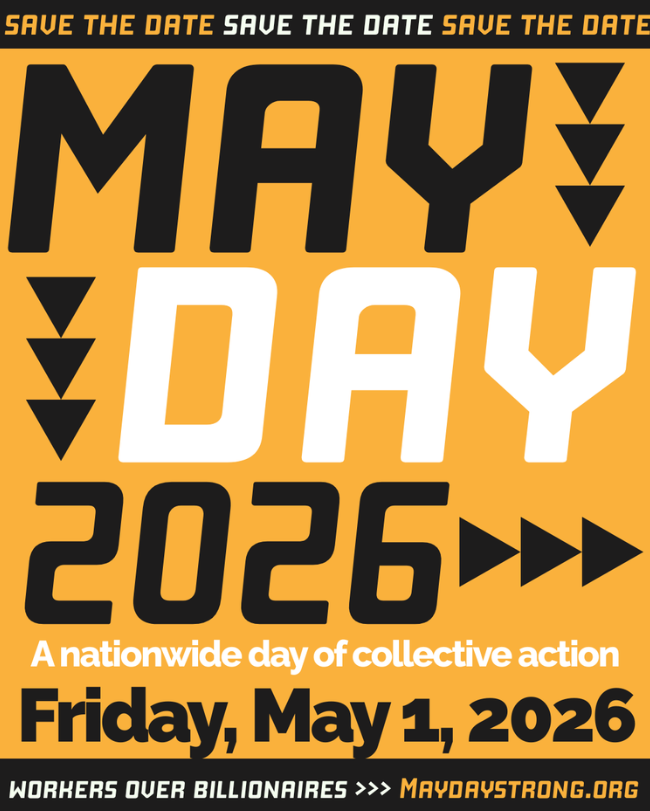
JOIN A MAY DAY ACTION FOR TOMORROW!
Call your members of Congress. The John R. Lewis Voting Rights Advancement Act is designed to restore and modernize key Voting Rights Act protections, including federal oversight tools weakened by earlier Supreme Court rulings. Demand that your senators and representative support it. Call the congressional switchboard at (202) 224-3121 or use 5calls.org for scripts and contact information.
Send a message through Resistbot. Text RESIST to 50409 or visit resist.bot to send letters to your elected officials about voting-rights protections.
Pay attention to your state. Redistricting is not only a federal issue. State legislative maps, county commissions, city councils, school boards, and judicial districts can all be affected by redistricting rules and voting-rights litigation. Governors, state legislators, secretaries of state, attorneys general, courts, and local officials can all shape maps and voting rules. Your state-level elections now carry even more weight.
Support voting-rights organizations. Groups like the NAACP Legal Defense Fund, the Brennan Center for Justice, and the Campaign Legal Center are deeply involved in voting-rights litigation, legal research, public education, and redistricting accountability. They will need resources and public support for the map battles ahead.
Talk about redistricting before it becomes an election result. One of the reasons map manipulation works is that it happens in quiet processes that most people do not follow. Share this information. Explain it to someone in your life. Treat redistricting as what it is: one of the central ways political power is distributed in this country.
The civil rights generation didn’t fight for only the physical act of casting a ballot.
They fought for representation and they fought against a system that spent generations finding new ways to keep Black citizens from shaping the laws, budgets, schools, courts, roads, hospitals, and institutions that governed their lives.
This ruling takes one of the most successful civil rights laws in American history and turns it into something easier for politicians to work around. It tells Black voters that discrimination may be visible but legally unreachable.
When a right becomes difficult to enforce, the people who need it most are the first to lose it.
Black voters fought for generations to be heard in this democracy!
This is a week to understand what happened, explain it to others, and make very clear to every elected official within reach that dismantling voting rights protections for the communities that need them most will not go unanswered.
The ruling told lawmakers across the country that if they can call racial dilution “partisan strategy,” the courts may be less willing to stop them.
Congressional pressure still works.
State-level elections still shape the rules.
Public attention still changes what lawmakers believe they can get away with.
Tennessee heard that message within hours.
The question now is whether the rest of us heard it too.
How would you explain vote dilution to someone who thinks voting rights only means access to the ballot box?
Share this with someone who wants to understand what the Supreme Court just did to the Voting Rights Act.

This is how power avoids saying the quiet part out loud.
It rewrites the rules. It raises the standards. It makes discrimination harder to prove — and then calls the outcome neutral.
A district works. A candidate wins. And then it gets erased.
That’s not procedure. That’s control.
Gutting the Voting Rights Act is now our battle cry!! You deny our rights, we stop work, school and spending. We hit the streets