


📌 NOTE FOR NEW READERS: This is an independent publication covering 50501, No Kings, and the broader pro-democracy and civic-action ecosystem. We cover the forces shaping this moment, the communities pushing back, and the peaceful actions taking shape across the country. Subscribe to join our community.
March 28 was historic.
Millions of people turned out across the U.S. and beyond, filling streets and showing every elected official watching that this movement is not slowing down.
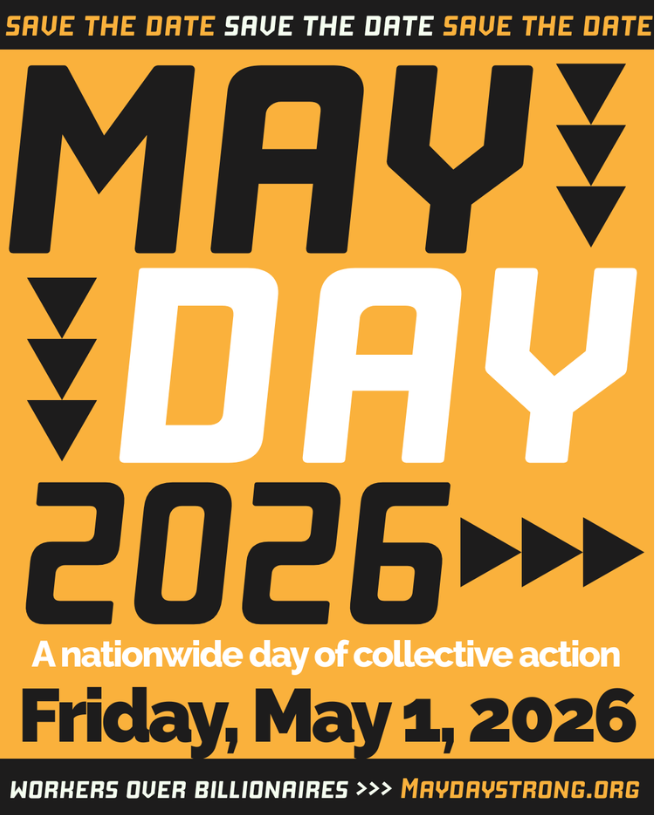
What’s next? May 1.
May Day Strong is building a nationwide day of rallies, marches, walkouts, and community action under one clear demand: a country that puts workers over billionaires, not the other way around.
In many cities, the call is “No Work. No School. No Shopping.”
May Day ties the fight for democracy directly to what people are living every day… the cost of groceries, the paycheck that doesn’t stretch, the public school that keeps losing funding, the immigrant neighbor who is afraid to go to work. The National Education Association is mobilizing educators in hundreds of cities. The Chicago Teachers Union passed a resolution declaring May 1 a Day of Civic Action. Labor Notes reports that nearly 100 solidarity schools have already been planned to prepare communities for the day.
The coalition is broad. And the map is growing.
If you showed up on March 28, this is where you show up next. (Share this post with someone who marched and is wondering where to go from here.)
Find Your Local May 1 Action
maydaystrong.org is where you’ll find actions near you.
Events are being added regularly, so if nothing shows up in your area yet, check back.
If you are part of a local group, union, faith community, parent organization, or any kind of civic network, now is the time to start the conversation about May 1.
The national organizing call is April 9.
Toolkits are already available on the May Day site.
If you know about a May 1 action in your area, leave it in the comments.
Sources:
May Day Strong official site | event map, demands, toolkit, April 9 national organizing call
National Education Association | May Day 2026 Toolkit
Labor Notes | “Gearing Up for May Day: Solidarity Schools Spread”
Chicago Teachers Union | Resolution for May 1 Day of Civic Action
May Day Strong | find your local event
May Day Strong coalition partners
Sacrifice is not easy
The following excerpt is from a Washington Post Op-ed from 2020 regarding the Pandemic, but the lessons apply perfectly to opposing the current fascist takeover.
“Sacrifice is not easy and natural, but it can happen. And yet, the language of sacrifice faded in the aftermath of a more popular, more total and more demanding conflict for Americans. Following World War II, the “good war,” politicians, business leaders, unions and many Americans embraced the idea that mass consumption would drive economic prosperity. Even in the midst of the burgeoning Cold War, such a notion supplanted more collectivist notions of community and sacrifice, in part because those were increasingly stigmatized as “socialist” or “communist.” This offered an individualist reaffirmation of the nation’s democratic values and became central to American identity. Mass consumption and participation in the economy, not sacrifice, increasingly came to signal one’s patriotism.
The last military draft in the United States ended in 1973, and since then, service and sacrifice have been voluntary and borne unevenly. The fractures of national unity that came at the end of the Vietnam War and the distrust of government in the wake of Watergate helped to propel these changes. In their wake, collective sacrifice has been extolled by politicians but never urged, much less required. Instead, market logics and consumer-citizenship has been the default setting for how to practice engaged models of citizenship.
Shopping, traveling and showing confidence in the economy have come to define American citizenship and even responses to collective existential threats such as terrorism and emergencies, including deadly viral outbreaks.
The challenges the nation now faces are dire and require sacrifice, not consumption. The problem is that Americans have been actively discouraged by their leaders from making sacrifices in support of larger efforts — including wars, fossil fuel consumption, global warming, the Great Recession and the current pandemic. Confronting the looming public health, economic and climate challenges today requires a wholesale change in how citizens and the state conceive and construct a rhetoric as well as a practice of collective sacrifice.”
Christopher McKnight Nichols is professor of history and Woody Hayes Chair in national security studies at The Ohio State University. He is author of "Promise and Peril: America at the Dawn of a Global Age" and editor and author of "Rethinking American Grand Strategy" and "Ideology in U.S. Foreign Relations: New Histories” (Columbia UP, 2022).
https://www.washingtonpost.com/outlook/2020/12/07/americans-used-sacrifice-public-good-what-happened/
With the following report in mind, why are we only organizing a one day event? We need multiple days so they feel the pain we feel:
https://www.theguardian.com/us-news/2026/apr/03/defense-spending-trump-budget-proposal?cdmc=3BrXjNG18mUChJsrnRxTCrkisis&refcode2=3BrXjNG18mUChJsrnRxTCrkisis&refcodecdmc=3BrXjNG18mUChJsrnRxTCrkisis