


📌 NOTE FOR NEW READERS: This is an independent newsletter covering 50501, No Kings, and the pro-democracy and civic action ecosystem. Subscribe to support our publication and to never miss a post.
On September 1, two new political groups were formed.
One called No Going Back PAC and the other called Safety and Affordability PAC… Neither with a previous history of political spending under those names.
Fifteen days later the Associated Press reported that Trump aligned groups reserved more than $130 million in midterm advertising.
No Going Back accounted for $98.5 million of that.
Safety and Affordability accounted for $27 million.
Both share a treasurer with MAGA Inc, which held more than $400 million as of late July.
Where Does Election Money Go?
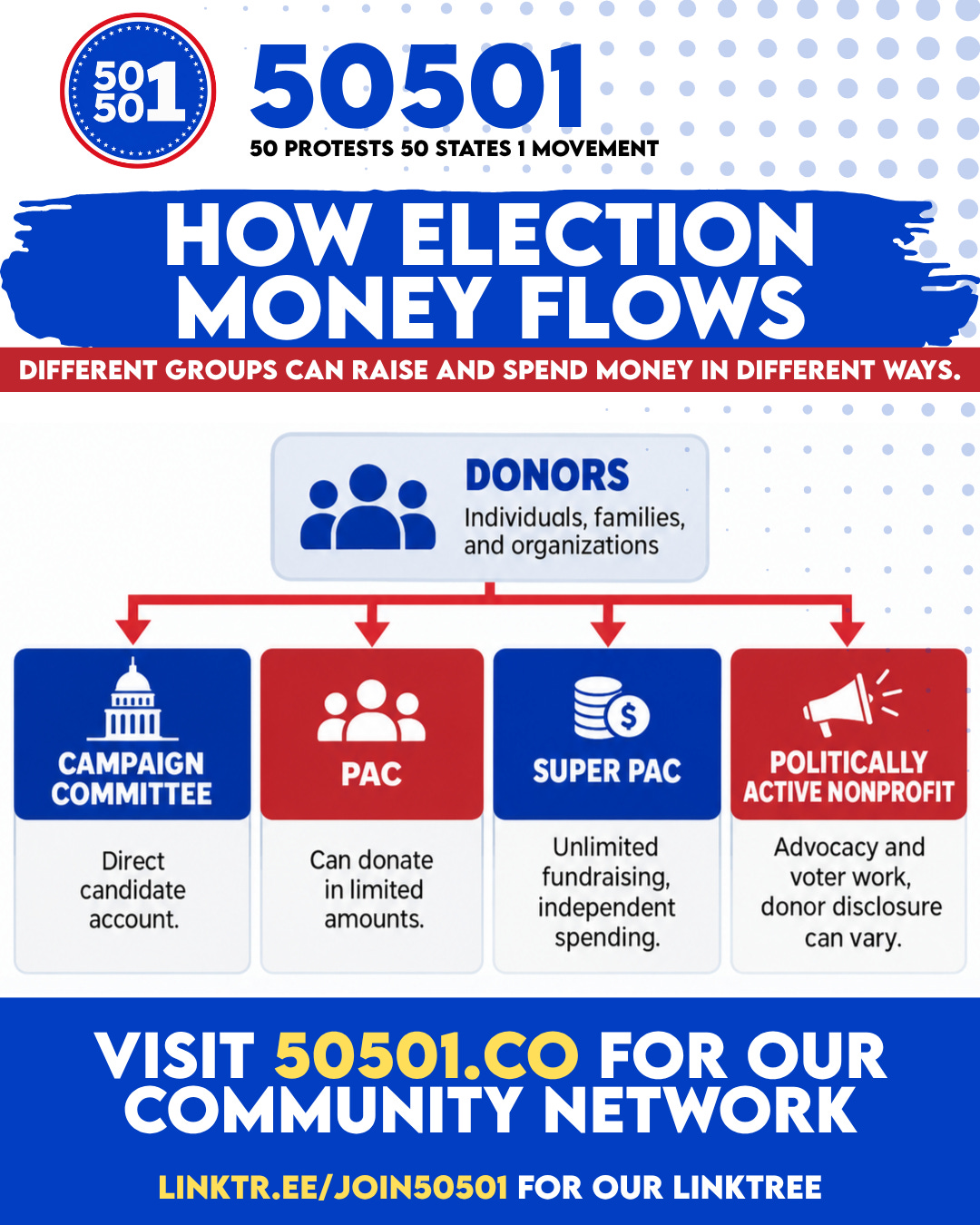
Here’s a quick recap of the four main types of organizations involved in funding elections. Each has different rules about who can give them money, how much they can accept, and what they can spend it on. Understanding these differences will make the rest of this article much easier to follow.
A campaign committee is the candidate’s own account. When you donate to a Senate candidate through their website, this is usually where it lands. The candidate controls it, spends it, and answers for it. Unlike an independent super PAC, it can coordinate directly with the candidate.
A PAC, or political action committee, is a group that pools money from many people to spend on politics. Think of it as a shared account with rules attached. A traditional PAC can give money directly to candidates, but only in limited amounts.
A super PAC is the one that changes things quite a bit... It can raise unlimited money from eligible individuals, corporations, and unions. In exchange, it’s barred from giving money directly to candidates or coordinating its independent spending with their campaigns. It spends on its own, usually on advertising. Those two new groups from September 1 are super PACs.
A politically active nonprofit is a tax exempt organization that does advocacy or voter work. Depending on what section of the tax code it falls under, it may or may not have to tell the public who funds it. This is where the phrase “dark money” usually comes from.
1. How Political Donors Give Millions Despite Contribution Limits
When we donate to another person’s campaign, the law caps it.
For the 2025-2026 cycle the Federal Election Commission set that cap at $3,500 per candidate per election.
Primaries and general elections count separately, so someone who gives the max in both has given $7,000 to one candidate across the cycle.
And candidates can spend unlimited amounts of their own personal funds on their own campaigns.
The FEC reported that between January 2025 and March 2026, congressional candidates raised $2.127 billion combined. Over the course of fifteen months, PACs raised $6.3 billion. This is roughly 3 times what all congressional candidates raised.
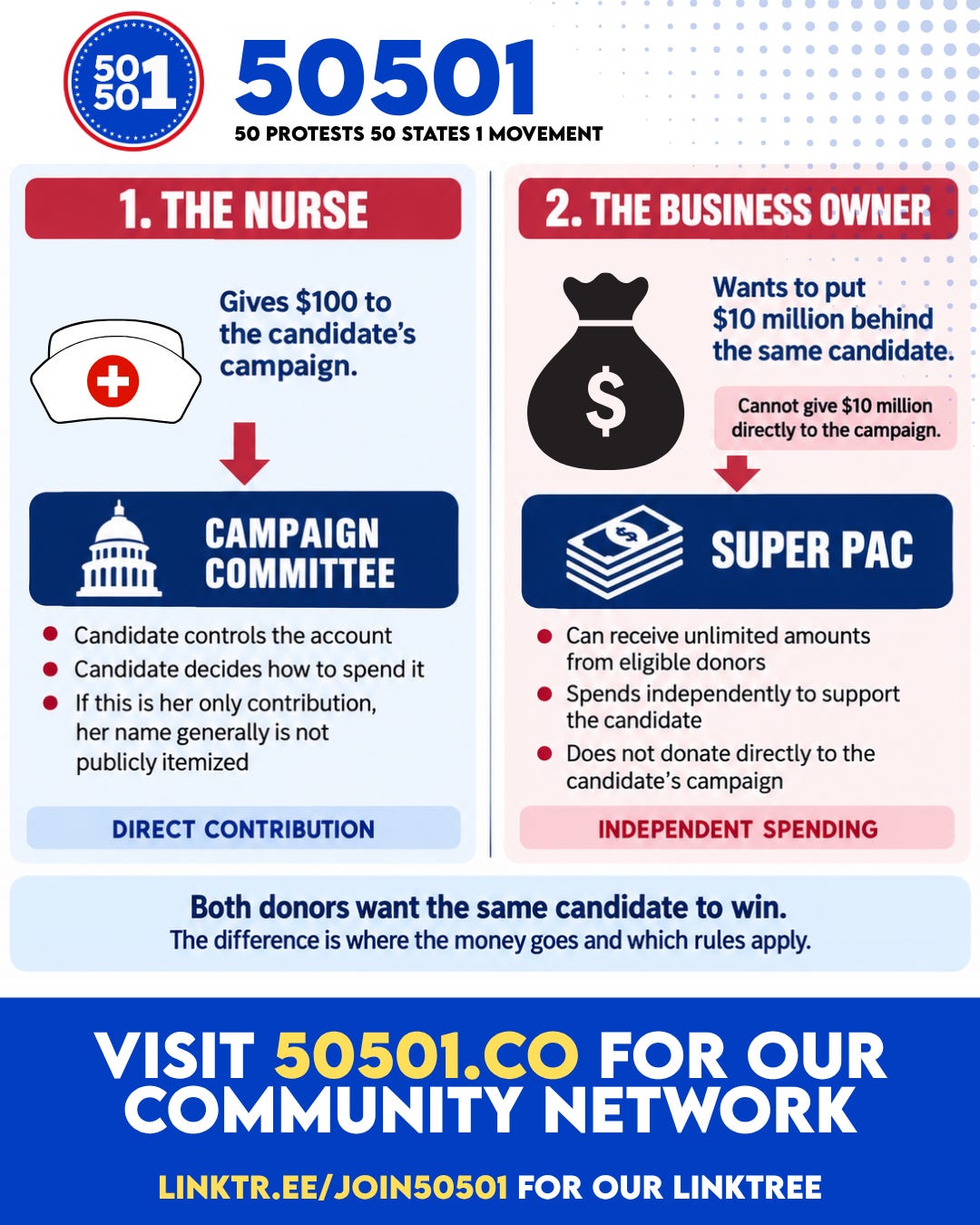
Imagine two people who both want the same Senate candidate to win:
The first is a nurse who can spare $100. Her money goes into the candidate’s campaign account. If that’s her only contribution during the election cycle, her name generally doesn’t have to appear in a public filing. The candidate decides how to spend it.
The second owns a company and wants to put $10 million behind that same candidate. She legally can’t give that amount directly to the candidate’s campaign. So instead she writes the $10 million to a super PAC, which faces no limit on the amount it can receive from an eligible donor.
2. How Super PACs Secured Power to Raise Unlimited Money
Most of us have heard of Citizens United, the 2010 Supreme Court decision that lets corporations and unions to spend unlimited amounts of money independently to support and oppose candidates. A few months later, an appeals court decided SpeechNow.org v. FEC . The court ruled that groups making independent expenditures only, couldn’t be subject to contribution limits.
Together these decisions helped establish the modern super PAC: An organization that can raise unlimited money from donors and spend it independently to support & oppose political candidates. However, super PACs can’t contribute directly to candidates or coordinate their independent spending with candidates campaigns.
3. What Is Dark Money and How Does It Work?
Not every organization involved in an election is a political campaign: many are nonprofits. The tax status determines what political activities they’re able to conduct and if they have to publicly disclose their donors.
Two types of nonprofits are important to understand:
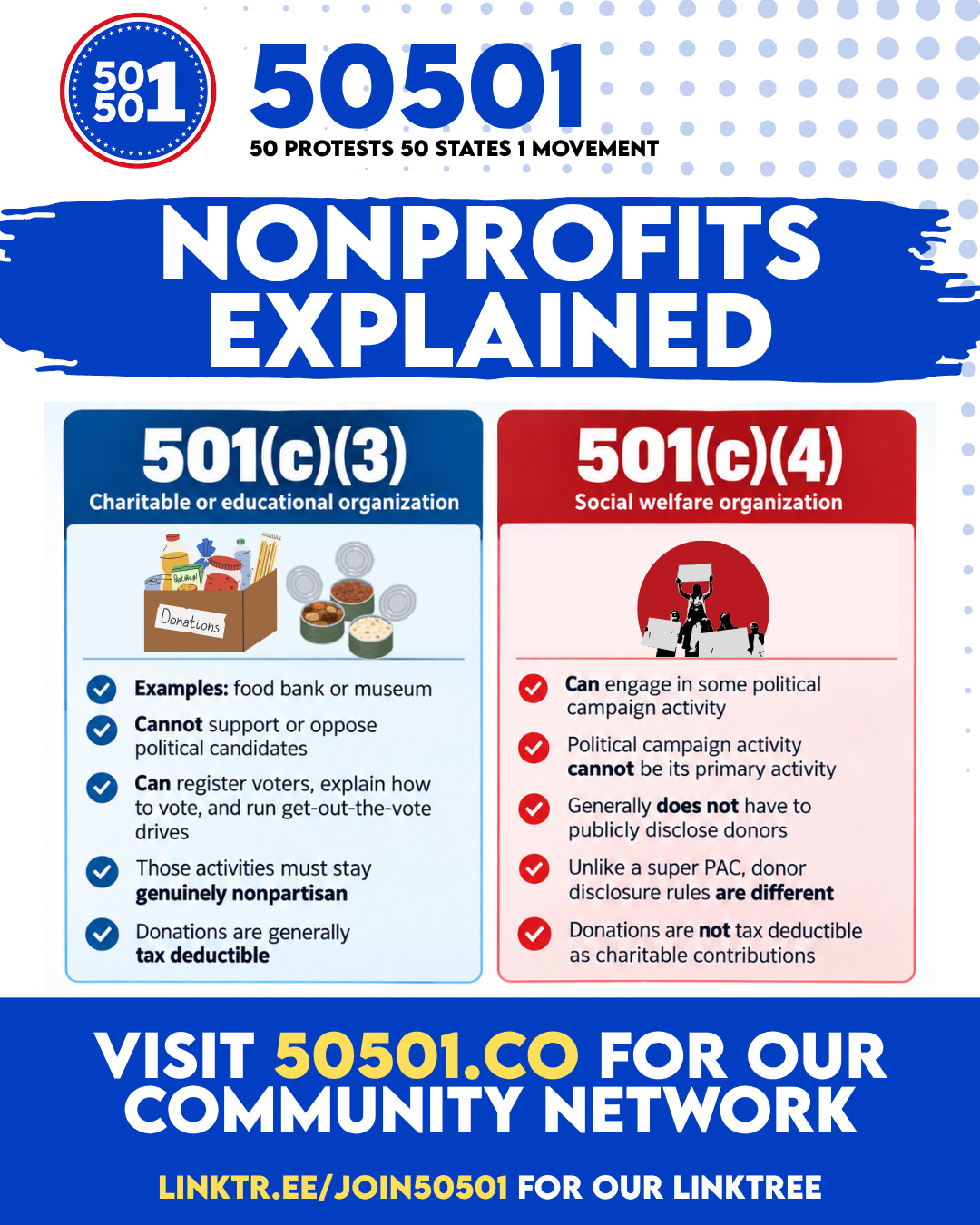
A 501(c)(3) is a charitable or educational organization like a food bank or museum. The IRS prohibits these groups from supporting or opposing political candidates. They can still register voters, explain how to vote, and run get-out-the-vote drives, but those actions/events have to be genuinely nonpartisan. Donations are generally tax deductible.
A 501(c)(4) is a social welfare organization. The IRS allows these groups to engage in some political campaign activity, provided it’s not the primary activity. Unlike super PACs, they don’t usually have to disclose their donors. Donations are not tax deductible as charitable contributions.
Now return to the business owner with $10 million: Instead of donating directly to a super PAC, where her name would appear, imagine she donates to a 501(c)(4), the nonprofit independently decides to contribute money to the super PAC, without the donor directing that transaction.
The super PAC’s filing identify the nonprofit as its donor but the nonprofit doesn’t have to publicly identify the people who fund it (the transfer is visible but the original donor might not be.)
This is one way dark money works. The public can see which organization provided money without knowing who funded the organization.
Making a contribution in someone else’s name is also prohibited and a nonprofit can legally make certain political contributions but can’t serve as a front for a donor seeking to evade campaign finance disclosure requirements.
This is why some advocacy organizations maintain separate 501(c)(3) and 501(c)(4) entities, each handling activities permitted under different legal structures.
4. Political Ads Are Getting Millions While Voter Outreach Faces Funding Shortfalls
According to September 19 reporting by the Associated Press, progressive voter organizations are experiencing funding shortages ahead of the 2026 midterms.
Voter outreach organizations fund events/activities like registration drives, voter education and transportation assistance. These programs depend on nonprofit funding, grants, and donations.
America Votes , who coordinates more than 400 progressive organizations, reported funding levels below those of the 2022 midterms. A July fundraising memo cited by the AP found that voter mobilization groups it examined raised nearly 40% less than at comparable points in the 2018 and 2022 election cycles.
Vamos a Votar, a Latino voter engagement initiative operating across 10 states and 17 House districts, reported $5.4 million shortfall against its $27.5 million fundraising goal.
In response, some organizations have reduced staffing and adjusted their outreach strategies, incorporating AI-assisted voter information, social media partnerships, and ride sharing programs to maintain services with smaller budgets.
5. How to Find Out Who Pays for Political Ads
Political ads and campaign finance records are publicly accessible, although disclosure requirements vary by organization.
Here are 3 ways to look into who’s funding political activity:
1. Check the advertisement
Federal law requires political ads to identify who paid for them and if a candidate authorized the message. An ad stating that it was “not authorized by any candidate” identifies spending outside a candidate’s campaign. Click here to read more about this.
2. Search the FEC database
At fec.gov/data you can search federal candidates to check out reported contributions, expenditures, and disclosed donors.
Candidate committees must publicly identify individuals whose contributions exceed $200 during an election cycle . For PACs and party committees, this threshold applies to contributions exceeding $200 during a calendar year.
Newly formed committees might not have filed their first financial reports. The next regular quarterly filing deadline is October 15, 2026 , however some committees have additional reporting-obligations.
3. Research nonprofit funding
The IRS Tax Exempt Organization Search lets you view available nonprofit financial filings including information about revenue, expenditures, and grants.
Most tax exempt organizations aren’t required to identify their donors. If a super PAC receives funding from a nonprofit, the financial records might identify the organization without revealing the individuals who originally provided the money.
Put What You've Learned Into Practice
The next time you see a political ad… check its disclaimer.
Who paid for it and was it authorized by a candidate?
Use the FEC database to find the organization behind the ad, including its reported contributions, expenditures, and disclosed donors.
For official voting information, visit Vote.gov to find your state’s registration requirements, deadlines, and election resources, or for a state by state guide, click here.
You can help by checking your voter registration and sharing these resources with your communities.
Useful Links:
Register at 50501.CO (Our Community Network!)
Election Protection Wallet Cards You Can Print
Check if you can vote early NOW (Don’t miss your registration cut-off!)
Save the Date: No Kings Is Back October 17