


📌 Note for new readers: The 50501 Movement organizes peaceful action across all 50 states to defend democracy. This publication is nearly 100k readers strong and growing. If this resonates with you, hit subscribe.
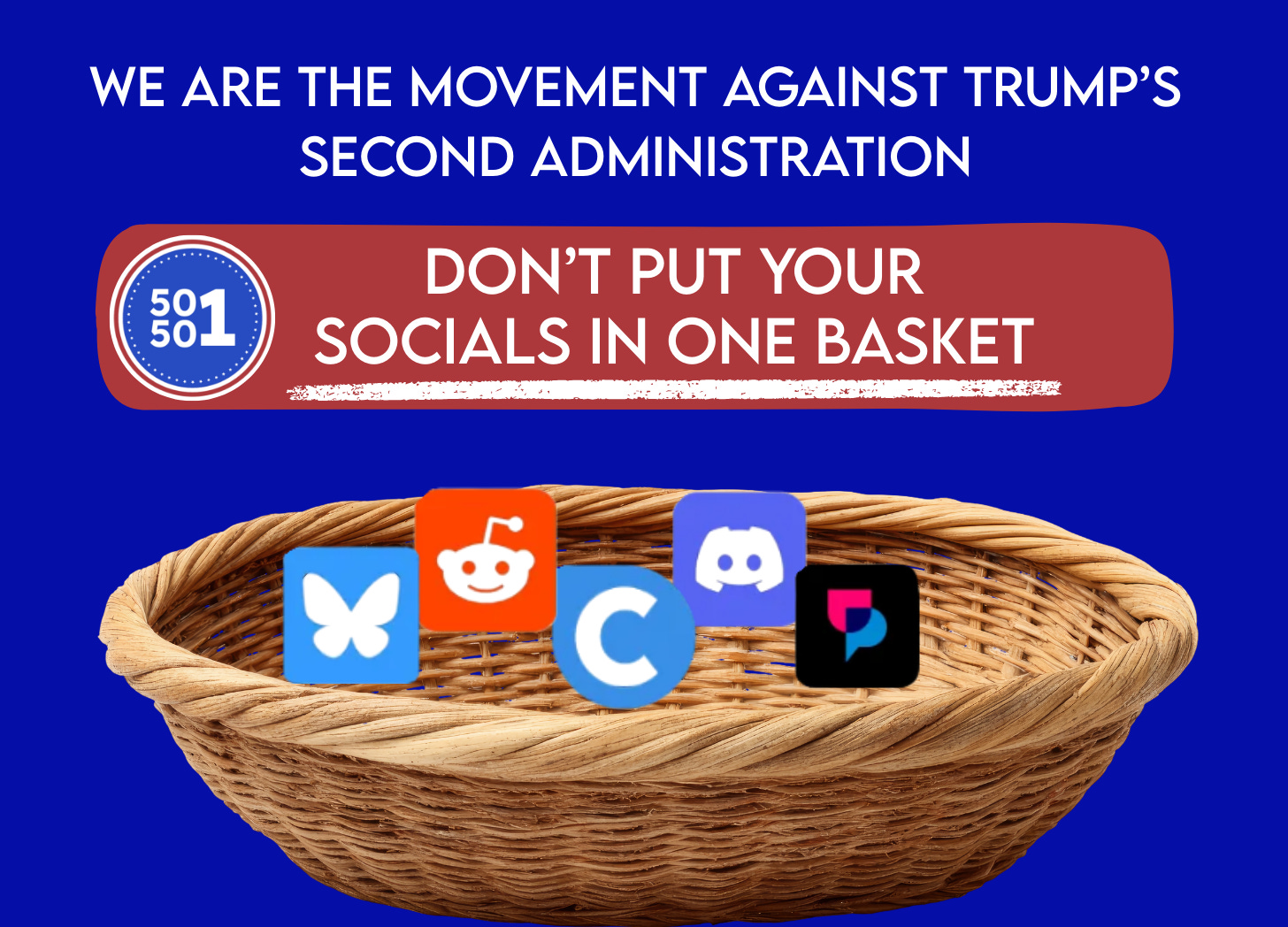
Movements that depend on a single platform can be weakened by an algorithm change, policy shift, ownership decision, or suppression. That’s why 50501 is intentionally building across multiple spaces instead of relying on just one platform. (Plus, we’re a grassroots movement- we’re everywhere!)
This post walks through where to find 50501 online, what each platform does best, where each one might fall short, and why you should be connected to us on Communities, Discord, and of course, this Substack.
Save the graphic, share this post, and consider joining us in more than one platform:
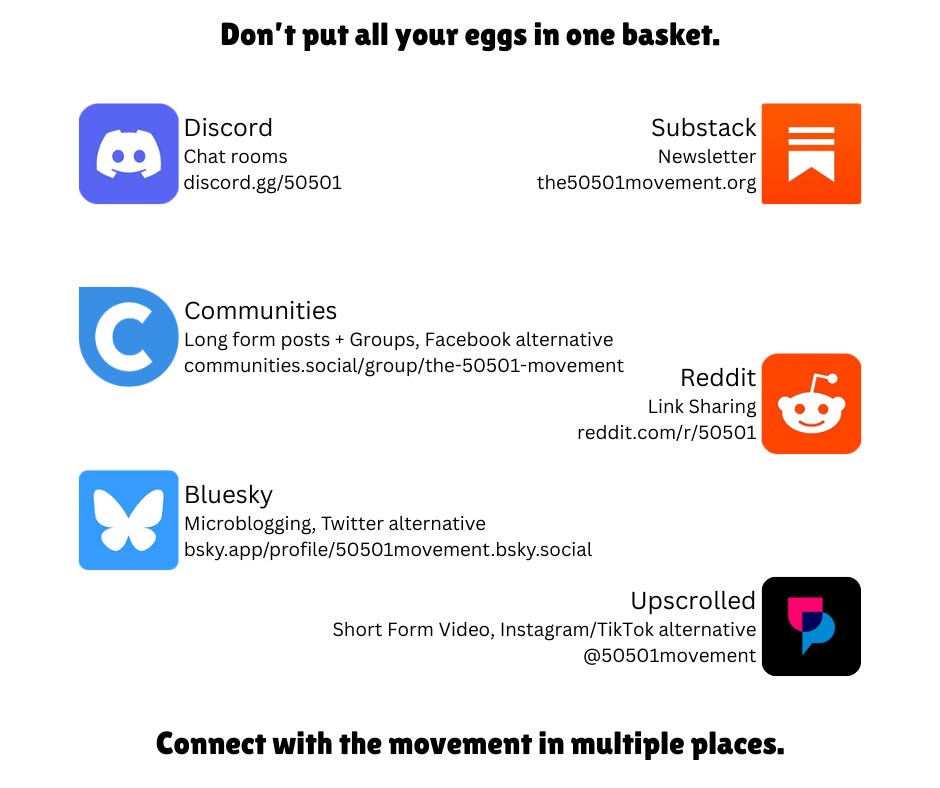
The platforms we use are owned, governed, and optimized for priorities that often have very little to do with the health of a pro-democracy movement. We have all seen what that looks like, especially on META owned platforms (Facebook/Instagram/Threads): reach drops, posts get buried, and audiences built over years become harder to find.
A movement that lives on only one platform can be easily buried. A movement that lives in a variety of places by a variety of people is much harder to silence.
This is already part of why 50501 keeps growing. We are stronger because people can still find each other across platforms, even when one space becomes less reliable.
Communities: A Different Kind of Platform
Communities is one of the newer spaces here, and it is worth paying attention to because it’s trying to solve a very real problem: how we keep organizing when major platforms suppress reach, bury posts, and make it harder for people to find each other.
The immediate goal behind Communities is practical. It’s meant to help pro-democracy movements build usable broadcast and organizing infrastructure, a place where people can spread information, cross-pollinate news and events, and stay connected without depending entirely on corporate platforms that can change the algorithm overnight.
In many ways, it is trying to bring back the best parts of older social media, especially the era when platforms like Facebook actually helped pro-democracy and social justice movements grow instead of suppressing them. But it’s also trying to improve on that model by changing two things: the funding model and the governance model.
Communities describes itself as working toward becoming a user-funded, multi-stakeholder cooperative, funded more like Wikipedia through user support, and governed democratically by the people who build it and use it. The idea is that if a platform is not driven by ads, tracking, and top-down corporate incentives, it has a better chance of staying pro-social over time instead of sliding into the kind of “enshittification” people have watched happen across the modern internet.
On corporate platforms, the users building community don’t control the rules/algorithm, the incentives, or the systems deciding what gets to be seen. Communities is trying to build something healthier from the ground up, a platform designed to serve the people using it rather than extract from them.
The broader vision draws inspiration from cooperative models like Mondragon. Some people describe that ambition as trying to build something closer to a cooperative Google or a healthier kind of social infrastructure as an attempt to build on different terms.
What it does well:
Communities supports long-form posts, comments, reactions, photo and link attachments, public and private sharing, and open and private groups.
Why it can help the movement:
It offers another place to gather, connect, and circulate information outside the pressures of algorithm-driven platforms.
The tradeoff:
It is still early, and the network is smaller than the established giants.
That doesn’t make it unimportant, it just means it should be understood for what it is right now… an emerging platform with a mission, a new and unique structure, and potential to become a meaningful part of a healthier platform.
If you want to learn more about the bigger vision behind it, including the ideas of enshittification, cooperative governance, and how Communities hopes to support democracy long term, you can listen to the founder Daniel Bingham’s interview here: Let’s Talk Democracy interview
Join Communities here: Communities
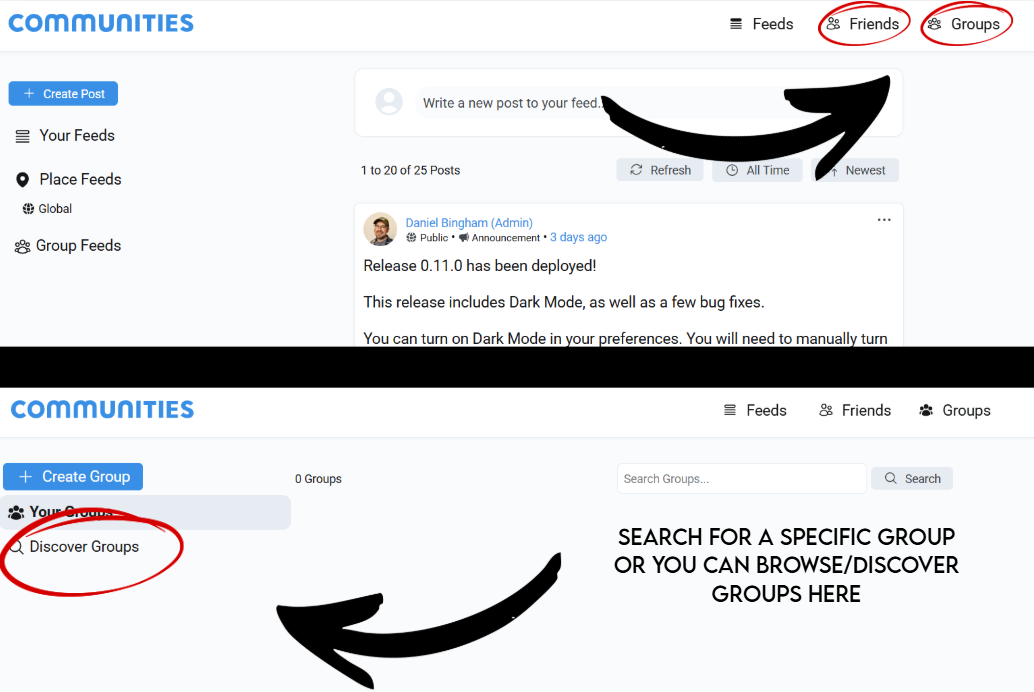
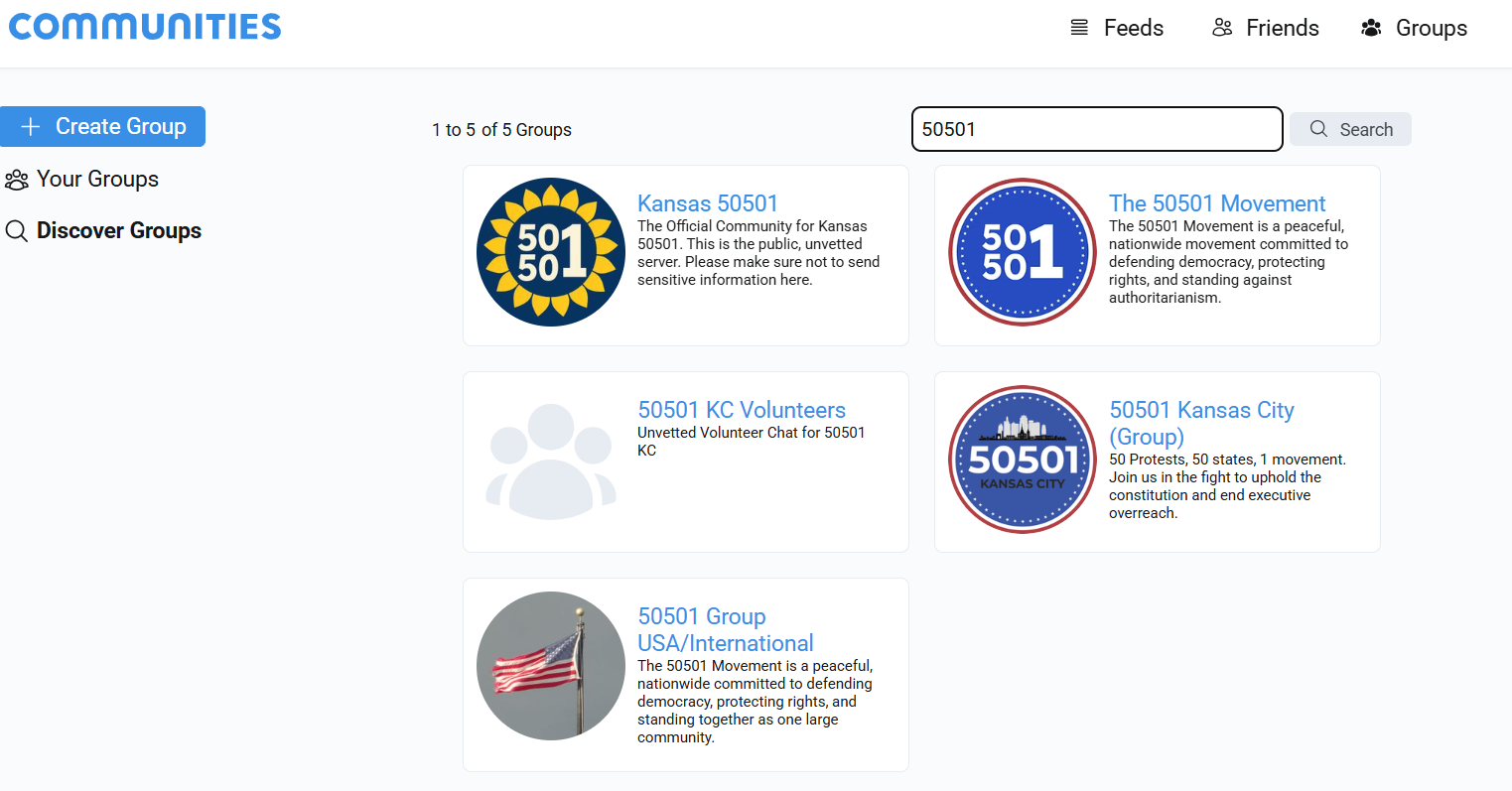
Discord: Rapid Response Connections and Volunteer Groups
Discord is one of the most useful spaces we have for actual day-to-day communication.
It’s organized into text and occasional voice channels. Discord is great for quick updates, active working groups, and the kind of back-and-forth problem solving that doesn’t happen easily on a publishing platform or a scrolling feed.
What it does well:
Discord is where someone can ask a question and get an answer quickly. It’s where announcements can be separated from discussion, organizing channels can be separated from general conversation, and people can work through ideas together quickly.
Why it’s important for the movement:
For people who want to do more than follow, Discord makes that easy. It’s one of the best places for people who want to communicate, plug in, and be part of what’s actively happening.
The tradeoff:
Because Discord moves fast, important information can get missed. Newcomers can find an active server overwhelming at first. Discord is not the easiest to learn, but once you understand where everything is, there is an “Aha!” moment. It’s also not the best archive or easiest place for public discoverability. Discord is simply built for a different purpose. Discord is where people talk in groups, quickly and has more group features.
If you have been meaning to join the 50501 Discord but have not taken that step yet, today is a good day.
Join Discord here: Discord
Substack: You Are Here ⭐
This Substack is where we can slow down enough to make sense of what’s going on.
It’s where context, analysis, weekly recaps, action guides, and historical parallels can all live in one place.
Subscribers receive posts directly by email and/or through the Substack app.
What it does well:
Substack gives us space for depth and long articles. It’s where longer explanations can come alive and where ideas can be developed fully. People can come back later to read, share, and reference what was written.
A post published here months ago can still be found, shared, and used by searching our archives or searching your email inbox. That’s not something you can get from a Facebook post, a short-form feed update, or a fast-moving chat thread.
Why it matters for the movement:
We need clarity, memory, and context. People need a place where they can understand not just what happened, but why it’s important, what we can do, and how different pieces connect.
The tradeoff:
Substack is not built for rapid-fire coordination. It’s not a chat room (although- you can join our subscriber chat!), and not everyone reads a long post the second it drops.
If you have been reading but have not subscribed yet, now is a great time. And if you are already subscribed, sharing a post with someone new is one of the most powerful things you can do to help us grow, especially if you share the post into a group with a larger audience (Like a local community group!)
The Rest of the 50501 Platform-Ecosystem
The platforms above are some of the most useful places to start, but the rest of the socials are important too because each platform plays a different supporting role.
Reddit is useful for threaded discussion, link-sharing, and discoverability. People stumble onto Reddit through search. The tradeoff is that recommendation systems still influence what gets buried.
Bluesky is useful for fast public updates and visibility outside more closed spaces. It works well for quick communication, but it’s still a short-form environment like X/Twitter.
UpScrolled is a newer platform that has attracted interest from people looking for alternatives away from highly censored video-apps like TikTok. It’s new and promising, but it’s still early, which means it hasn’t yet developed the scale or stability but it’s worth checking out.
(We’re excluding Meta platforms and TikTok from this list, but yes 50501 is there too.)
What To Do Next- Call to Action!
Save the social media graphic at the top of the post.
Share this post.
Call to Action: Join us in more than one place!
If you want a place to communicate and connect with your state group or find a team to volunteer with, join Discord.
If you want recaps, information, and context, subscribe to this Substack.
If you want to explore another platform trying to build on different terms, check out Communities.
Other, leave us a comment:
Which platform do you think is most useful for building right now?
While I applaud what 50501 does, I do want to warn you against substack (although yes, I do use this platform). It’s still a corporate owned algorithm, and there is still a huge problem with nazis and other far right propaganda accounts on this platform. Not to mention the crazed far left accounts. Every so often the algorithm inserts them into my feed.
So take care with this platform. It is not an innocent alternative to meta.
Can't find you in upscrolled. What should I search for?