


📌 NOTE FOR NEW READERS: The 50501 Movement organizes peaceful action across all 50 states to defend democracy. This publication is nearly 100,000 readers strong and growing. If this resonates with you, hit subscribe.
SUMMARY
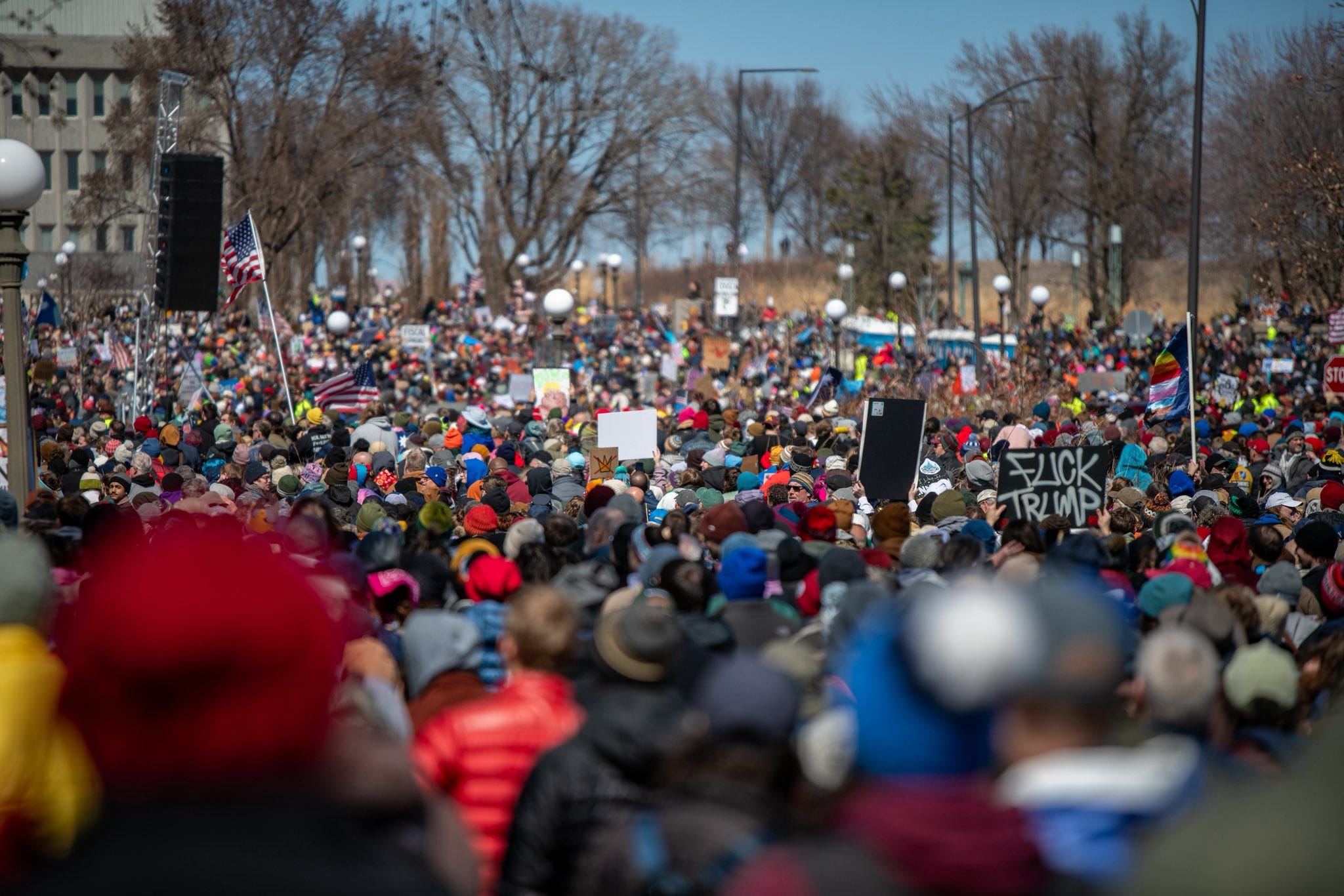
On Saturday, March 28, more than 3,200 coordinated No Kings events took place across all 50 states and in several countries abroad. Organizers estimated that eight to nine million people participated, which would make it the largest single-day protest in American history. According to Reuters, roughly two-thirds of No Kings events were happening outside major cities, a nearly 40% jump for smaller communities compared to the movement’s first mobilization last June. March 28 was a map of civic refusal that reached into every corner of the country.
The flagship. In St. Paul, Minnesota
Where federal agents killed Renée Good and Alex Pretti earlier this year, local reports put attendance at more than 100,000. Bruce Springsteen performed. Sen. Bernie Sanders, Jane Fonda, Joan Baez, and Gov. Tim Walz spoke. The event was massive and impactful.
No Kings 3
In Albuquerque, organizers estimated 50,000 people marched peacefully for roughly three miles. Counter protesters were few. The mood was upbeat and positive.
In Alabama, nearly two dozen protests drew thousands statewide, 7,000 in Birmingham alone. An organizer in Auburn described what brought her out in a phrase worth sitting with: “joyful resistance.” She said the purpose was “to try to turn that pervasive feeling of hopelessness into something that looks like hope.”
In Southwest Florida, thousands gathered across multiple sites. Naples saw its largest No Kings turnout yet.
In Maryland, the Hagerstown rally drew an estimated 2,500–3,000 people just miles from the 825,000-square-foot warehouse that ICE wants to convert into a 1,500-bed immigrant detention center. Outside a high-rise assisted-living center in Chevy Chase, a group of held signs that read “Resist tyranny,” “Honk if you want democracy,” and “Dump Trump.”
In North Carolina, more than 70 cities and towns held No Kings protests from Durham to Fayetteville to Southern Pines, where more than 3,000 took to the streets. A group gathered in Raleigh’s Brier Creek neighborhood.
In New Orleans, thousands rallied as civil rights pioneer Leona Tate urged the crowd to connect this moment to a longer history of resistance.
Why the Geography Is the Point
CBS News captured the range; People rallied from New York City, with almost 8.5 million residents in a solidly blue state, to Driggs, Idaho, a town of fewer than 2,000 people in a state Trump carried with 66% of the vote.
A movement can fill one downtown and still be dismissed as regional, partisan, or confined to people who already agree with each other. It’s much harder to dismiss a movement that appears simultaneously in Albuquerque and Auburn, in Hagerstown and Naples, in Driggs and Southern Pines and Chevy Chase… places that national commentators rarely mention when they talk about “the American public.”
Leah Greenberg, co-founder of Indivisible, told Reuters that competitive suburban areas are seeing “huge” increases in organizing interest citing Bucks and Delaware counties in Pennsylvania, East Cobb and Forsyth in Georgia, and Scottsdale and Chandler in Arizona. Those are the places that decide national elections.
The movement grew from roughly 2,100 events in June to more than 2,700 in October to more than 3,200 on March 28. That trajectory is incredible. And the White House is aware of it. The administration dismissed the nationwide protests as the product of “leftist funding networks” with little real public support while the president’s own approval rating sat at 36%, its lowest since his return to the White House, according to Reuters/Ipsos.
When the most common response to a movement is to pretend it doesn’t exist, tells us about how seriously it’s being taken behind closed doors.
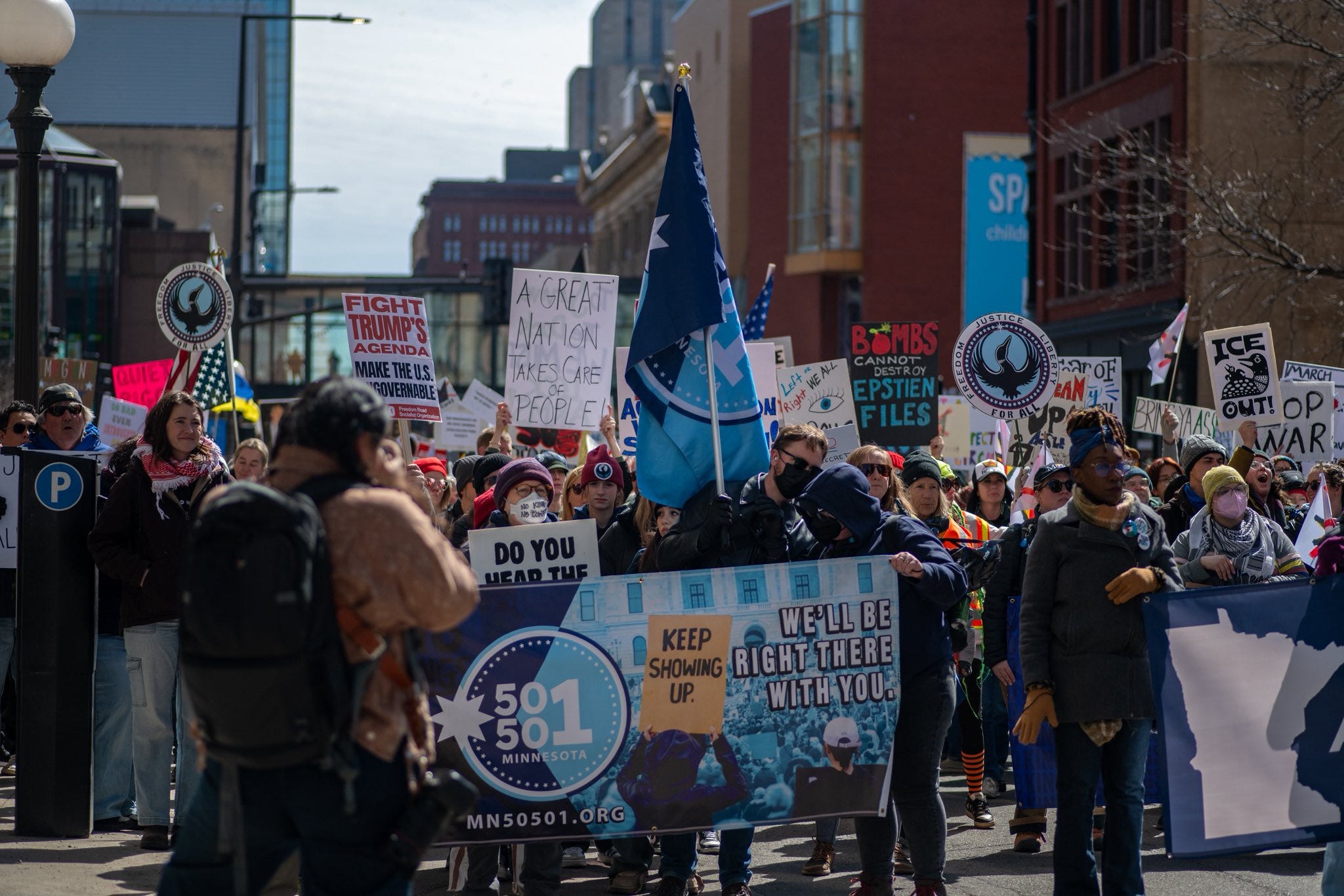
Honest coverage requires preserving an important distinction: the vast majority of March 28 was peaceful. In Los Angeles, AP reported dozens of arrests near a federal detention center after a dispersal order, while describing the overall No Kings demonstrations as vast and largely peaceful. Separate evening protests at ICE facilities in some cities ended with a small number of arrests. The exceptions made headlines precisely because the broader pattern of the day was different.
Organizers also included a virtual protest for people with disabilities and those unable to attend in person. A movement that builds in accessibility is a movement that is thinking beyond just a day. If you attended the virtual protest, give us some feedback in the comments.
What’s Next
A country does not change only because millions of people fill streets for one afternoon. A country changes when those people engage in their communities and keep building the momentum. Momentum that registers voters, supports candidates, builds mutual aid networks, and makes civic participation a habit instead of an occasion.
The midterm elections are in November. The time between now and then is important and urgent. It’s where we become durable or a memory.
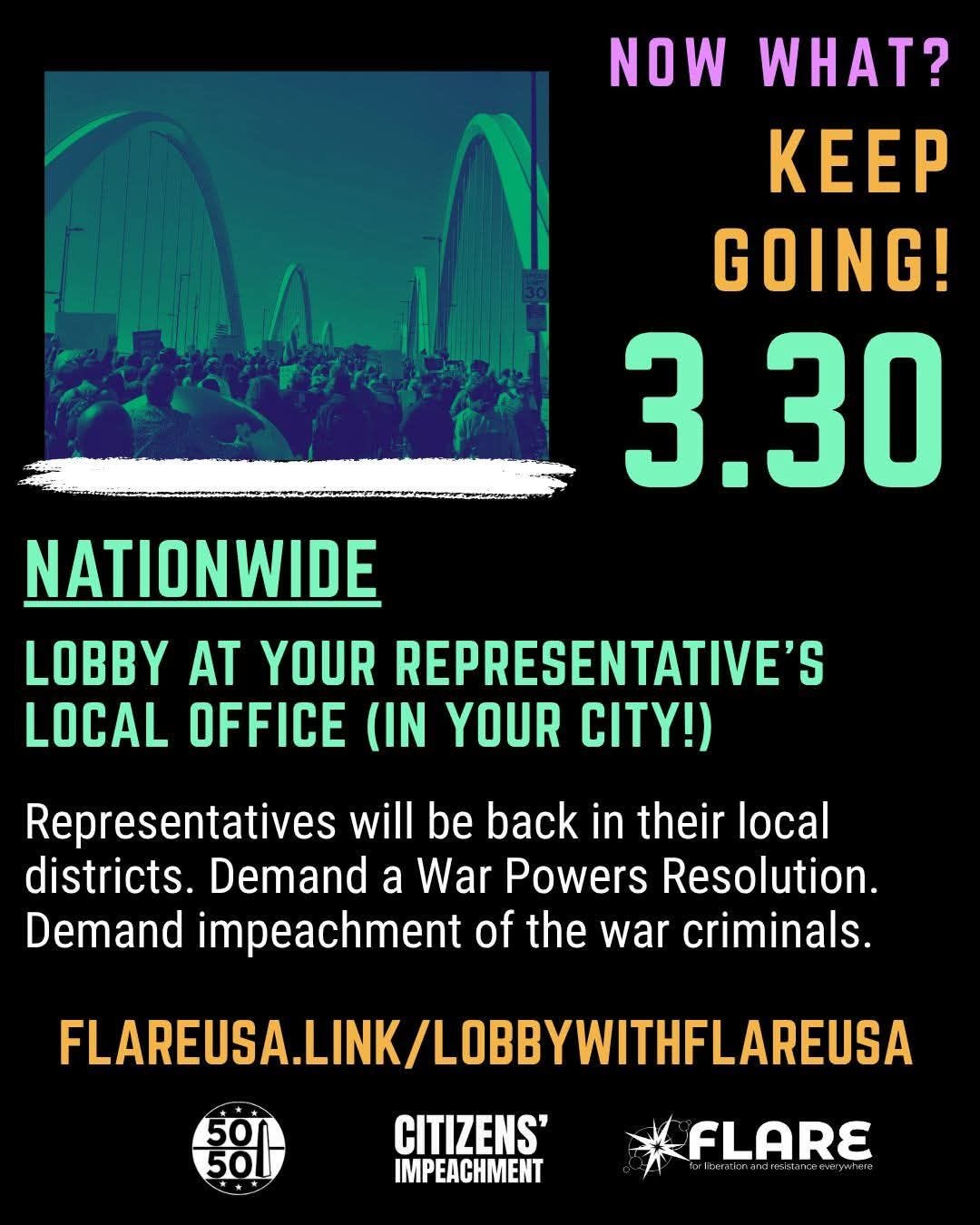

Demand that the war criminal be impeached.
Comment Section!
If you were in the streets on Saturday… whether in a major city or a town of 2,000, drop a comment with your city and a sentence or two about what the day felt like where you were. How did it go?
Sources
PBS NewsHour/AP | 3,200+ events, two-thirds outside major urban centers, international demonstrations, San Diego and LA reporting
CBS News | Organizer estimates of millions, NYC-to-Driggs geographic contrast, White House “leftist funding networks” dismissal
CNBC | Two-thirds of events outside major cities (40% jump from June), Trump approval at 36%, competitive suburban organizing surge in PA, GA, AZ
Alabama Reflector | “Joyful resistance” framing, 22 protests statewide, 7,000 in Birmingham, Auburn campus security conflict
KUNM | Albuquerque estimated at 50,000, three-mile peaceful march, upbeat mood
WGCU | Southwest Florida multiple-site protests, Naples largest No Kings turnout yet
Maryland Matters | Hagerstown rally near proposed ICE detention center, Sen. Van Hollen remarks, statewide turnout
OPB | Tens of thousands of peaceful Northwest protesters, distinction between daytime rallies and evening ICE facility arrests
KOIN 6 | McMinnville, Lake Oswego, Salem, Tillamook, and other Oregon rally locations
KLCC | Springfield, Corvallis, Astoria, La Grande protests and personal testimonies
Al Jazeera | “Where they are protesting” as the defining story, international photo coverage


In Paris we demonstrated at Place de la Bastille and we also registered many US citizens to vote. When thinking about the cost of driving to your voter registration center to register to vote in person as would be required by the SAVE Act, think about what it would mean for the millions of us who live overseas. I would have to get back to Boston every year to register. I use my travel money to visit family - who are not in Boston. It's a voter disenfranchisement act. Probably no need to have mentioned this to your readers!
It's not much but we had 75 brave souls in Hillsdale, MI. Thanks to all who showed up everywhere, special thanks to those who stood up with us in the home of Project 2025.