


📌 NOTE FOR NEW READERS:
The 50501 Movement organizes peaceful action across all 50 states to defend democracy. Our publication is thousands of subscribers strong and growing. If this resonates with you, hit subscribe!
TL;DR
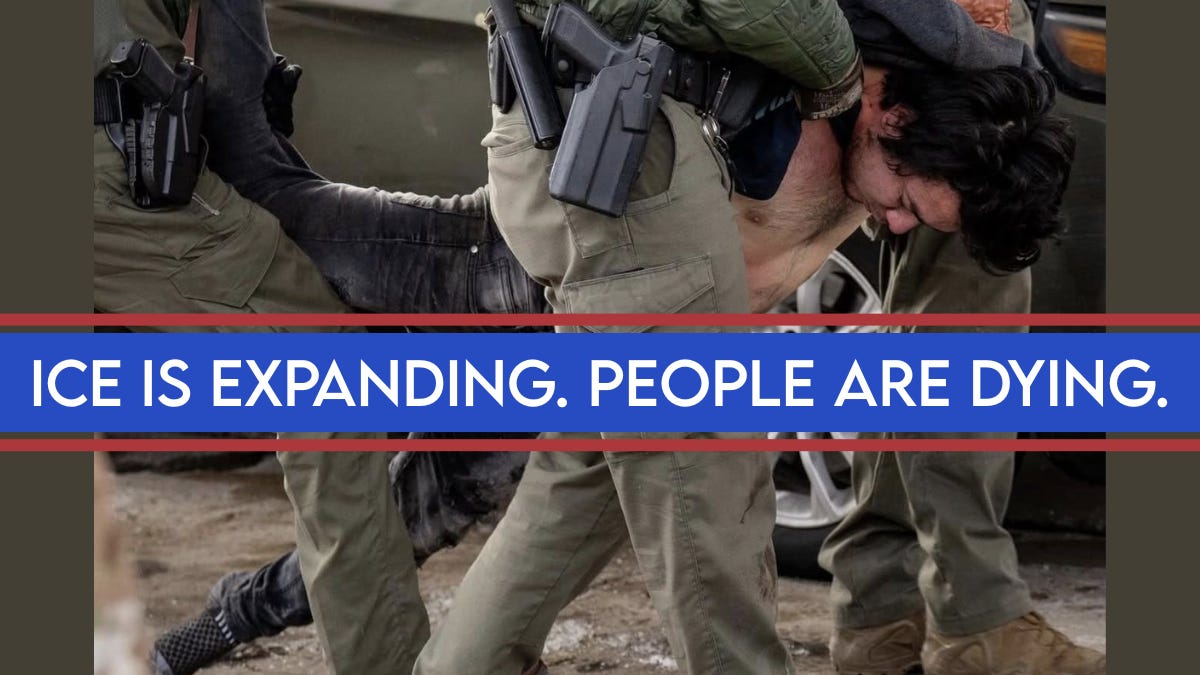
ICE is expanding its workforce and enforcement reach at the same time people are being killed by ICE agents and dying in ICE custody. Federal leadership has responded with intimidation and rhetoric signaling protection from consequences. This post explains how ICE is scaling, what has already happened, and how to protect yourself and others when ICE shows up especially when ICE breaks the law or turn violent.
Why ICE Encounters Are More Dangerous Right Now
ICE encounters have always carried risk. What has changed is the environment in which the encounters are happening.
ICE is in a period of accelerated expansion, broader recruiting, faster onboarding, increased incentives, and a clear mandate to increase enforcement activity inside communities. At the same time, political leadership has framed criticism, documentation, and even public grief as hostility toward the agency.
People are dying at the hands and weapons of ICE agents, and the response from the federal government has been disappointing to say the least.
What Has Already Happened
In January 2026, ICE shot and killed Renee Nicole Good in Minneapolis. She was a U.S. citizen. Her death immediately sparked nationwide protests because the federal narrative conflicted with eyewitness accounts, video evidence, and statements from local officials.
In the same period, the killing of Keith Porter Jr. by an off-duty ICE agent, which occurred on New Year’s Eve, became central to 2026 protests and public outrage.
Multiple people have already died in ICE custody in the first days of 2026, confirmed through ICE’s own detainee death notifications. These deaths followed one of the deadliest years on record for deaths in ICE detention.
From Enforcement to Intimidation
After Renee Good was killed, federal leadership did not lead with transparency or restraint.
Instead, the public saw defensive messaging, threats toward critics, and posturing that framed accountability as an attack on law enforcement. Kristi Noem appeared publicly behind messaging that read: “One of ours, all of yours.”
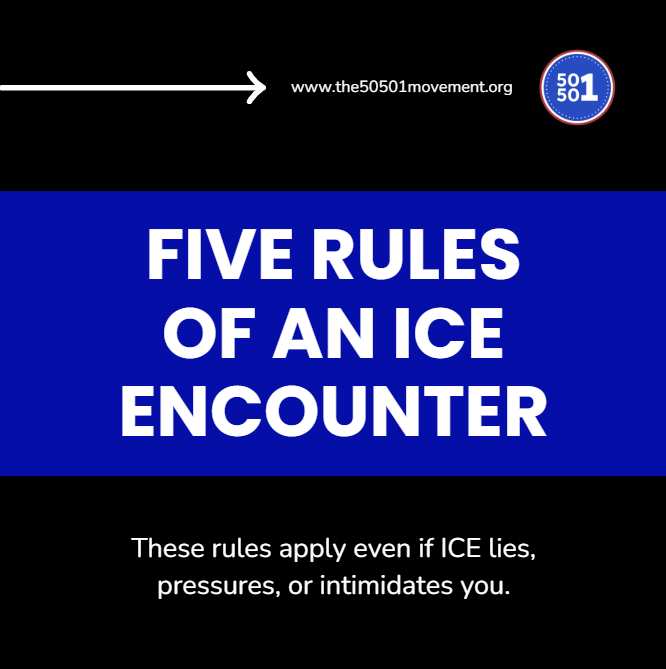
WHAT TO DO IF YOU ENCOUNTER ICE
Save this. Share it. Read it before you need it.
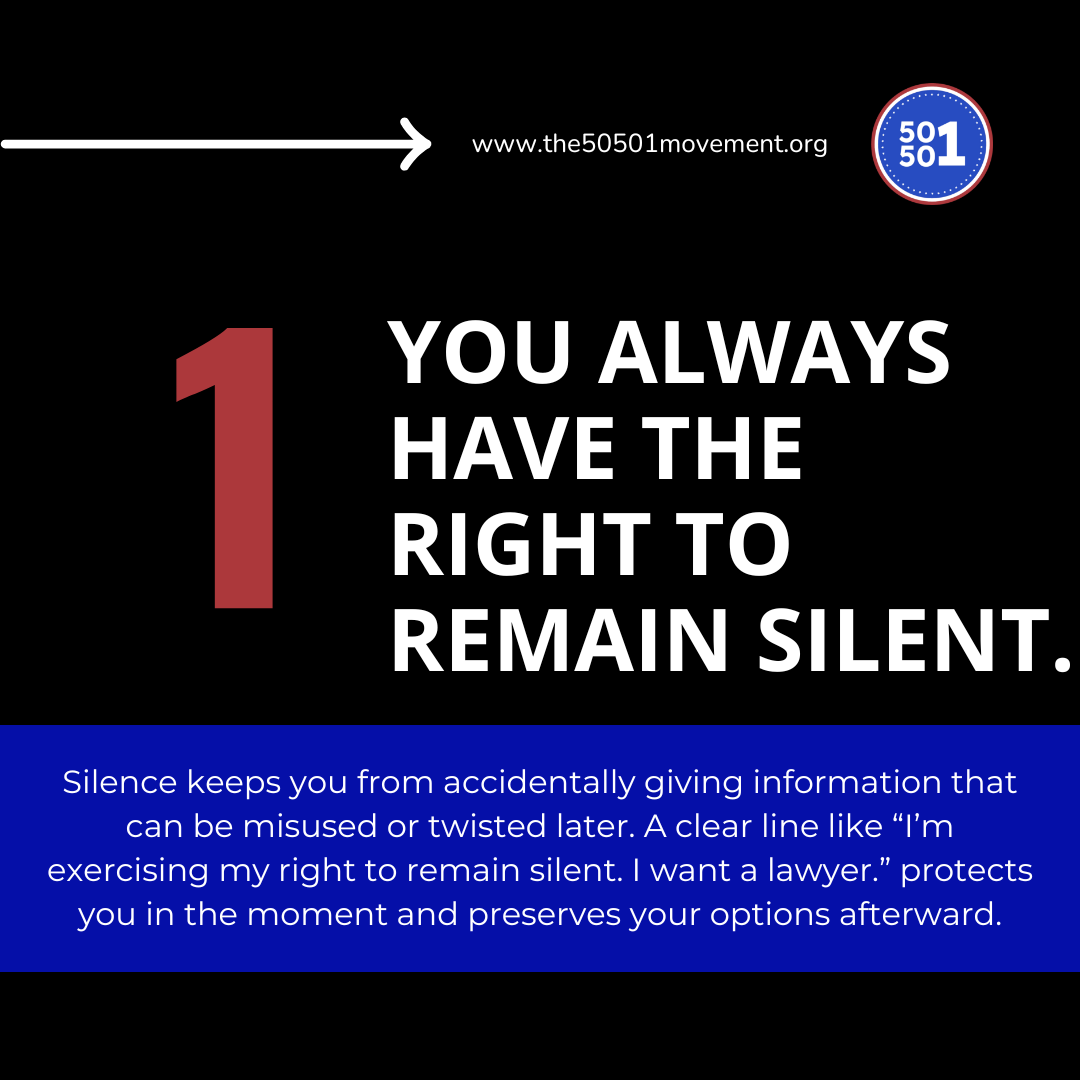
You always have the right to remain silent.
Silence keeps you from accidentally giving information that can be misused or twisted later. A clear line like “I’m exercising my right to remain silent. I want a lawyer.” protects you in the moment and preserves your options afterward.
You do not have to open your door.
Most ICE “warrants” people are shown are administrative forms, not a judge-signed warrant, and they don’t authorize entry into a home without consent. Keeping the door closed prevents “consent-by-opening” and buys you time to verify what they actually have.

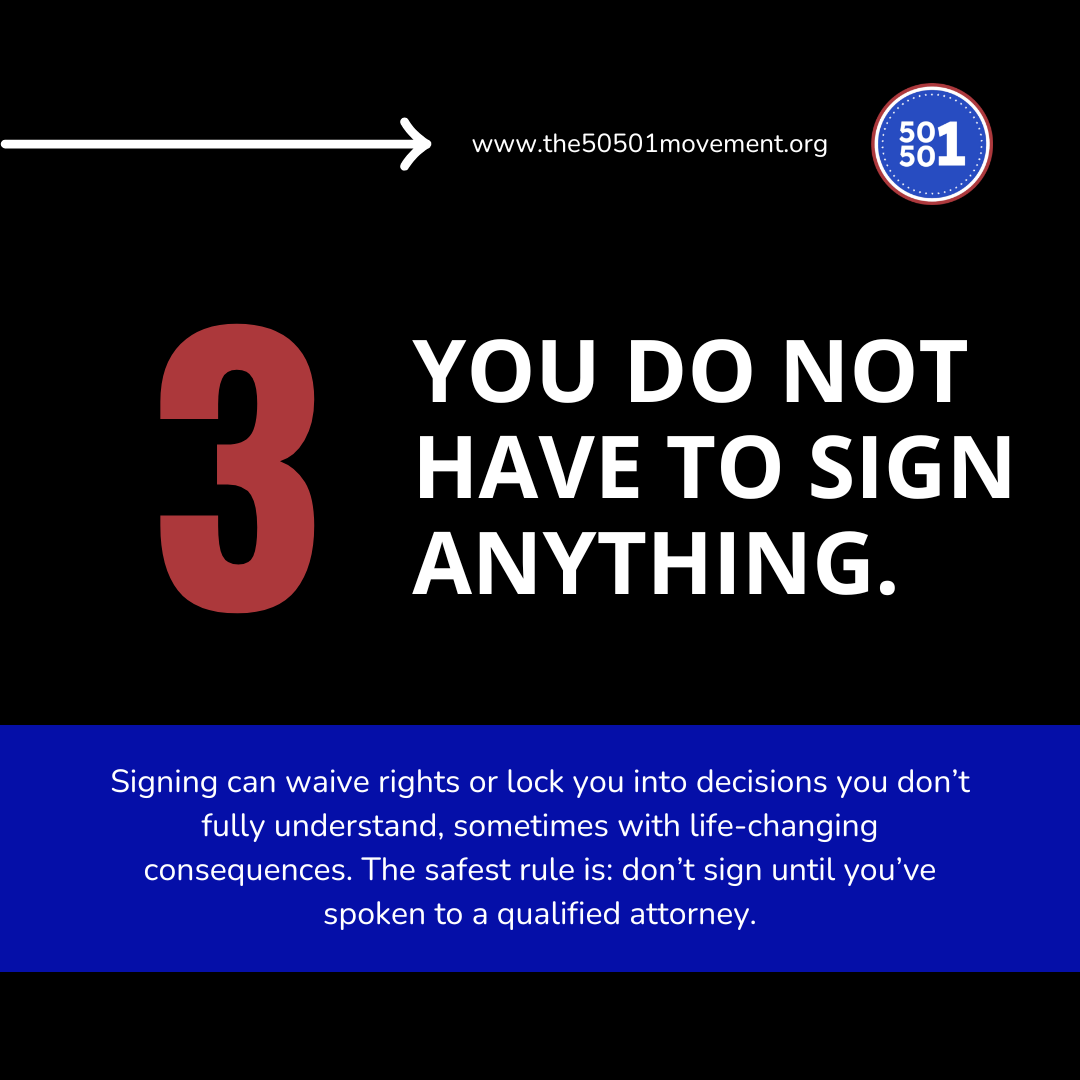
You do not have to sign anything.
Signing can waive rights or lock you into decisions you don’t fully understand—sometimes with life-changing consequences. The safest rule is: don’t sign until you’ve spoken to a qualified attorney.
You can ask if you are free to leave.
That single question clarifies whether you’re being detained or whether you can end the interaction. If they say yes, you can calmly leave; if they say no, you know to stop chatting and stick to your rights.
You should not physically resist.
Physical resistance can escalate danger fast and can add criminal charges even if the stop or search was improper. The safer approach is verbal resistance: state “I do not consent” and keep asserting your rights calmly.
These rules apply even if ICE lies, pressures, or intimidates you.
Non-Escalation Is Not Surrender
Telling people not to escalate can sound dismissive when emotions are high. That is not what this guidance means.
Non-escalation is control and safety.
Escalation: yelling, rushing agents, physical confrontation does not protect the person being detained. It increases the risk of violence and gives federal agencies justification to use aggressive force.
The goal is not to “win” in the moment.
The goal is to protect lives and preserve evidence.
Documentation Is a Form of Protection
Documentation does more than create records afterwards. It also changes behavior.
When agents know they are being calmly recorded from a safe distance, escalation drops, language becomes more careful and their force becomes more restrained. This is observed behavior across law enforcement contexts.
Good documentation is:
steady
timestamped
backed up immediately and stored somewhere safe
paired with written notes and witnesses
When ICE Breaks the Law or Turns Violent
If ICE enters without a judge-signed warrant, uses excessive force, threatens, or escalates illegally, your priorities are:
First: reduce harm.
Do not physically interfere.
Do not crowd.
Keep a safe distance.
Protect bystanders.
Second: document like evidence.
Record.
Note badge numbers.
Capture vehicle identifiers.
Write down what was said and in what order.
Third: preserve the record.
Back up footage immediately.
Do not edit originals.
Collect witness contact information while memories are fresh.
Fourth: run the accountability chain.
Evidence becomes complaints.
Complaints become investigations.
Investigations become hearings, lawsuits, or injunctions.
Remember, there is generally no statute of limitations for murder.
Moments like this are when community stops being an abstract idea and becomes a form of protection.
No one should have to face federal power alone, not in their home or on their street.
Being part of a trusted community means there are people who know your name and notice when something is wrong.
Community members will help document what happens, and they will be the ones to show up for you when you need it.
Community helps information and ICE alerts travel quickly, especially in strong communities when people who take the lead are there to set up guardrails to protect their neighborhoods.
Accountability doesn’t depend on a single person carrying all the weight. Community is how people stay safe and how evidence grows, and how no one disappears quietly.
Finding your people and getting involved is for mutual protection, shared awareness, and looking out for one another when our government fails us.
If you are wanting to help lead in your community, consider creating a social media group or text chat for ICE ALERTS or ICE WATCH. If you have an app you recommend or more resources to share, please let us know in the comments:
ICE (official PDF): Notification and Reporting of Detainee Deaths (policy directive)
ACLU: Know Your Rights | If ICE Agents Show Up at Your Door (PDF)
National Immigrant Justice Center (NIJC): Know Your Rights | If You Encounter ICE
Reuters (Jan 12, 2026): Four migrants died in ICE custody in the first 10 days of 2026
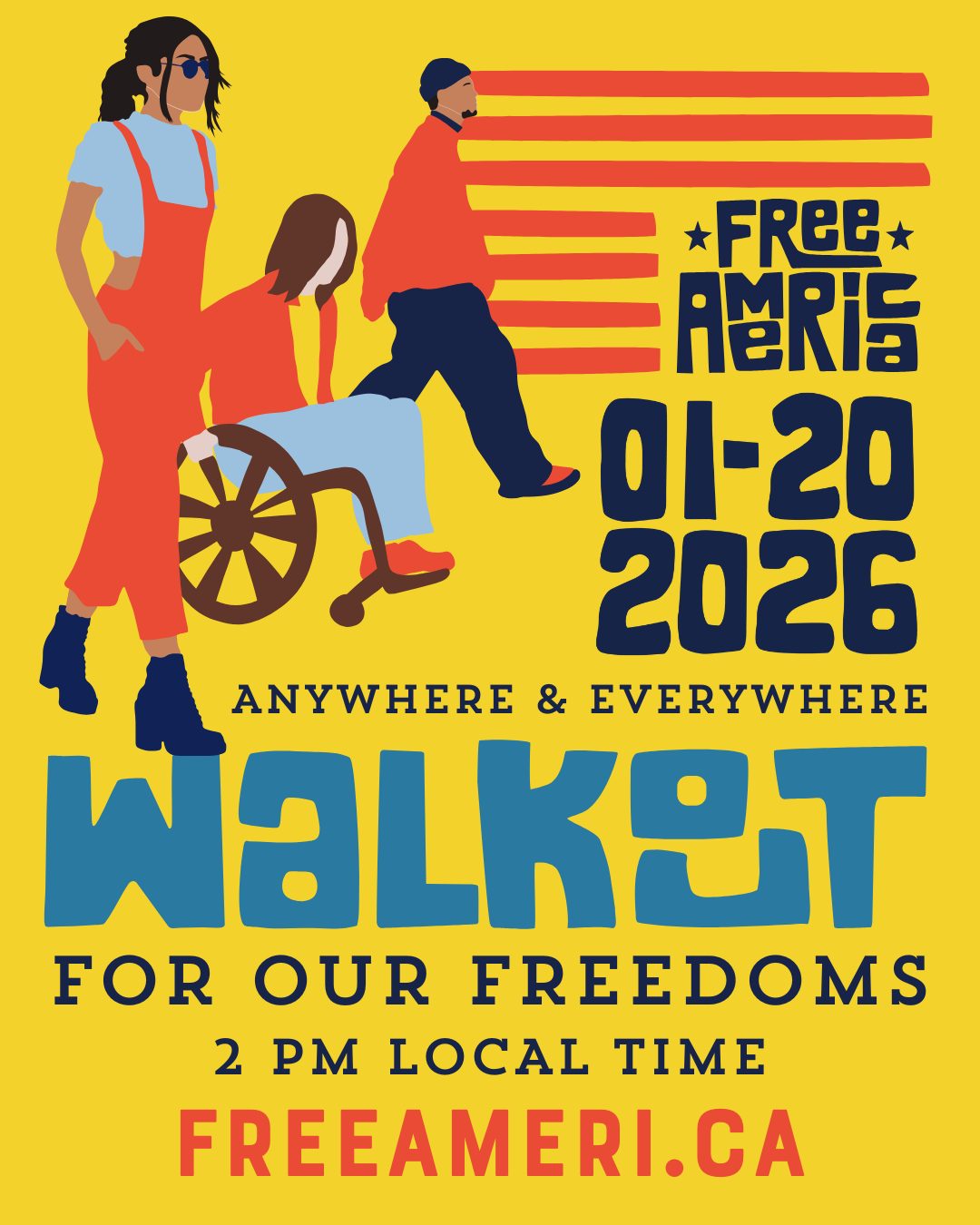
Join Us January 20th | The Free America Walk Out
On January 20, 2026 at 2 PM local time, we walk out of work, school, and commerce as a visible refusal to normalize the construction of a coercive state.
Read/listen more about how walkouts are different from a protest and how they can help make a bigger impact here: What Walkouts Do, Why They Work, and How to Join Safely
Do this today (2 minutes):
Commit here: FreeAmeri.ca
Calendar it: Jan 20, 2026, 2 PM local
Text two people: “Jan 20, 2 PM local. Free America Walk Out. I’m going. Will you?”
Please share this to help us get the word out:
I would definitely start by calling 911. These goons are breaking the law. I call my Republican Senator every day to say defund ICE and impeachment Trump.
Thank you 50501 for this sharable, viable, survival information. EXCELLENCE AT ITS BEST.